
Cathie Wood Nvidia Stock Purchase: What ARK's August Buys Show

 Prefer us on Google


The Cathie Wood Nvidia stock purchase story is not one trade — it is a month-long accumulation funded by selling other AI names. Across July 28, August 5 and August 10, 2026, ARK Invest bought $59.9 million of Nvidia across five ETFs, lifting its total NVDA position 24% to more than $303.6 million as of August 11, according to ARK's own daily trade disclosures. It kept buying after that: roughly $22.8 million on August 17, and 243,707 shares worth about $53 million on August 28, the day after earnings. On each of those days, ARK was also selling AMD. That detail matters more than the headline dollar figures, and it is the part most coverage skips.
Cathie Wood's Nvidia stock purchase: what ARK actually bought in August
ARK publishes a trade file every evening, so the sequence is unusually well documented for an active manager. The three pre-earnings sessions broke down like this, per ARK data cited by The Motley Fool on August 13, 2026:

- Ark Innovation ETF (ARKK): $8.2M on July 28, $9.4M on August 5, $12.6M on August 10 — $30.2M total
- Ark Next Generation Internet ETF (ARKW): $2.3M, $2.7M, $7M — $12M total
- Ark Autonomous Technology & Robotics ETF (ARKQ): $2.7M, $3.1M, $4.1M — $9.9M total
- Ark Space & Defense Innovation ETF (ARKX): $1.1M, $1.3M, $1.7M — $4.1M total
- Ark Fintech Innovation ETF (ARKF): $1.1M, $1.1M, $1.5M — $3.7M total
Two things stand out. The buys got larger each session — $15.4M, then $17.6M, then $26.9M — which is the shape of a manager building conviction into an event rather than nibbling at a dip. And the buying continued after the August 26 print, when the stock was no longer cheap relative to the week before. A manager scaling in before earnings and adding again after is not trading the event. She is rebuilding a position.
Where the money came from: AMD and Palantir were sold to fund NVDA
On August 17, ARK bought roughly $22.8 million of Nvidia while trimming AMD and Palantir. On August 28, it bought 243,707 Nvidia shares and sold 156,286 AMD shares across the same five funds, while adding 55,131 shares of Broadcom in ARKK, ARKQ and ARKW.
Read the two sides together and the trade changes meaning. This is not ARK increasing its AI exposure — its semiconductor exposure was already there. It is ARK concentrating that exposure into the incumbent and out of the challenger. Selling AMD to buy Nvidia and Broadcom is a bet that in a capacity-constrained cycle, the accelerator supplier with the software moat and the custom-silicon partner capture the spend, while the second-source GPU vendor does not.
The better reading is that ARK made a relative call, not a directional one. Anyone framing this as "Cathie Wood is bullish on AI" is missing that she funded it by getting less bullish on part of AI.
Why Nvidia's weighting is heaviest in ARK's space and robotics funds
Here is the detail almost nobody reports. As of August 11, 2026, Nvidia was not most heavily weighted in the flagship. By ARK's holdings data:
- ARKX (space and defense): 141,864 shares, $30.9M, 3.62% of the fund
- ARKQ (autonomous tech and robotics): 329,001 shares, $71.6M, 3.52%
- ARKF (fintech): 101,153 shares, $22.0M, 2.89%
- ARKW (next-gen internet): 183,964 shares, $40.0M, 2.28%
- ARKK (innovation): 639,590 shares, $139.1M, 2.20%
ARKK holds the most shares in absolute terms but gives Nvidia the smallest portfolio weight of the five. The concentration sits in the thematic funds that are supposedly about rockets and robots. That tells you how ARK is now classifying Nvidia internally: not as a chip stock, but as the compute layer underneath every theme it sells. It also means an investor who bought ARKX for space-and-defense exposure owns proportionally more Nvidia than someone who bought the flagship — a diversification question worth knowing before you buy the fund instead of the stock.
-- Price
Wood sold Nvidia in 2022 on valuation — what changed
ARK first bought Nvidia in the fourth quarter of 2016 at an estimated average near $81 per share, pre-split. It then sold roughly 1.3 million shares starting in Q4 2022, with the bulk exiting in November 2022, and Wood told CNBC in February 2023 that she liked the company but the valuation was too high. Nvidia's AI rally began weeks later. By later estimates, the Q4 2022 tranche alone — about 859,000 shares sold at an average near $146 pre-split, roughly $15 adjusted for the June 2024 ten-for-one split — cost ARK on the order of $854 million in forgone returns.
So the current buying is a reversal at a far higher price. NVDA closed at $217.88 on August 28, 2026, with a market capitalization around $5.24 trillion. Wood is paying roughly fourteen times the split-adjusted level at which she sold, for a company whose growth rate is now decelerating from a much larger base.
That is not automatically a bad trade — the earnings arrived and the valuation call was wrong — but it is a reason to be careful about copying it. The position that looks like conviction from the outside can also be a manager correcting a well-publicized error under performance pressure. Both explanations fit the same trade file.
Did Nvidia's Q2 earnings justify the buying?
The August 26, 2026 print (fiscal Q2 2027, quarter ended July 26) supported the thesis on the top line:
- Revenue of $96.2 billion, up 106% year over year and 18% sequentially, against roughly $92.2 billion expected
- Data center revenue of about $89 billion, up 117% year over year, versus estimates near $85 billion
- Adjusted EPS of $2.22 against $2.10 expected
- Q3 guidance of $108 billion versus $104.2 billion consensus — and that guide assumes no China revenue
The number that should temper the enthusiasm is margin. Nvidia guided gross margin to trough at 71–72% by fiscal Q4, down from roughly 75%, citing rising memory costs. Trailing gross margin was 74.67% as of late August. Revenue can double while the quality of that revenue erodes, and HBM pricing is not something Nvidia controls. If you are buying because ARK is buying, that margin path — not the revenue beat — is the variable that decides whether the next four quarters look like this one.
How to trade NVDA when ARK's disclosures land after the closing bell
There is a structural problem with following ARK. Its trade file is published in the evening, after the US equity market has closed. By the time you know what she bought, you cannot act on the underlying stock until the next session — and after an event like the August 26 earnings, the gap between disclosure and open is where most of the move happens.
Crypto-side venues close that timing gap by keeping stock-linked markets open continuously. On WEEX, the NVDA-USDT perpetual was marked at 217.68 as of August 31, 2026, with leverage available up to 100x and a listed reference market cap of $5.292 trillion. There is also a tokenized NVDA spot market settled in USDT. Both are price exposure, not share ownership — no votes, no dividends, no claim on the company.
If you want to position around a disclosure rather than wait for the bell:
- Fund a USDT margin balance before the catalyst, not after — transfer delays are what actually cause missed entries.
- Size from the liquidation price backward. Decide the level at which your thesis is wrong, then pick leverage that puts liquidation beyond it.
- Set the stop when you open, not later. Stock-linked perpetuals gap hardest in the first minutes after the underlying market reopens.
- Check the funding rate before holding through a weekend. Crowded one-way positioning makes carry expensive.
- Treat a single ARK trade as one input. ARK is a public fund with published flows, which means the reaction is often already in the mark by the time you see it.
For a broader read on entry levels and support zones, WEEX's NVDA price analysis and trading guide covers the same instrument in more depth.
What traders usually miss about the 24/7 stock market
Continuous trading sounds like an unambiguous advantage. It is not.
A stock-linked perpetual trades all weekend, but the underlying equity does not. From Friday's close to Monday's open there is no arbitrage anchor, so the weekend price is thin, sentiment-driven, and set by whoever is willing to take the other side of a small book. Positions can be liquidated over the weekend at a mark that Monday's cash open never validates. This is where leveraged retail traders most often get taken out — not on a wrong directional call, but on a Saturday wick against a 50x position with no volume behind it.
The practical rule: cut leverage into the weekend, or accept that you are trading a different instrument than you were on Friday afternoon.
Conclusion
The Cathie Wood Nvidia stock purchase is best understood as a concentration trade, not an AI trade. ARK spent August moving money out of AMD and Palantir and into Nvidia and Broadcom, weighted most heavily in its robotics and space funds, and paid roughly fourteen times the split-adjusted price at which it sold the same stock in late 2022. The Q2 print justified the revenue thesis emphatically. The gross margin guide, down to 71–72% on memory costs, is the part of the story that has not resolved yet.
If you are trading around it rather than investing alongside it, the disclosure lag is the real constraint, and the fix — a 24/7 stock-linked market — brings its own weekend gap risk. Size for that, or the timing advantage costs more than it earns.
FAQ
1. How much Nvidia stock did Cathie Wood buy?
ARK bought $59.9 million of Nvidia across July 28, August 5 and August 10, 2026, lifting its total stake 24% to more than $303.6 million as of August 11. It added roughly $22.8 million more on August 17 and 243,707 shares worth about $53 million on August 28.
2. Which ARK funds bought Nvidia?
Five: ARKK, ARKW, ARKQ, ARKF and ARKX. ARKK bought the most in dollar terms, but ARKX and ARKQ carry the highest Nvidia portfolio weights, at 3.62% and 3.52% respectively as of August 11, 2026.
3. Why did Cathie Wood sell Nvidia in 2022?
She said the valuation was too high. ARK sold roughly 1.3 million shares from Q4 2022, mostly in November, just before the AI rally. The Q4 2022 tranche alone is estimated to have cost about $854 million in forgone returns.
4. What did ARK sell to buy Nvidia?
Mainly AMD and Palantir. On August 28 alone, ARK sold 156,286 AMD shares across five funds while buying 243,707 Nvidia shares and 55,131 Broadcom shares.
5. Did Nvidia's August 2026 earnings beat expectations?
Yes. Revenue was $96.2 billion versus roughly $92.2 billion expected, data center revenue was about $89 billion, and adjusted EPS was $2.22 against $2.10 expected. Q3 guidance of $108 billion also came in above the $104.2 billion consensus.
6. What is the main risk in Nvidia's latest results?
Gross margin. The company guided margin to trough at 71–72% by fiscal Q4, down from roughly 75%, on rising memory costs. Revenue growth can stay strong while margin compresses.
7. Can I trade NVDA on a crypto exchange?
WEEX offers an NVDA-USDT perpetual and a tokenized NVDA spot market settled in USDT, both trading continuously. These give price exposure only — you do not own shares, votes or dividends.
8. Should I copy Cathie Wood's Nvidia trade?
ARK's disclosures are published after the US close, so the information is public before most retail traders can act. Treat a single day's trade file as one input among several, not a signal on its own.
Risk Warning
Nvidia is a high-volatility equity, and stock-linked crypto instruments add layers of risk on top of that. Tokenized stocks and stock perpetuals provide price exposure only — holders receive no shares, voting rights or dividends, and depend on the issuer or exchange for pricing and settlement. Leverage of up to 100x means small adverse moves can liquidate a position entirely. Because these markets trade continuously while the underlying US equity market does not, weekend pricing is thin and can gap sharply against positions at the Monday open. Nvidia-specific risks include gross margin compression from memory costs, guidance that currently assumes no China revenue, export-control changes, and a valuation that already prices in sustained AI infrastructure spending. Fund disclosures such as ARK's are published with a lag and describe past trades, not future intentions. Crypto and derivatives trading is high risk and may result in partial or total loss of capital. Never trade with money you cannot afford to lose.
This content is provided for general informational purposes only and doesn't constitute financial, investment, legal, or tax advice. Any events, rewards, online promotions, or related information mentioned herein should not be considered a recommendation, solicitation, or invitation to purchase, sell, trade, or otherwise deal in any crypto assets. Crypto assets are highly volatile and may result in loss. The availability of WEEX services, products, and related events may vary by region. You are responsible for ensuring that your participation is in accordance with applicable local laws and regulations.
You may also like

Cathie Wood Robinhood Stock: What Her 2026 Trades Really Show
Is Arbitrum (ARB) Worth Buying After Its 30% Rally? An Analysis About Utility, Supply and Risks
ARK Invest Crypto Stocks vs ARKB: How Cathie Wood Gets Crypto Exposure
Which ARK ETFs Hold Coinbase Stock? COIN Exposure in ARKK, ARKW and ARKF

How Much Coinbase Stock Does Cathie Wood Own? ARK’s COIN Position Explained
Why Is Cathie Wood’s ARK Invest Buying Coinbase, Circle, BitMine and Bullish?
Cathie Wood’s $50 Million Crypto Stock Bet Explained: What Did ARK Invest Buy?
Bitcoin Price Over 10 Years: Historical Recap and Long-Horizon Outlook
Tesla Stock Price Is Down 30% in 2026: What the Q2 Earnings Miss and 1.4% Operating Margin Actually Signal
Cathie Wood Sold AMZN Stock and Bought SPCX Today: What ARK's Reshuffling Actually Signals

AMZN Stock Soars 10% After Q2 Earnings: What the AWS 37% Growth and $220 Billion Capex Mean for Amazon
SPCX Stock Price Is Down $1 Trillion From Its Peak: Is Now the Time to Buy?
What is Ark of Panda (AOP) Coin? A 2025 Guide to the RWA and AI Crypto

How to Buy Crypto Anonymously: 5 Methods, Real Costs and Limits
Crypto Liquidation Price: How to Calculate It From 5x to 50x
Stop Loss and Take Profit in Crypto Futures: A 1% Risk Playbook
Crypto Funding Rate: Who Pays, What It Costs, What It Signals
PEP Earnings: PepsiCo Beats Q3, Cuts Guidance on North America
SPCX Stock Futures: 2.75B SpaceX Shares Unlock by December
SNDK Stock Futures: SanDisk at 7.5x Earnings Before Oct. 29
BTC Futures Analysis: $80K Held, but Longs Are Still Paying Up
ETH Futures: Why Ether Is Falling Faster Than Bitcoin This Week
WEEX API Key Setup: How to Connect a Third-Party Platform Safely
How to Become a WEEX Broker: Application, API Setup and Go-Live
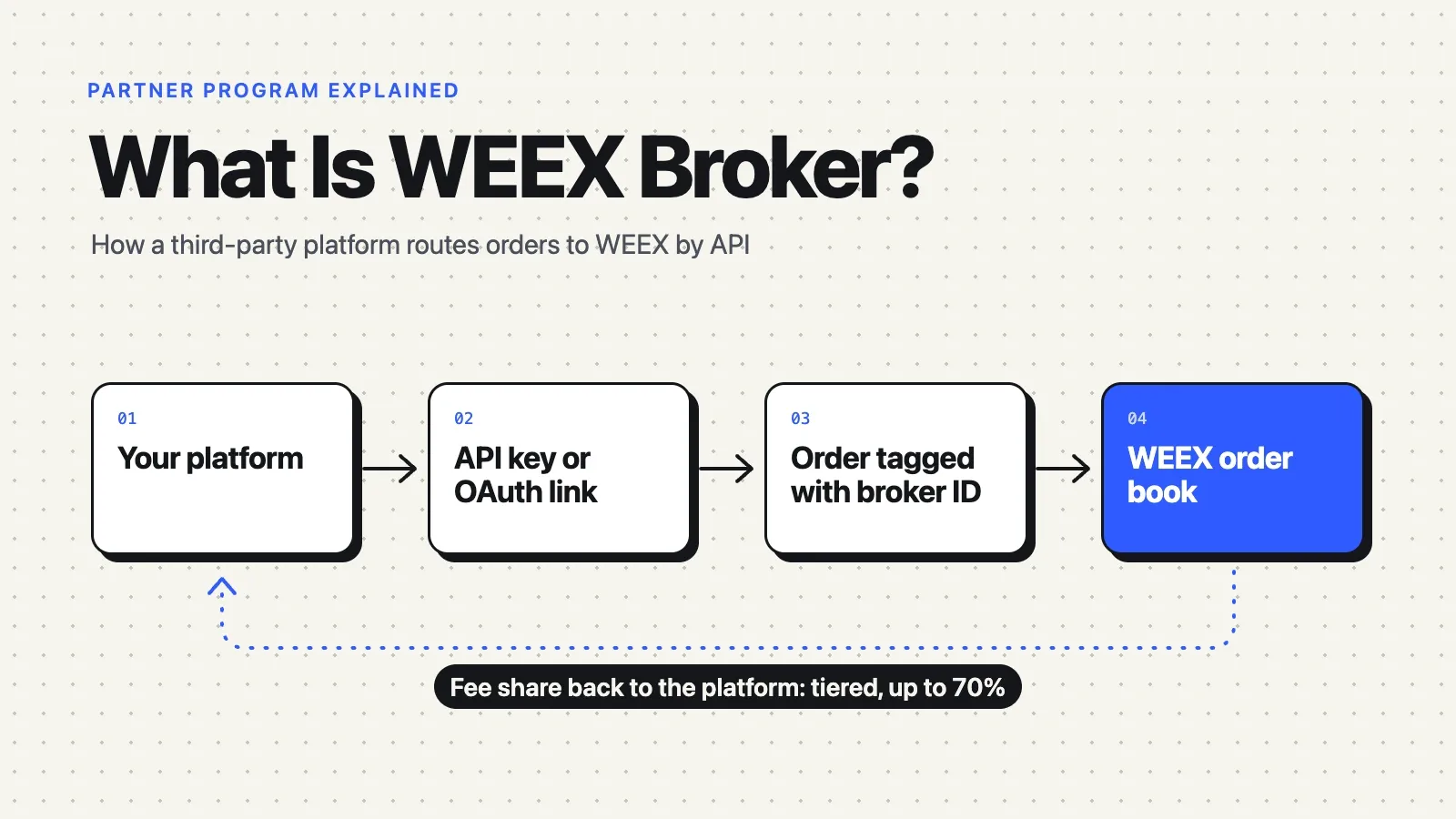
What Is WEEX Broker? API Program, Commissions and How It Works
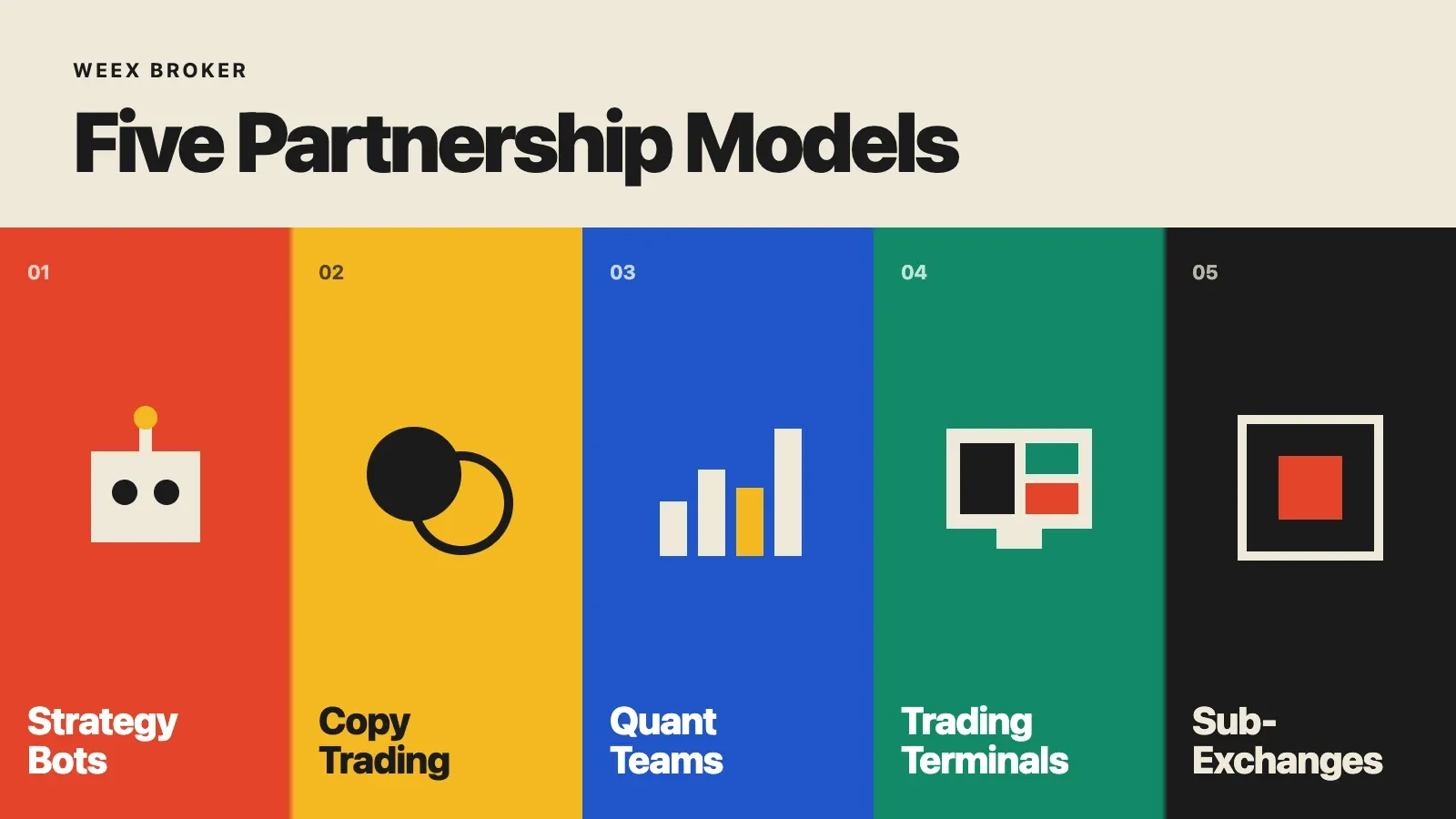
WEEX Broker Models: Strategy Bots, Copy Trading and Sub-Exchanges
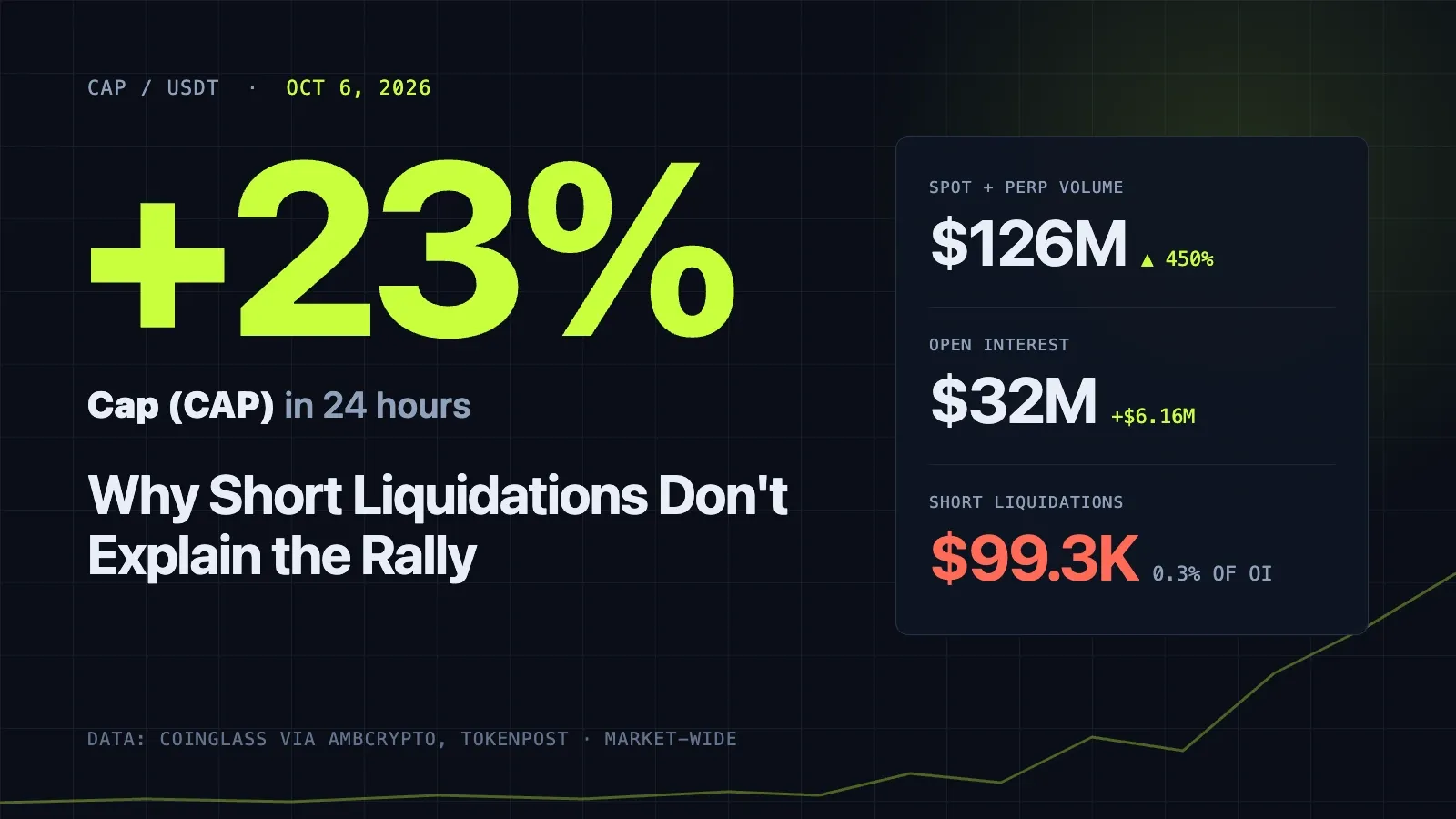
CAP Price Up 23%: Why Short Liquidations Don't Explain the Rally
What Is WEEX Exchange? Crypto Trading, API and Platform Overview
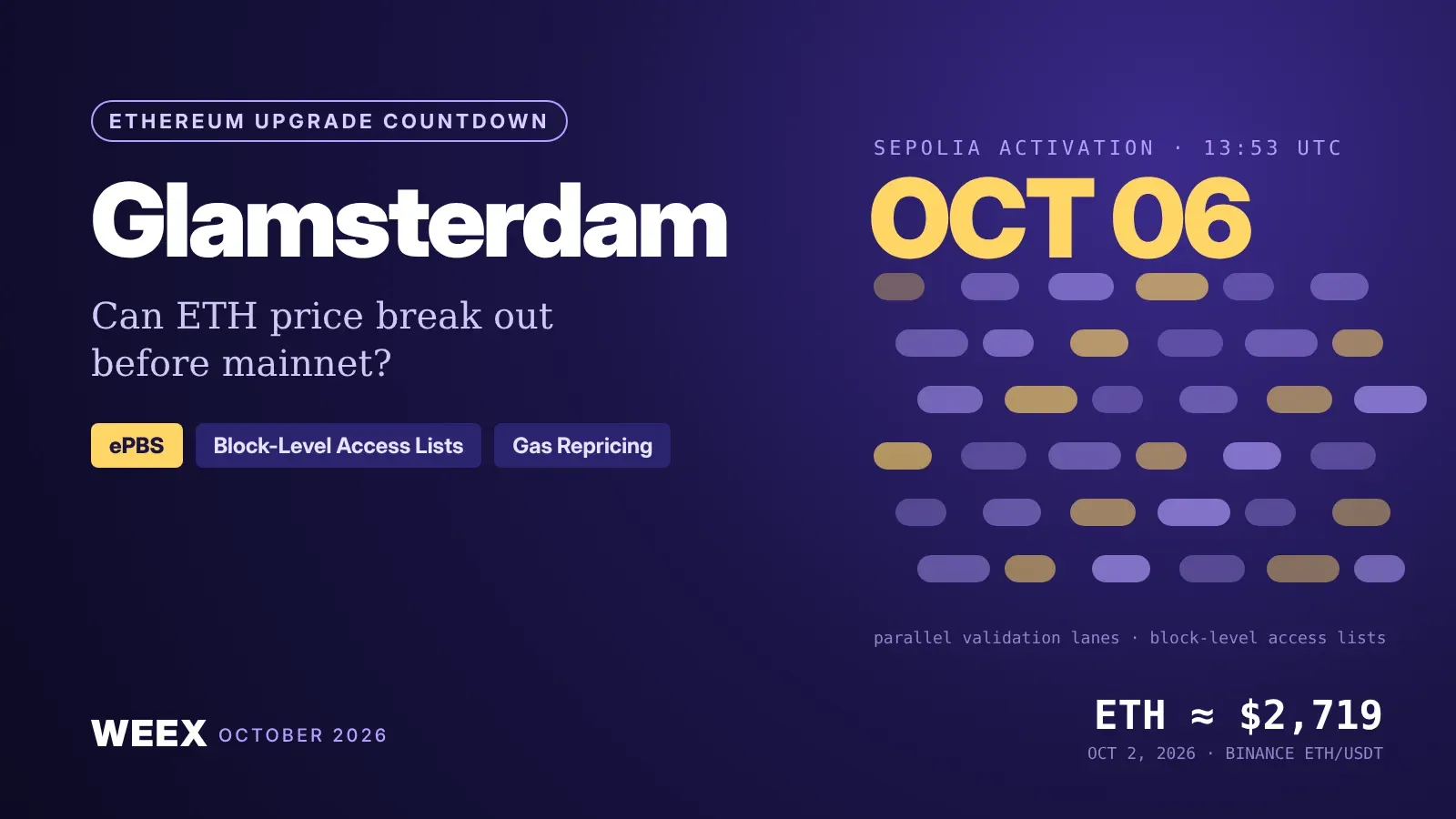
Ethereum Glamsterdam Upgrade Countdown: Can ETH Price Break Out?
Stock Market Crash Risk in 2026: The Warning Signs Worth Watching
Cathie Wood Robinhood Stock: What Her 2026 Trades Really Show
Is Arbitrum (ARB) Worth Buying After Its 30% Rally? An Analysis About Utility, Supply and Risks
ARK Invest Crypto Stocks vs ARKB: How Cathie Wood Gets Crypto Exposure
Which ARK ETFs Hold Coinbase Stock? COIN Exposure in ARKK, ARKW and ARKF
How Much Coinbase Stock Does Cathie Wood Own? ARK’s COIN Position Explained
Why Is Cathie Wood’s ARK Invest Buying Coinbase, Circle, BitMine and Bullish?



