
Guide to Spot and Futures Trading Fees on WEEX

 Prefer us on Google


Understanding the fee structure is vital for trading on WEEX. Whether you’re engaging in spot or futures trading, knowing how fees are calculated helps you optimize your trades. This guide details WEEX’s fee calculations and highlights the latest discounts and related charges.
WEEX Spot Trading Fees
Spot trading fees on WEEX are clear and simple:
Spot Trading Fees: 0.1% for both makers and takers.
This means a 0.1% fee applies to the transaction value for every buy or sell on the spot market, whether you’re a maker or taker.
WEEX Futures Trading Fees
Futures trading features a varied fee structure with different rates for makers and takers:
Makers: 0.02% fee rate.
Takers: 0.08% fee rate.
In futures, makers add liquidity with orders that aren’t filled instantly, while takers remove liquidity by matching existing orders immediately.
How Are Trading Fees Calculated?
Fee calculations depend on factors like opening, closing, or reducing positions. Here’s how they work:
Spot Trades: Fees are computed as 0.1% of the trade value.
Futures Trades: The calculation is more complex, using the formula:
Transaction Fee = (Entry Price × Futures Nominal Value × Quantity × Maker or Taker Rate)
This reflects your position’s value and your maker or taker status.
Fees apply only when you open, close, or reduce positions, not for unfilled or canceled orders. They’re deducted from your position margin and based on position value, unaffected by leverage.
-- Price
Fee Discounts for WEEX Traders
To ease trading costs, WEEX offers attractive discounts:
VIP Members: Holding WXT grants WEEX VIPs up to 70% off futures trading fees, with savings tied to your VIP level.
Futures Fee Promotions: WEEX hosts events offering reduced fees, such as discounts for holding WXT over specific periods.
Additional Fees on WEEX
Beyond trading fees, consider these charges:
Deposit Fees: None.
Withdrawal Fees: Vary by cryptocurrency and network conditions, with no fixed rate due to potential congestion.
Where to Check Fee Rates
WEEX makes fee information accessible:
In the WEEX App: Tap the profile icon, then select [Fee Rates] to view the fee schedule for all tokens.
Withdrawal Interface: See specific crypto and chain fees at the bottom of the withdrawal page.
Understanding Makers and Takers
Maker Orders: These boost market liquidity, like limit orders listed in the order book, charged at the lower 0.02% maker fee.
GTC Orders (Good-Till-Canceled) may be maker or taker, depending on execution.
Use “Maker Only” to ensure your order enters the order book.
Taker Orders: These reduce liquidity, like market orders filled instantly, charged at the higher 0.08% taker fee.
IOC (Immediate or Cancel) and FOK (Fill or Kill) orders are treated as taker orders.
Conclusion
Grasping WEEX’s fee calculations is key to enhancing your trading efficiency. Whether trading spot or futures, you can benefit from VIP discounts, with up to 70% off futures fees by holding WXT. The fee structure is transparent, and this guide helps you strategize trades to boost profits.
Keep track of fee rates and seize special discount events to lower costs. The more you trade and elevate your VIP level, the more you can save!
For details, visit the WEEX Fee Rates page to make informed trading choices.
This content is provided for general informational purposes only and doesn't constitute financial, investment, legal, or tax advice. Any events, rewards, online promotions, or related information mentioned herein should not be considered a recommendation, solicitation, or invitation to purchase, sell, trade, or otherwise deal in any crypto assets. Crypto assets are highly volatile and may result in loss. The availability of WEEX services, products, and related events may vary by region. You are responsible for ensuring that your participation is in accordance with applicable local laws and regulations.
You may also like

WEEX Promo Code and Sign-Up Bonus: What You Need to Know

WEEX Welcome Bonus Explained: How New User Rewards Work
WEEX Affiliate Program: How to Join and Track Commission

How to Get WEEX Referral Commission: Rules and Tracking
WEEX API Trading Cost: The Full Fee Stack, Not Just Maker-Taker
What Is Proof of Reserves (PoR)? How WEEX Ensures Transparency and User Fund Safety
WEEX Proof of Reserves: Building Unshakable Trust in a Volatile Crypto World
WEEX VIP Benefits Newly Upgraded
MetaMask Seed Phrase & Private Key Security Guide

How to Install and Set Up MetaMask (2026 Updated Guide)

What Is MetaMask? A Complete Beginner's Guide
What Is Arbitrum (ARB) and How Does This Ethereum Layer 2 Work?
Is Arbitrum (ARB) Worth Buying After Its 30% Rally? An Analysis About Utility, Supply and Risks
GoPro Stock Soared 40%: What the $1.14 Merger Actually Pays
Stealth XST Coin: The $1,806 Daily Volume Behind a $2.3M Cap
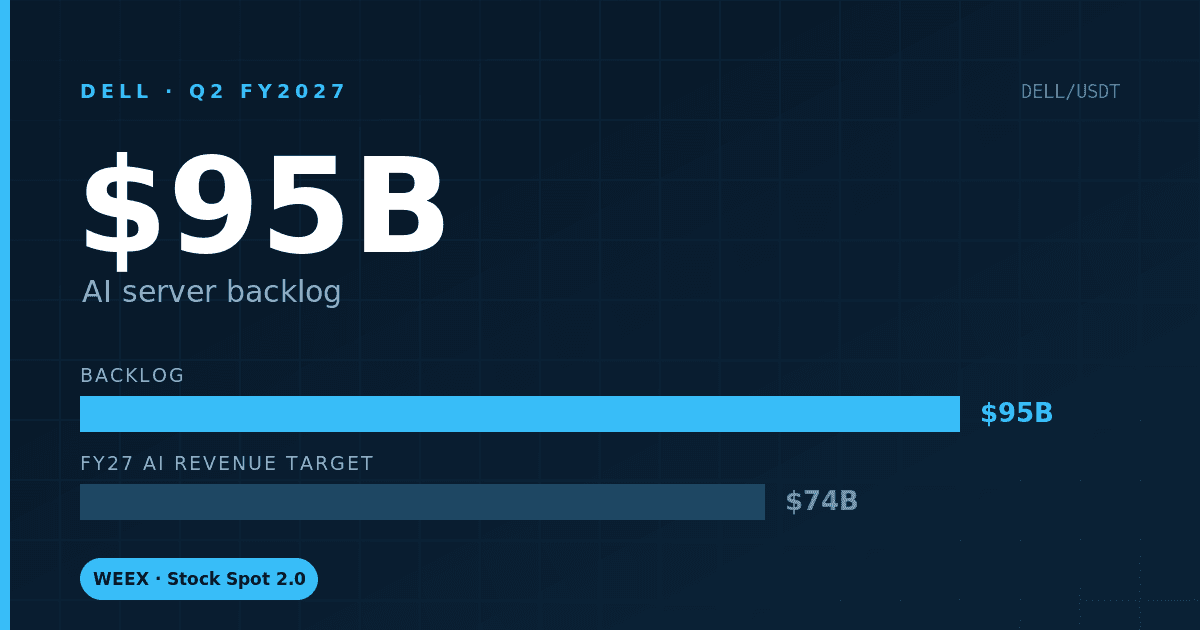
Dell Earnings: $95B AI Backlog Now Dwarfs Its Own Guidance
Fable 5.1: What Anthropic's New Model Means for AI Tokens
Dell Stock Surges 9.4% After Smashing Earnings Estimates: What Drove the AI Server Beat

Why Is GoPro Stock Surging 80%? A YouTuber's 8.5% Stake and a Short Squeeze Collide
XST ETF vs XST Coin (XSolut): Don't Confuse These Two Completely Different Assets
What Is PONS? Inside the "100x Coin" Taking Over Robinhood Chain

Stock Spot vs Perpetuals vs Real Stocks: Key Differences
WEEX Stock Spot 2.0 Rewards Guide: Trade & Share $100K
ARK Invest Crypto Stocks vs ARKB: How Cathie Wood Gets Crypto Exposure
Which ARK ETFs Hold Coinbase Stock? COIN Exposure in ARKK, ARKW and ARKF
How Much Coinbase Stock Does Cathie Wood Own? ARK’s COIN Position Explained

Why Is Cathie Wood’s ARK Invest Buying Coinbase, Circle, BitMine and Bullish?

Cathie Wood’s $50 Million Crypto Stock Bet Explained: What Did ARK Invest Buy?
AIINU: How a "100x Coin" on Robinhood Chain Turned NVDA Stock Into a Memecoin
"We're Back": Why Strategy's Return to Bitcoin Buying Is Moving More Than Just MSTR Stock
WEEX Promo Code and Sign-Up Bonus: What You Need to Know
WEEX Welcome Bonus Explained: How New User Rewards Work
WEEX Affiliate Program: How to Join and Track Commission
How to Get WEEX Referral Commission: Rules and Tracking
WEEX API Trading Cost: The Full Fee Stack, Not Just Maker-Taker
What Is Proof of Reserves (PoR)? How WEEX Ensures Transparency and User Fund Safety
Contents
Popular coins
Latest articles


