
ECB keeps rate at 2.5% as energy inflation raises concerns

 Prefer us on Google


**The European Central Bank kept its key rate at 2.5%, despite inflation in the eurozone climbing to 3.8%. Energy is complicating the outlook, and Mark Wall from Deutsche Bank anticipates another increase in December.
- The ECB maintained the deposit facility at 2.5% after the 25 basis point increase in September.
- Overall inflation reached 3.8%, its highest level since September 2023, and energy inflation hit 18.8%.
- Mark Wall considers an additional increase to 2.75% in December likely and warns that Christine Lagarde's announced departure adds uncertainty.
🚨 ECB keeps rate at 2.5% despite inflation surge
Eurozone inflation reached 3.8% in September and energy inflation, 18.8%.
Deutsche Bank forecasts another increase in December, up to 2.75%. The ECB did not confirm this measure. pic.twitter.com/R5Ph2YVaRV
--- Diario฿itcoin (@DiarioBitcoin) October 29, 2026
ECB keeps rate at 2.5% as energy inflation raises concerns
The European Central Bank (ECB) decided to keep its key rate unchanged at 2.5%, in line with market expectations, even though eurozone inflation rose to a three-year high. The decision maintains the deposit facility at this level, which is the interest rate that the central bank uses as a benchmark to remunerate the funds that financial institutions keep deposited at the institution.
The Governing Council acknowledged that rising energy costs could push inflation higher while simultaneously weakening growth. It also noted that core inflation and wages remain broadly stable for now, while financing conditions have tightened since the last meeting and could weigh on both prices and economic activity.
Energy once again drives inflation
Overall inflation in the eurozone reached 3.8% in September, its highest level since September 2023. The energy component reached 18.8%, in a context of persistent turmoil in the Middle East that has made it more difficult to anticipate price trajectories and their effects on the economy.
The ECB's statement presents this movement as a double-edged risk: energy costs can fuel new inflationary pressures but can also weaken growth. The institution added that financing conditions have tightened since its last meeting; this change, according to the Governing Council, will likely exert pressure on both inflation and activity.
The energy surge follows the outbreak in February of the war between the United States and Israel against Iran. Since then, the ECB has raised rates in June and September, with increases of 25 basis points each time. The June increase was the first since 2023.
Thus, Thursday's pause does not eliminate the tension between controlling prices and avoiding a greater slowdown in growth. The bank made it clear that it is observing core inflation and wages differently, which it currently considers broadly stable, against the uncertainty generated by energy costs.
A pause that does not clear doubts about December
Mark Wall, Chief Economist for Europe at Deutsche Bank, stated that anticipating the ECB's monetary policy is becoming more complicated. In a note published on Thursday, he questioned whether the two increases already applied and the tightening of financial conditions since September would be enough to counteract the rising risk of energy inflation; his answer was probably not.
Wall separated two elements of the debate: the effect of decisions already made and the new momentum that energy prices could bring. His assessment is an interpretation of the landscape and not an announcement from the ECB, which maintained the rate unchanged in its statement and described the risks without committing to a future trajectory.
The Deutsche Bank economist expects an additional hike in December, which would bring the rate to 2.75%, as long as Christine Lagarde remains at the helm of the bank. According to his forecast, this measure would likely mark the end of the rate hike cycle, although it is not a decision already adopted by the Governing Council.
The difference between the current pause and that projection summarizes the uncertainty faced by monetary authorities: energy inflation could require further adjustment, but tighter financial conditions may also weigh on growth. The ECB pointed out both risks, without specifying in the statement which one will carry more weight in its next decision.
Lagarde's Announced Departure Adds Uncertainty
The meeting also coincided with the announcement that Christine Lagarde will leave the presidency of the ECB on February 7, 2027, almost nine months before her term is set to end on October 31 of that year. Wall mentioned the transition as another unknown for the bank's decision-making next year, when the debate over inflation, energy, and growth will continue to shape monetary policy expectations.
The economist stated that, in his view, the institution is more important than the person leading it, although he acknowledged that the announced departure introduces uncertainty. This assessment accompanies his forecast of a final hike in December while Lagarde remains in office, not a confirmation that the ECB has already set the course for that month.
The available information does not identify who will succeed Lagarde, so there is no basis to anticipate who will occupy the presidency. The announcement of her departure came on the same Thursday as the decision on rates, and Wall considered it a relevant factor for next year's monetary policy.
For now, the ECB's immediate message combines a stable rate of 2.5% with caution regarding the evolution of energy and financing. The inflation figure for September, at 3.8%, and Wall's forecast of a new increase in December keep the debate open, but the next decision will depend on the Governing Council's assessment of the described risks.
-- Price
This content is provided for general informational purposes only and doesn't constitute financial, investment, legal, or tax advice. Any events, rewards, online promotions, or related information mentioned herein should not be considered a recommendation, solicitation, or invitation to purchase, sell, trade, or otherwise deal in any crypto assets. Crypto assets are highly volatile and may result in loss. The availability of WEEX services, products, and related events may vary by region. You are responsible for ensuring that your participation is in accordance with applicable local laws and regulations.
You may also like

Tokenized collateral brings custody and settlement closer together

Treasury’s cash plan points to a possible December liquidity window for Bitcoin

A Counterintuitive Logic: The Anti-AI Movement Won't Eliminate Demand, But It Gives the Industry More Time to Absorb the Bubble

Bank of England Raises Interest Rates: What Changes for Investors
Net Inflows into Spot Bitcoin and Ether ETFs in the US

TradingBeats Launches New Version, Upgraded to Information Stream Format

Is Trump Media selling Bitcoin? 4,259 BTC moved to Crypto.com

Trading Volatility Without Guessing Price Movements: What New Strategies Does Paragon's Power Perps Bring?

Gold Token 2026: Why Move Gold on Chain?

Economy: The People's Bank of China Tightens Currency Rules to Calm the Yuan

Trust Wallet user reports losing funds without approving transaction

HashKey Uses Standard Chartered's Digital Deposits for Money Movement

Has Wall Street Broken the Mechanism That Made Bitcoin Soar?
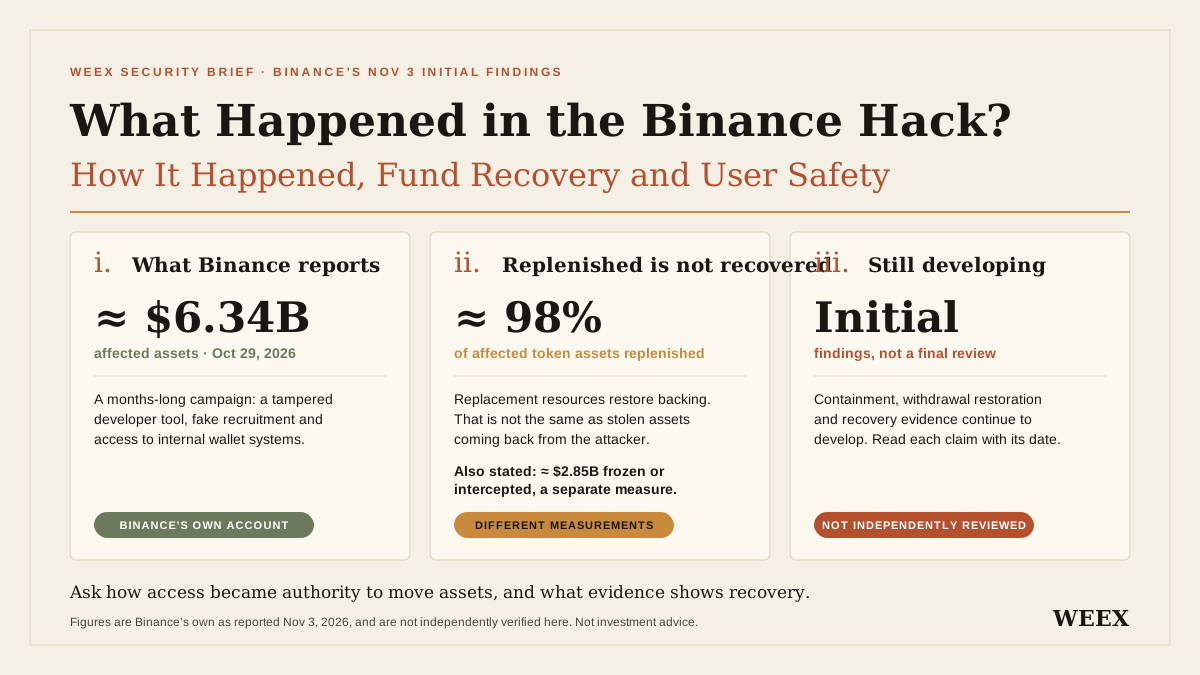
What Happened in the Binance Hack? How It Happened, Fund Recovery and User Safety
What happened in the Binance hack? Review the attack timeline, latest fund replenishment, recovery limits and practical steps to protect your account.
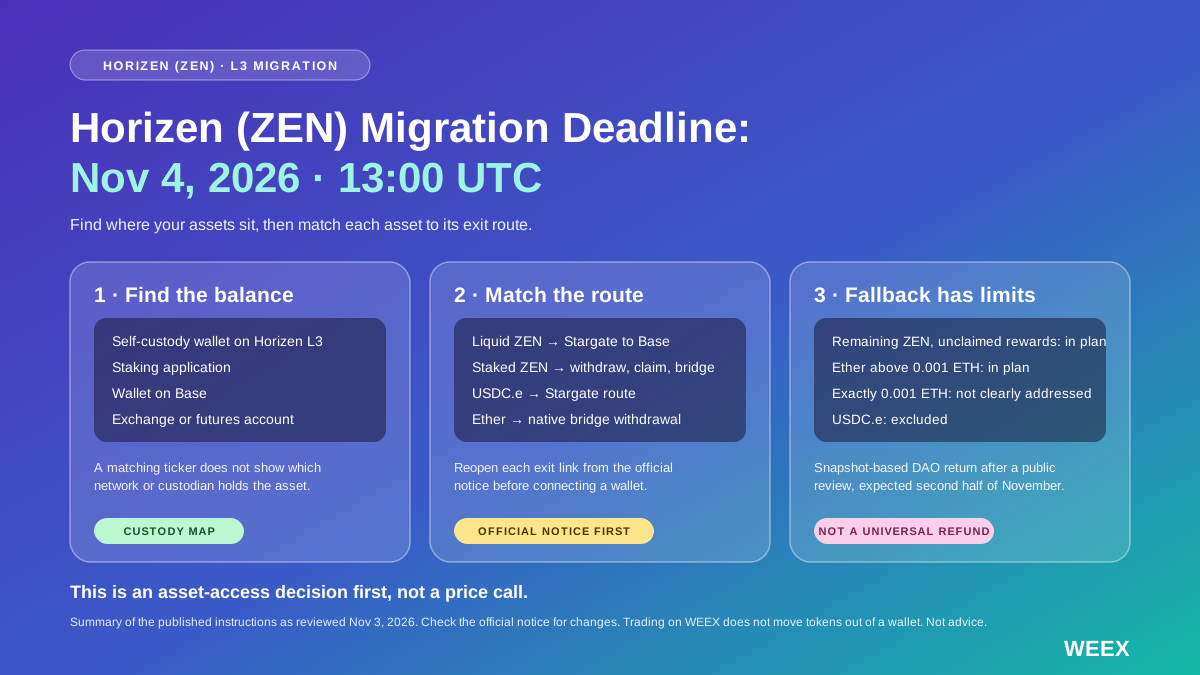
Horizen (ZEN) Migration Deadline: What to Move Before November 4 and What Happens If You Miss It
Horizen (ZEN) migration closes November 4. Check asset-specific bridge routes, wallet requirements, recovery exclusions and what to do if you miss it.

Bitcoin’s year-end liquidity hopes face a projected $150 billion Treasury cash rebuild

DMG Says Client Assets Are Secure and Highlights Layered Transaction Controls
Solana study finds wider spreads outside aggregators at five of six sampled pools
Crypto: Gate Freezes Two Accounts Linked to Binance Hack
BlackRock’s Ethereum fund sheds 580K ETH as monthly exits mount

How T7X Is Building the Infrastructure for a New Era of Capital Markets

The End of the Seasonality Myth. Why September and October Surprised Investors?

Hong Kong plans stablecoin trials for tokenized government debt

Ownership of Bitcoin in the Qian Zhimin Case and Victim Compensation

Polygon expands US banking access to Solana's 15 billion stablecoin market

Sui Puts Enforced Spending Limits at the Center of Its AI-Agent Design

Apple Reclaims Top Market Cap as Silver Nears $50: WEEX TradFi Market Brief
Vitalik's Latest Thoughts: We Need a Digital Minimalism Movement

RLUSD supply fell 29% on XRPL. One XRP trading pool barely changed

Mercado Bitcoin Plans Sui Asset Access in Brazil With Lending and Tokenization Links
Tokenized collateral brings custody and settlement closer together
Treasury’s cash plan points to a possible December liquidity window for Bitcoin
A Counterintuitive Logic: The Anti-AI Movement Won't Eliminate Demand, But It Gives the Industry More Time to Absorb the Bubble
Bank of England Raises Interest Rates: What Changes for Investors
Net Inflows into Spot Bitcoin and Ether ETFs in the US
TradingBeats Launches New Version, Upgraded to Information Stream Format
Contents
Latest articles


Latest coin listings on WEEX


