
FATF Report Interpretation: The Evolving Role of Virtual Assets in Professional Money Laundering, Underground Banking, and Hawala-like Services

 Prefer us on Google


FATF Report Interpretation: The Evolving Role of Virtual Assets in Professional Money Laundering, Underground Banking, and Hawala-like Services
On September 3, the Financial Action Task Force (FATF) released the report "Investigating Professional Money Laundering, Underground Banking, and Hawala and Other Similar Service Providers." The report is based on feedback from questionnaires across 46 jurisdictions, case studies, and expert discussions, focusing on the integration of underground banking, hawala, and other similar service providers (Hawala and Other Similar Service Providers, HOSSPs) with professional money laundering networks. It reveals how virtual assets (VA) are embedded in the business chains of traditional underground banking and hawala, becoming a crucial settlement layer in underground value transfer networks.
In this article, Beosin will interpret the core content of the report to help readers quickly grasp the operational models and evolving trends of virtual assets in underground banking and HOSSPs, enhancing their awareness and response capabilities regarding compliance risks associated with virtual assets.
I. Digital Hawala: Utilizing Virtual Assets for Mixed Settlements
One of the most significant findings of this report is the digital transformation of underground banks and HOSSPs. They use digital technologies to coordinate, execute, and conceal informal value transfers (for professional money laundering), covering a series of practices from digital communication to integrating virtual assets and electronic payment technologies into settlement mechanisms:
(1) Digital Coordination / Communication
Using encrypted communication software (WhatsApp, Telegram, Signal), shared electronic ledgers, and other digital tools to coordinate transactions, issue instructions, and recruit client couriers. Communication content is often short-lived, encrypted, and stored across multiple platforms and countries.
(2) Digital Entry Points
Clients initiate transfers through bank transfers, mobile wallets, fintech applications, and instant payment systems.
(3) Use of AI Tools
Some jurisdictions report that AI tools are used for professional money laundering, such as helping to automatically split transactions, dynamically route funds between human accounts and payment platforms, facilitate rapid conversions between fiat and virtual assets, manage multiple human accounts, and generate transaction flows resembling legitimate businesses.
(4) Virtual Asset Settlements
An increasing number of hawala operators are using virtual assets (such as USDT, USDC, DAI, etc.) for near-instant cross-regional settlements, reducing the need for physical cash transportation. This can serve as an alternative or supplement to traditional settlement methods, including virtual asset transfers, exchanges between virtual assets and cash, and mixed models combined with trade and cash settlements. Typical cases include:
Virtual Asset + Precious Metal Mixed Settlement
The questionnaire indicates that virtual asset + precious metal mixed settlements are most systematic in the Middle East. This multi-layered settlement structure includes virtual asset transfers, value anchoring backed by gold, and netting of trade or high-value goods, such as underground banks in Turkey and hawala networks using virtual assets and precious metals to complete value transfer settlements. This network connects banks, virtual asset service providers (VASP), VA OTC, forex operators, and precious metal dealers: rapid cross-border transfers are settled through virtual assets, with commodities like gold used to clear debts between operators, utilizing corporate entities and associated individuals to support settlement operations and conceal the nature of informal value transfers.
Virtual Asset + Cash Mixed Settlement
Taking the Karasu operation in Spain as an example, this operation uncovered an underground banking network with two major branches. The Arab branch collects illegal funds (cash) and connects with the Chinese branch in Spain through intermediaries, where the Chinese branch transports cash to the leaders or designated recipients of the Arab branch, and then the intermediaries pay the Chinese branch an equivalent amount in virtual assets, achieving the exchange of illegal funds from overseas to within Spain.
Additionally, the report mentions that one-third of the surveyed jurisdictions reported observing underground banking hawala structures related to East Asia, referred to by multiple law enforcement agencies as the "Chinese money laundering network," similar to the previous Huiwang Group. Participants in these transnational organized crime networks come from multiple jurisdictions. In their current form, they have become industrialized money laundering networks, serving various criminal and non-criminal clients, acting as hubs in a multi-ethnic money laundering ecosystem, aggregating cash from various organized crimes, and laundering it through trade, luxury goods procurement, casinos, and virtual assets.
Overall, virtual assets as digital value transfer tools serve as settlement or enabling tools, accelerating and supporting various settlement models, increasing the complexity of transaction links, and allowing hawala networks to achieve faster settlement speeds, global reach, and a certain degree of anonymity.
II. Governance Challenges and Practical Recommendations
The report systematically summarizes the challenges faced by jurisdictions in governing underground banking and HOSSPs:
(1) Fragmented Definitions
There are differences in terminology and definitions of underground banking and HOSSPs across jurisdictions, and even within the same country, different departments use inconsistent definitions, hindering consensus, obstructing international cooperation, crime pattern summarization, and intelligence alignment, making it difficult to form coherent and appropriate AML/CFT response plans.
(2) Cognitive Information Gaps
Most jurisdictions lack sufficient understanding of the operational models, scale, client profiles, and crime patterns of underground banking and HOSSPs, lacking reliable quantitative data and detailed information on the architecture of professional money laundering networks and complex settlement methods (such as virtual asset settlements).
(3) Inconsistent Regulatory Rules
Professional money laundering networks engage in regulatory arbitrage, conducting transactions in jurisdictions with loose or unclear regulations and minimal oversight. At the same time, the "de-risking" pressure in some jurisdictions has led legitimate remittance users to turn to informal/unlicensed channels, fueling the development of underground banking and HOSSPs.
(4) Difficulties in Investigation and Evidence Collection
Tracking funds, investigating, and collecting evidence face challenges: funds may not fully traverse the banking system or circulate entirely on the blockchain, but rather settle through a cash-trade-virtual asset mixed model. During cross-border investigations, tracing virtual assets, obtaining data from overseas VASPs, and judicial assistance processes are slow, with technical capabilities and data format differences hindering collaboration. Many underground banks also use AI automation tools to automatically allocate funds among numerous mule accounts, further complicating investigation efforts.
Financial intelligence agencies and law enforcement agencies have also pointed out that their ability to monitor the digital aspects, such as fintech channels and virtual assets, is limited, and there is a lack of standardized early warning indicators, creating structural obstacles to proactive investigations.
In response to these challenges, FATF systematically proposes mitigation measures and good practices to address the use of underground banking and HOSSPs for professional money laundering:
(1) Parallel Prevention and Law Enforcement
Establish a clear legal and regulatory framework to clarify which HOSSP activities are legal and which are illegal, eliminating gray areas;
Expand relevant controls, risk awareness, and regulatory focus to designated non-financial businesses and professions (DNFBP) and key industries;
Reduce legitimate users' reliance on illegal channels through public awareness, reporting channels, and financial inclusion measures;
Publish statistics on law enforcement actions, sanctions, and convictions to enhance deterrence and support international cooperation.
(2) Shift from Case-by-Case Law Enforcement to Targeting the Entire Money Laundering Chain
Identify the complete money laundering chain: client solicitation - cash aggregation - netting settlement - fund laundering, and set targeted measures at each stage, such as identification measures, financial intelligence analysis, inspections, transaction monitoring, investigations, asset tracking, and domestic/international cooperation, with the primary goal of dismantling money laundering infrastructure.
(3) Establish a Dedicated Multi-Agency Coordination Framework
Financial intelligence agencies, enforcement departments, regulatory bodies, prosecutorial agencies, central banks, customs, tax authorities, and security departments should establish dedicated working groups targeting underground banking/HOSSPs, coordinating around common goals.
(4) Expand Intelligence through Public-Private Cooperation
Establish a two-way feedback mechanism through public-private cooperation, systematically sharing early warning indicators, monitoring methods, case studies, threat intelligence, and other results related to underground banking/HOSSPs.
(5) Technological Empowerment for Regulation and Investigation
To address the digitalization trend of underground banking/HOSSPs (such as encrypted communication tools and virtual assets), it is necessary to establish digital infrastructure that can integrate and analyze data across multiple departments, platforms, and institutions. Regulatory and enforcement agencies should utilize blockchain analysis and tracking tools (such as Beosin KYT and Beosin Trace), as well as big data analysis tools, to trace the flow of virtual assets and identify mixed-mode funding links.
(6) International Cooperation and Financial Inclusion
Jurisdictions should promote the coordination of legal concepts related to underground banking/HOSSPs, facilitate intelligence sharing, coordinated analysis, and, where appropriate, joint investigations or law enforcement actions. Additionally, access to secure, affordable, and efficient formal financial services should be expanded for ordinary users/groups to reduce their reliance on illegal channels.
-- Price
Conclusion
The FATF report indicates that underground banking and HOSSPs are undergoing digital upgrades, utilizing encrypted communications, stablecoins/virtual assets, mobile payments, and AI tools to construct more complex mixed money laundering links, significantly increasing professional money laundering risks. Among them, virtual assets, as a settlement layer and enabling tool embedded in underground banking and HOSSP networks, are replacing or supplementing traditional settlement methods, making transactions within these networks faster, more concealed, and anonymous.
Therefore, jurisdictions urgently need to shift from a single-agency, case-by-case enforcement model to a cross-departmental, full-chain, international collaborative governance paradigm. On one hand, they should accelerate the coordination of definitional discrepancies and establish a comprehensive regulatory framework; on the other hand, they should strengthen intelligence sharing and joint action capabilities among departments, fully utilizing blockchain analysis, big data, and other technological means to enhance the efficiency of tracing and collecting evidence on mixed-mode funding links. Meanwhile, international cooperation should be strengthened, and financial inclusion should be expanded to reduce legitimate users' reliance on illegal channels, effectively addressing the money laundering threats posed by the digital evolution of underground banking and HOSSPs, and safeguarding the security and stability of the global financial system.
Report link: https://www.fatf-gafi.org/content/dam/fatf-gafi/reports/pml-underground-banking-hawala-fatf-report-2026.pdf.coredownload.pdf
This content is provided for general informational purposes only and doesn't constitute financial, investment, legal, or tax advice. Any events, rewards, online promotions, or related information mentioned herein should not be considered a recommendation, solicitation, or invitation to purchase, sell, trade, or otherwise deal in any crypto assets. Crypto assets are highly volatile and may result in loss. The availability of WEEX services, products, and related events may vary by region. You are responsible for ensuring that your participation is in accordance with applicable local laws and regulations.
You may also like

Analysts Bullish on MicroStrategy, Target Price Raised to $240

Bank of America Report Shows $39 Billion Inflow into US Stocks in One Week, Strategists Prefer Risk Aversion

MSCI New Rules Implemented, 14 Crypto Companies Enter Potential Impact List

What Do the New Tesla Roadster Specs Mean for Tesla (TSLA) Stock?
Explore the new Tesla Roadster specs, reservation payments and 2028 production plan, plus what the reveal could mean for Tesla stock and future profits.

Quant (QNT) Price Prediction 2026–2030: Can Bank Adoption Drive a Return to $500?

Spout raises $2M to offer 0% interest loans on Solana

RWA Weekly: Ant Group and HSBC Test Agent Tokenized Payments; Robinhood Explores Tokenized Actively Managed ETFs

BlackRock CEO Larry Fink Flags a Different AI Risk, and It Isn’t the Bubble

Shanghai Supports International Data Center Construction to Facilitate Cross-Border Data Flow

Shanghai Advances National Blockchain Network Construction, Strengthens Cross-Chain Service Capabilities

When Will AI Investments Pay Off? JPMorgan Optimistic About Google and Amazon

What is being said at the tables: the BCRA turns on the dollar vacuum and the city counts the bullets in Javier Milei's bazooka

New Developments in the Blue Sky Ge Rui Case: Bitcoin Rises 200 Times, Can Victims Only Be Compensated at Original Price?
Bitcoin inflows to US set to turn positive in 2026, Chainalysis says
iGaming Tokens Need Real Revenue, Not Just Hype
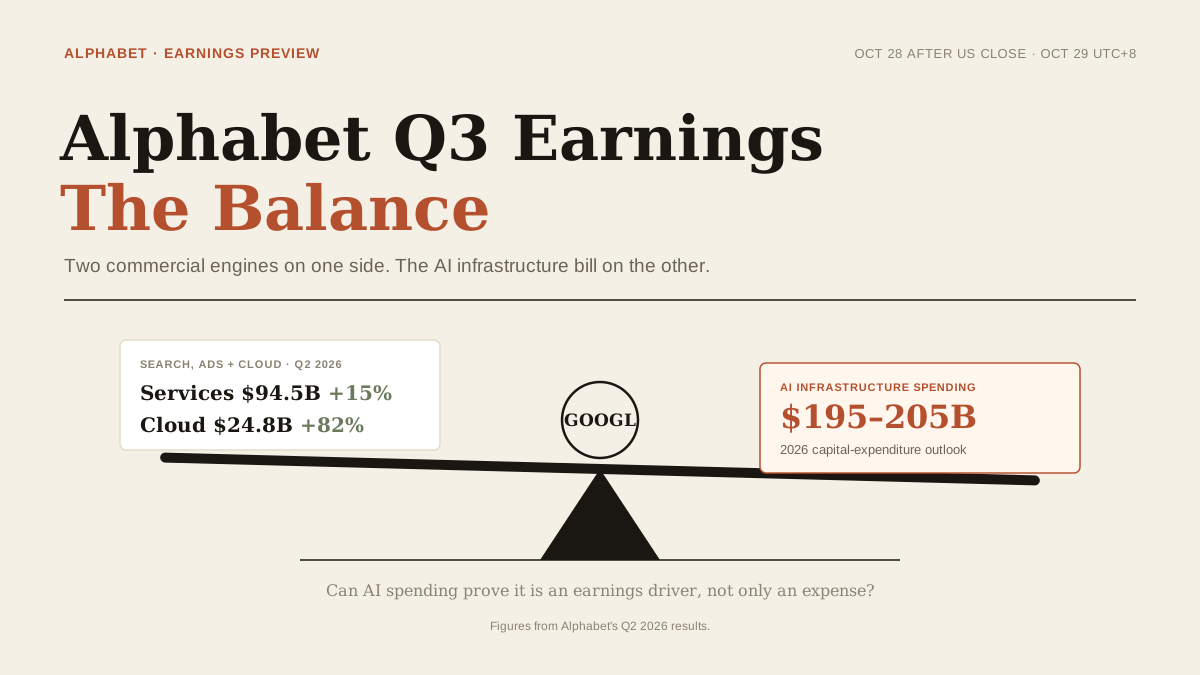
Google Stock Before Alphabet Earnings: Can AI Spending and Search Growth Support GOOGL?
Alphabet reports Q3 2026 results on October 28. See the Search, Google Cloud, AI spending, and guidance signals shaping GOOGL stock.
Fractional Reserve: Reserve Requirement Abolished. Where is the Value?

Anthropic's Revenue Rises to $16.8 Billion Ahead of IPO

‘Is Korea Facing a Second IMF Crisis? The Solution Lies in XRP?’... The Leap of the Crisis Theory by BeInCrypto

ICO, VC Tokens, and Alpha Models: Why They Can't Save the Current Crypto Market?

One Order Book for Dollars and Stablecoins. How It Works

Cyberattack on the ports of Marseille and La Rochelle? Hackers paid 1 dollar in crypto
![[Exclusive] Coinbase Transaction Data Shows 100 Million Trades Misrepresented... Data Analysis Firm Corrects Errors](/public-static/20_9098579959.png?format=avif)
[Exclusive] Coinbase Transaction Data Shows 100 Million Trades Misrepresented... Data Analysis Firm Corrects Errors

Wall Street Morning Report: U.S. Inflation Resurfaces, AI Credit Risks Spread, Chip Stocks Fall for Six Consecutive Days
Arthur Hayes: Focus on Established DeFi Projects with Cash Flow
Anthropic Reports $16.8 Billion Revenue in Q3, IPO Feasibility Strengthened

Hot CPI Lifts Hike Bets; Risk Assets Pull Back | WEEX TradFi Daily(October 15, 2026)
Major indexes closed lower on October 14, with the Nasdaq leading the decline. September unadjusted CPI rose to 3.7% year on year, above forecasts, and core CPI also beat expectations. Traders sharply raised this month’s hike probability to about 43.7% and fully priced two more hikes by the end of January. Chip stocks were sold again. Bitcoin broke below $83,000 and last traded near $81,700, while spot gold and silver fell. Crypto-related stocks were under pressure, but PYTH rose against the tape. October 15 brings PPI, retail sales and key
WEEX Exclusive:Hot CPI Lifts Hike Bets; Risk Assets Pull Back | WEEX TradFi Daily(October 15, 2026)

Sam Price Observes Changes in Bitcoin ETF Net Inflows

G20 warns that stablecoins may lose value even if fully backed
Analysts Bullish on MicroStrategy, Target Price Raised to $240
Bank of America Report Shows $39 Billion Inflow into US Stocks in One Week, Strategists Prefer Risk Aversion
MSCI New Rules Implemented, 14 Crypto Companies Enter Potential Impact List
What Do the New Tesla Roadster Specs Mean for Tesla (TSLA) Stock?
Explore the new Tesla Roadster specs, reservation payments and 2028 production plan, plus what the reveal could mean for Tesla stock and future profits.
Quant (QNT) Price Prediction 2026–2030: Can Bank Adoption Drive a Return to $500?
Spout raises $2M to offer 0% interest loans on Solana


