
More than $34.6 million moved before Tether blockade

 Prefer us on Google


Of 846 selected crypto wallets linked to Iran and regional groups by U.S. or Israeli authorities, 84% traded exclusively or almost exclusively in USDT. Tether claims to have frozen nearly $550 million in Iran-related tokens in 2026, but Senate researchers assert that delays allowed tens of millions of dollars to flow through. The question is whether those delays are isolated incidents.
84% of a selected group of 846 wallets
The preliminary report from Democratic minority staff of the U.S. Senate Permanent Subcommittee on Investigations was released on September 28. The researchers examined 846 wallets that had been sanctioned or marked for seizure by U.S. or Israeli authorities due to ties to Iran or regional groups. The evidence reviewed spans more than five years, up to August 2026.
The 84% figure is not a statement about all Iranian crypto wallets or the share of all USDT transactions that are illegal. The report used 'primarily' for a digital currency when it represented more than 80% of the total transaction value of a wallet. The figures also do not indicate what portion of Iranian sanction evasion occurs via crypto.
USDT can move across different blockchains, but Tether can blacklist addresses as the issuer and prevent tokens from being moved from those addresses. Thus, the discussion revolves not only around the use of the stablecoin but also how quickly addresses are blocked. The rules surrounding USDT and access for European trading platforms are also under scrutiny; the regulation of USDT on European exchanges forms a broader context for this discussion.
Tether cites freezes, researchers point to delays
Tether reported that actions related to USDT froze approximately $550 million in wallets linked by U.S. authorities to the Iranian central bank and Iranian sanction networks in 2026. The company stated that it helped block more than $344 million on two addresses following information from OFAC and other U.S. law enforcement agencies. In July, Tether reported a freeze of over $130 million on four wallets after the Treasury Department added new blockchain addresses to the sanctions list.
These two announced actions together amount to at least $474 million. Tether did not provide a breakdown by wallet that would allow the total amount of approximately $550 million to be fully verified.
Senate staff also examined 39 wallets that the Israeli NBCTF linked in June 2023 to Tawfiq Muhammad Sa'id al-Law, who was later sanctioned by the U.S. Treasury for providing financial services to Hezbollah. Five addresses had already been blocked; the remaining 34 were reportedly frozen only in March 2024. In the interim, according to the researchers' calculations, more than $34.6 million in USDT moved from those wallets.
That amount pertains to this specific group of addresses, not all Iranian wallets. The findings also do not constitute a judicial determination that Tether violated U.S. law. The issue touches on broader questions regarding investigations into Iran-related transactions and sanction compliance among crypto companies, but the cases are not the same.
Blumenthal calls for compliance investigation
Senator Richard Blumenthal, the Democratic vice chair of the subcommittee, has forwarded the findings to the Treasury Department and the Justice Department. He is asking the agencies to investigate whether the delays indicate shortcomings in Tether's anti-money laundering and sanction policies. That referral does not prove that Tether violated the law and does not mean that either department has opened a new investigation.
The report states that Tether received a request from the subcommittee on June 4 for information and documents but had not responded by the time of publication. The company's public statement on September 28 did not directly address the analysis of the 846 wallets or the example of the $34.6 million.
Tether CEO Paolo Ardoino stated that the company acts when authorities provide credible information. He also pointed out that public blockchains give researchers visibility into money flows. A previous audit of Tether's financial position addresses a different question: it does not speak to the timing of individual sanction freezes.
The two series of events also occur in different timeframes. The wallet example from the researchers pertains to a report from 2023 and freezes in 2024; the actions highlighted by Tether took place in 2026. Together, they show that issuers can block large amounts after addresses have been identified, while a delay before blocking may allow for further transactions.
Separately, a U.S. forfeiture case is attempting to seize approximately $61 million in crypto allegedly linked to illegal Iranian oil trade. Prosecutors claim that the broader network moved more than $1.5 billion in proceeds and was involved in sanction evasion and money laundering. That case is separate from the Senate investigation and does not constitute evidence of wrongdoing by Tether. The outstanding question for the departments is whether the delays described by Senate staff were isolated gaps or indicative of broader shortcomings.
-- Price
This content is provided for general informational purposes only and doesn't constitute financial, investment, legal, or tax advice. Any events, rewards, online promotions, or related information mentioned herein should not be considered a recommendation, solicitation, or invitation to purchase, sell, trade, or otherwise deal in any crypto assets. Crypto assets are highly volatile and may result in loss. The availability of WEEX services, products, and related events may vary by region. You are responsible for ensuring that your participation is in accordance with applicable local laws and regulations.
You may also like

Pago Móvil Reaches 63% of Transactions in Venezuela, Competing with USDT

Analysts Bullish on MicroStrategy, Target Price Raised to $240

Bank of America Report Shows $39 Billion Inflow into US Stocks in One Week, Strategists Prefer Risk Aversion

MSCI New Rules Implemented, 14 Crypto Companies Enter Potential Impact List

What Do the New Tesla Roadster Specs Mean for Tesla (TSLA) Stock?
Explore the new Tesla Roadster specs, reservation payments and 2028 production plan, plus what the reveal could mean for Tesla stock and future profits.

Quant (QNT) Price Prediction 2026–2030: Can Bank Adoption Drive a Return to $500?

Spout raises $2M to offer 0% interest loans on Solana

RWA Weekly: Ant Group and HSBC Test Agent Tokenized Payments; Robinhood Explores Tokenized Actively Managed ETFs

BlackRock CEO Larry Fink Flags a Different AI Risk, and It Isn’t the Bubble

Shanghai Supports International Data Center Construction to Facilitate Cross-Border Data Flow

Shanghai Advances National Blockchain Network Construction, Strengthens Cross-Chain Service Capabilities

When Will AI Investments Pay Off? JPMorgan Optimistic About Google and Amazon

What is being said at the tables: the BCRA turns on the dollar vacuum and the city counts the bullets in Javier Milei's bazooka

New Developments in the Blue Sky Ge Rui Case: Bitcoin Rises 200 Times, Can Victims Only Be Compensated at Original Price?
Bitcoin inflows to US set to turn positive in 2026, Chainalysis says
iGaming Tokens Need Real Revenue, Not Just Hype
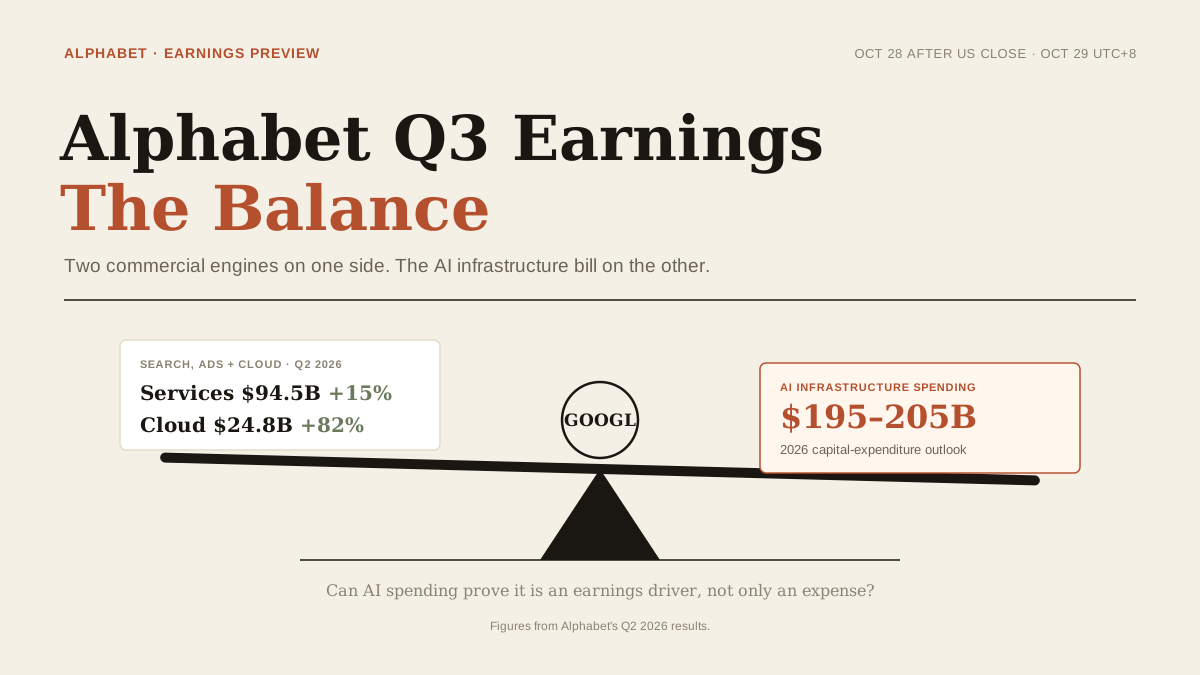
Google Stock Before Alphabet Earnings: Can AI Spending and Search Growth Support GOOGL?
Alphabet reports Q3 2026 results on October 28. See the Search, Google Cloud, AI spending, and guidance signals shaping GOOGL stock.
Fractional Reserve: Reserve Requirement Abolished. Where is the Value?

Anthropic's Revenue Rises to $16.8 Billion Ahead of IPO

‘Is Korea Facing a Second IMF Crisis? The Solution Lies in XRP?’... The Leap of the Crisis Theory by BeInCrypto

ICO, VC Tokens, and Alpha Models: Why They Can't Save the Current Crypto Market?

One Order Book for Dollars and Stablecoins. How It Works

Cyberattack on the ports of Marseille and La Rochelle? Hackers paid 1 dollar in crypto
![[Exclusive] Coinbase Transaction Data Shows 100 Million Trades Misrepresented... Data Analysis Firm Corrects Errors](/public-static/20_9098579959.png?format=avif)
[Exclusive] Coinbase Transaction Data Shows 100 Million Trades Misrepresented... Data Analysis Firm Corrects Errors

Wall Street Morning Report: U.S. Inflation Resurfaces, AI Credit Risks Spread, Chip Stocks Fall for Six Consecutive Days
Arthur Hayes: Focus on Established DeFi Projects with Cash Flow
Anthropic Reports $16.8 Billion Revenue in Q3, IPO Feasibility Strengthened

Hot CPI Lifts Hike Bets; Risk Assets Pull Back | WEEX TradFi Daily(October 15, 2026)
Major indexes closed lower on October 14, with the Nasdaq leading the decline. September unadjusted CPI rose to 3.7% year on year, above forecasts, and core CPI also beat expectations. Traders sharply raised this month’s hike probability to about 43.7% and fully priced two more hikes by the end of January. Chip stocks were sold again. Bitcoin broke below $83,000 and last traded near $81,700, while spot gold and silver fell. Crypto-related stocks were under pressure, but PYTH rose against the tape. October 15 brings PPI, retail sales and key
WEEX Exclusive:Hot CPI Lifts Hike Bets; Risk Assets Pull Back | WEEX TradFi Daily(October 15, 2026)

Sam Price Observes Changes in Bitcoin ETF Net Inflows
Pago Móvil Reaches 63% of Transactions in Venezuela, Competing with USDT
Analysts Bullish on MicroStrategy, Target Price Raised to $240
Bank of America Report Shows $39 Billion Inflow into US Stocks in One Week, Strategists Prefer Risk Aversion
MSCI New Rules Implemented, 14 Crypto Companies Enter Potential Impact List
What Do the New Tesla Roadster Specs Mean for Tesla (TSLA) Stock?
Explore the new Tesla Roadster specs, reservation payments and 2028 production plan, plus what the reveal could mean for Tesla stock and future profits.
Quant (QNT) Price Prediction 2026–2030: Can Bank Adoption Drive a Return to $500?


