
Ripple and DriveWealth Link Stablecoin Settlement to Global Brokerage

 Prefer us on Google


TL;DR: Brokerage infrastructure provider DriveWealth is working with Ripple to incorporate stablecoin settlement and digital-asset capabilities across its global business. The official source also identifies specific limits or future steps, so implementation and market impact should not be assumed.
Brokerage infrastructure provider DriveWealth is working with Ripple to incorporate stablecoin settlement and digital-asset capabilities across its global business. For digital-asset markets, the important issue is less the announcement in isolation than the channel through which it could affect users, capital or network activity. The latest development deserves attention, but its relevance depends on the facts published by the organisation behind it and the work still required to make it matter.
What the primary announcement establishes
The companies announced the collaboration on October 14, with European RLUSD settlement integration and US expansion planned. DriveWealth is also integrating Ripple Payments for cross-border partner flows and exploring Ripple custody solutions for Europe.
The parties are considering equity financing through Ripple Prime, in addition to their settlement and payment work. DriveWealth says it powers investing experiences for more than 100 partners, but the source does not state that every partner uses the new digital-asset integrations.
Why this could matter for crypto markets
Cross-border brokerage is a useful stress test for stablecoin settlement because an investment trade and its underlying cash movement do not always occur on the same timetable. Closing that gap could improve capital efficiency, but only if the partners connect compliance, liquidity, reconciliation and ordinary bank money in a controlled way. New payment rails alone do not remove market risk or the need for dependable intermediaries.
For financial institutions, a technical link is only the beginning. They must also settle liability, account for funds, control access and recover from a failed transfer. That is why announced partnerships are best judged by operating detail rather than by the number of logos appearing in a release. That distinction matters to investors trying to separate a plausible structural change from a headline that may not immediately move price or onchain activity.
The limits of the headline
Some components remain plans or explorations. The release does not provide system-wide transaction volumes, revenue or a commitment that every DriveWealth client will receive RLUSD access immediately.
Consider the difference between holding a token and using it in an everyday business process. Treasury teams and trading desks need reconciliation, internal approvals, liquidity at the point of conversion and an auditable record. Projects that solve those edges may have more practical impact than projects that simply shorten onchain confirmation times.
-- Price
The wider context
DriveWealth Ripple settlement partnership sits within a wider shift toward cross-border settlement. This area has a recurring challenge: the benefits are easiest to describe before the operational details are complete. Different stakeholders measure success differently. A user wants clarity and predictable access; an operator wants reliable controls and manageable costs; an institution wants accountability if something fails. Those perspectives can be in tension, and the source announcement should be read with that in mind.
The distinction also shapes how to read future updates. A new partnership, proposal or software version is a verifiable milestone. Adoption, consistent performance and financial effects require additional evidence. That is why follow-up reporting should distinguish released features, planned features and measured use rather than combining them into one claim.
What to watch next
Watch for production availability, geographic rollouts, named partners, realised costs and whether funding time improves in normal brokerage operations.
Adoption is rarely a single launch moment. It typically moves from a commercial agreement to limited implementation, onboarding, real transaction volume and eventually routine usage. Keeping those stages separate matters when evaluating institutional blockchain announcements. The next evidence should come from official implementation updates and measurable outcomes, not from assuming that a news release guarantees adoption or a token-price response.
Primary source: DriveWealth Ripple settlement partnership (published 2026-10-14).
This article was written by the News Desk and edited by Samuel Rae.
This content is provided for general informational purposes only and doesn't constitute financial, investment, legal, or tax advice. Any events, rewards, online promotions, or related information mentioned herein should not be considered a recommendation, solicitation, or invitation to purchase, sell, trade, or otherwise deal in any crypto assets. Crypto assets are highly volatile and may result in loss. The availability of WEEX services, products, and related events may vary by region. You are responsible for ensuring that your participation is in accordance with applicable local laws and regulations.
You may also like

TradingBeats Launches New Version, Upgraded to Information Stream Format

Is Trump Media selling Bitcoin? 4,259 BTC moved to Crypto.com

Trading Volatility Without Guessing Price Movements: What New Strategies Does Paragon's Power Perps Bring?

Gold Token 2026: Why Move Gold on Chain?

Economy: The People's Bank of China Tightens Currency Rules to Calm the Yuan

Trust Wallet user reports losing funds without approving transaction

HashKey Uses Standard Chartered's Digital Deposits for Money Movement

Has Wall Street Broken the Mechanism That Made Bitcoin Soar?
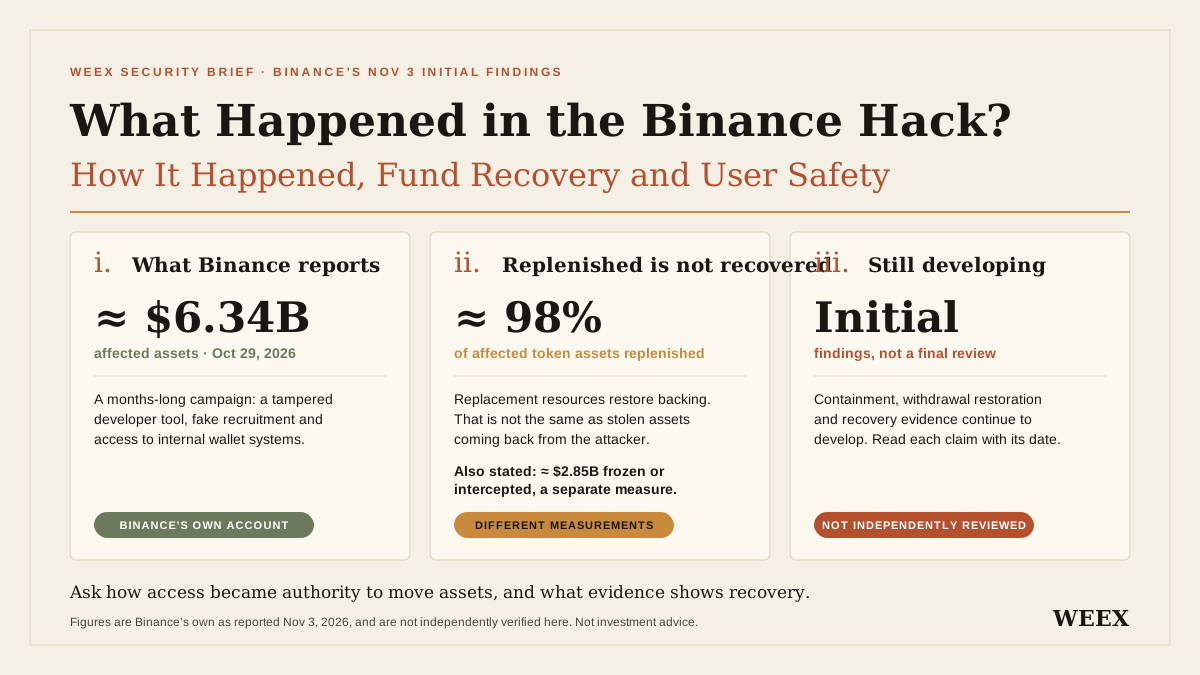
What Happened in the Binance Hack? How It Happened, Fund Recovery and User Safety
What happened in the Binance hack? Review the attack timeline, latest fund replenishment, recovery limits and practical steps to protect your account.
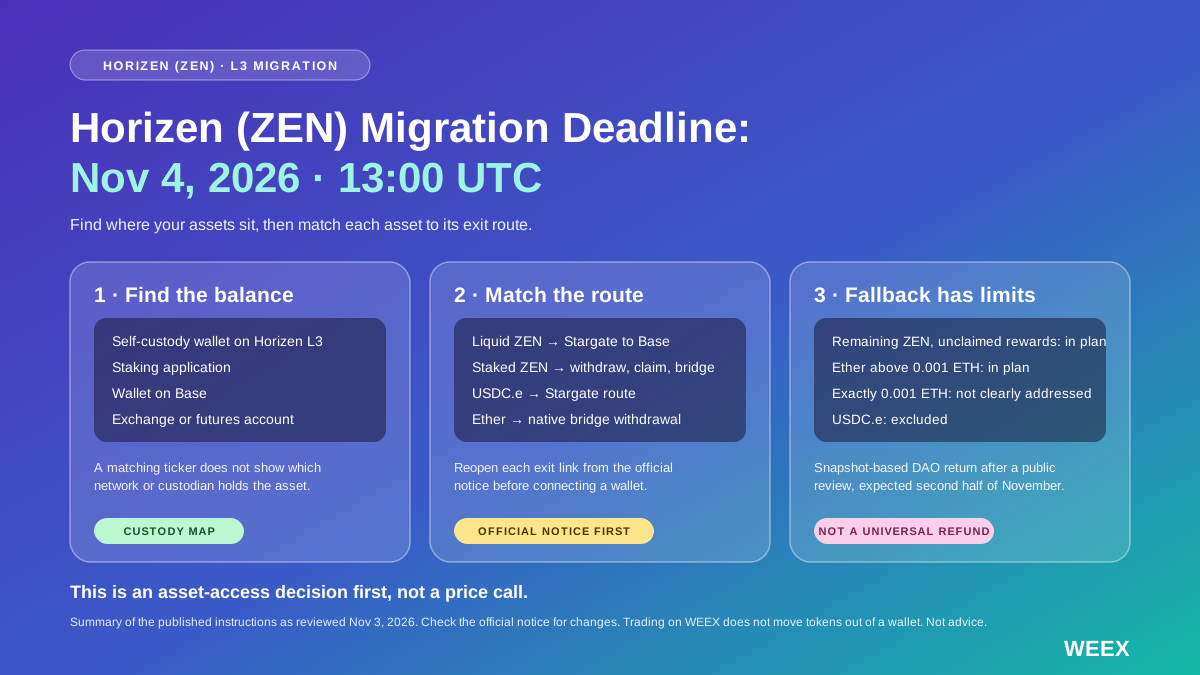
Horizen (ZEN) Migration Deadline: What to Move Before November 4 and What Happens If You Miss It
Horizen (ZEN) migration closes November 4. Check asset-specific bridge routes, wallet requirements, recovery exclusions and what to do if you miss it.

Bitcoin’s year-end liquidity hopes face a projected $150 billion Treasury cash rebuild

DMG Says Client Assets Are Secure and Highlights Layered Transaction Controls
Solana study finds wider spreads outside aggregators at five of six sampled pools
Crypto: Gate Freezes Two Accounts Linked to Binance Hack

BlackRock’s Ethereum fund sheds 580K ETH as monthly exits mount

How T7X Is Building the Infrastructure for a New Era of Capital Markets

The End of the Seasonality Myth. Why September and October Surprised Investors?

Hong Kong plans stablecoin trials for tokenized government debt

Ownership of Bitcoin in the Qian Zhimin Case and Victim Compensation

Polygon expands US banking access to Solana's 15 billion stablecoin market

Sui Puts Enforced Spending Limits at the Center of Its AI-Agent Design

Apple Reclaims Top Market Cap as Silver Nears $50: WEEX TradFi Market Brief
Vitalik's Latest Thoughts: We Need a Digital Minimalism Movement

RLUSD supply fell 29% on XRPL. One XRP trading pool barely changed

Mercado Bitcoin Plans Sui Asset Access in Brazil With Lending and Tokenization Links
Bitcoin Volatility Calendar: Which Events Really Shake the Market?

The decline of gold could signal further tensions, according to Peter Schiff
Bitcoin Turns 18; Will Satoshi's Legacy Stand the Test of Time?

Polygon Completes Coinme Acquisition to Expand Regulated Fiat Payment Rails
The Need for Institutionalization of Market Makers Between Liquidity Provision and Price Manipulation
TradingBeats Launches New Version, Upgraded to Information Stream Format
Is Trump Media selling Bitcoin? 4,259 BTC moved to Crypto.com
Trading Volatility Without Guessing Price Movements: What New Strategies Does Paragon's Power Perps Bring?
Gold Token 2026: Why Move Gold on Chain?
Economy: The People's Bank of China Tightens Currency Rules to Calm the Yuan
Trust Wallet user reports losing funds without approving transaction





