
What Happens When the AI Bubble Bursts? MIT University Responds

 Prefer us on Google


The surge in investment in artificial intelligence has become one of the largest spending waves in technology history, but a new study warns that if these investments do not lead to the expected productivity growth, the bursting of the AI bubble could cause widespread damage to financial markets. According to this study, large tech companies need to increase their productivity by 2.7 times by 2030 to break even on their investments.
According to Mihan Blockchain, Jessica Wachter, a finance professor at Wharton and former chief economist of the U.S. Securities and Exchange Commission (SEC), estimates that Alphabet, Microsoft, Amazon, Meta, and Oracle will spend nearly $1.1 trillion on data centers by 2027. These calculations also take into account capital costs, a 15% return, and infrastructure depreciation.
What Happens If the AI Bubble Bursts?
Wachter and her colleague believe that large tech companies need a 2.7-fold increase in productivity by 2030 to justify these costs. If this growth does not materialize, the massive capital spent on AI infrastructure could lead to unprecedented misallocation of capital. Wachter described this situation as "the largest misallocation of capital in history."
Signs of pressure from these investments on companies' financial status are also evident. Alphabet faced a $5.9 billion shortfall in free cash flow in the last quarter; an occurrence that has not happened since the company went public in 2004.
Debt Transfers AI Bubble Risk to the Market
The potential problem is not limited to tech companies. Morgan Stanley estimates that more than half of the $2.9 trillion planned spending on data centers by 2028 will be financed through external funding. Thus, if the returns on AI investments decline, part of the risk could be transferred to the credit market and investors.
In one example, Meta transferred 80% of the shares of the Hyperion data center in Louisiana to the private equity firm Blue Owl Capital. Stein van Nuyvenburch, a professor at Columbia Business School, warned that such debts are finding their way into more parts of the financial market through pension funds and private credit instruments.
Gary Gensler, former SEC chair and professor at MIT Sloan School of Management, also believes that this wave of investment will eventually face a period of retreat, although the timing is uncertain; he described this situation as "a common bet of the capital market and the economy."
In the cryptocurrency market, Arthur Hayes, a market strategist, has proposed a different scenario. He believes that if a credit crisis arises from the AI bubble, the Federal Reserve may inject more liquidity into the economy to counter its effects; a scenario that, from Hayes's perspective, could drive the price of Bitcoin to one million dollars.
However, it remains unclear how and when this bubble might deflate. The main issue is whether the productivity growth resulting from AI can keep pace with the massive investments made in its infrastructure.
-- Price
This content is provided for general informational purposes only and doesn't constitute financial, investment, legal, or tax advice. Any events, rewards, online promotions, or related information mentioned herein should not be considered a recommendation, solicitation, or invitation to purchase, sell, trade, or otherwise deal in any crypto assets. Crypto assets are highly volatile and may result in loss. The availability of WEEX services, products, and related events may vary by region. You are responsible for ensuring that your participation is in accordance with applicable local laws and regulations.
You may also like

Analysts Bullish on MicroStrategy, Target Price Raised to $240

Bank of America Report Shows $39 Billion Inflow into US Stocks in One Week, Strategists Prefer Risk Aversion

MSCI New Rules Implemented, 14 Crypto Companies Enter Potential Impact List

What Do the New Tesla Roadster Specs Mean for Tesla (TSLA) Stock?
Explore the new Tesla Roadster specs, reservation payments and 2028 production plan, plus what the reveal could mean for Tesla stock and future profits.

Quant (QNT) Price Prediction 2026–2030: Can Bank Adoption Drive a Return to $500?

Spout raises $2M to offer 0% interest loans on Solana

RWA Weekly: Ant Group and HSBC Test Agent Tokenized Payments; Robinhood Explores Tokenized Actively Managed ETFs

BlackRock CEO Larry Fink Flags a Different AI Risk, and It Isn’t the Bubble

Shanghai Supports International Data Center Construction to Facilitate Cross-Border Data Flow

Shanghai Advances National Blockchain Network Construction, Strengthens Cross-Chain Service Capabilities

When Will AI Investments Pay Off? JPMorgan Optimistic About Google and Amazon

What is being said at the tables: the BCRA turns on the dollar vacuum and the city counts the bullets in Javier Milei's bazooka

New Developments in the Blue Sky Ge Rui Case: Bitcoin Rises 200 Times, Can Victims Only Be Compensated at Original Price?
Bitcoin inflows to US set to turn positive in 2026, Chainalysis says
iGaming Tokens Need Real Revenue, Not Just Hype
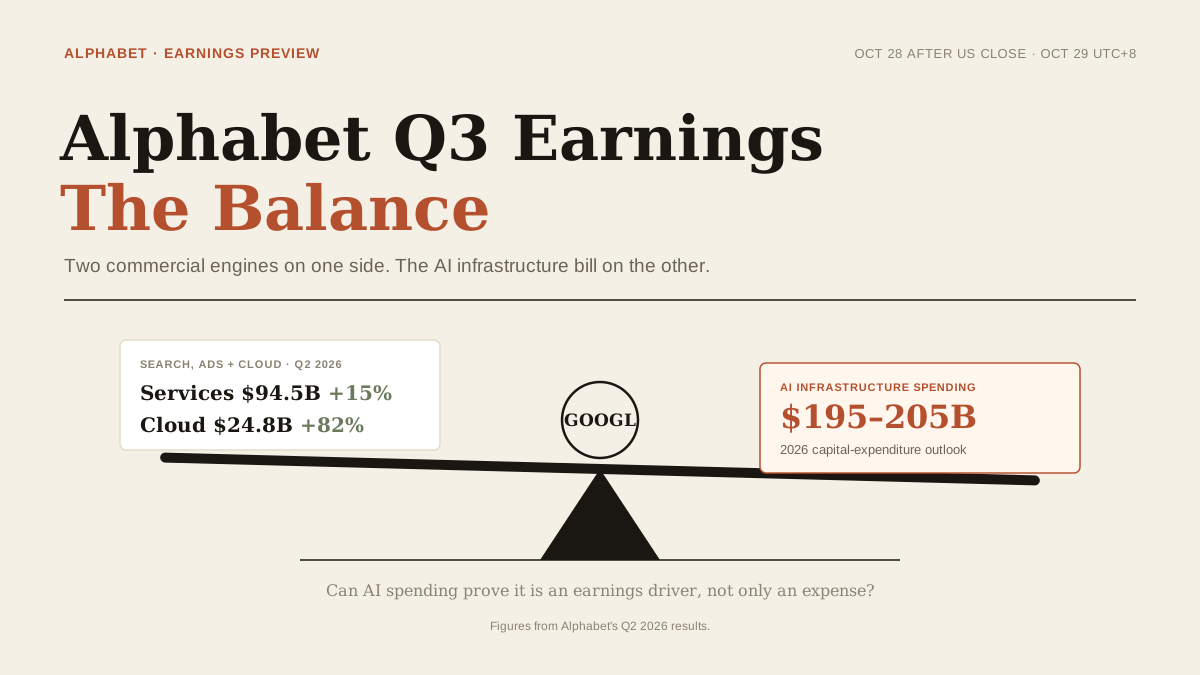
Google Stock Before Alphabet Earnings: Can AI Spending and Search Growth Support GOOGL?
Alphabet reports Q3 2026 results on October 28. See the Search, Google Cloud, AI spending, and guidance signals shaping GOOGL stock.
Fractional Reserve: Reserve Requirement Abolished. Where is the Value?

Anthropic's Revenue Rises to $16.8 Billion Ahead of IPO

‘Is Korea Facing a Second IMF Crisis? The Solution Lies in XRP?’... The Leap of the Crisis Theory by BeInCrypto

ICO, VC Tokens, and Alpha Models: Why They Can't Save the Current Crypto Market?

One Order Book for Dollars and Stablecoins. How It Works

Cyberattack on the ports of Marseille and La Rochelle? Hackers paid 1 dollar in crypto
![[Exclusive] Coinbase Transaction Data Shows 100 Million Trades Misrepresented... Data Analysis Firm Corrects Errors](/public-static/20_9098579959.png?format=avif)
[Exclusive] Coinbase Transaction Data Shows 100 Million Trades Misrepresented... Data Analysis Firm Corrects Errors

Wall Street Morning Report: U.S. Inflation Resurfaces, AI Credit Risks Spread, Chip Stocks Fall for Six Consecutive Days
Arthur Hayes: Focus on Established DeFi Projects with Cash Flow
Anthropic Reports $16.8 Billion Revenue in Q3, IPO Feasibility Strengthened

Hot CPI Lifts Hike Bets; Risk Assets Pull Back | WEEX TradFi Daily(October 15, 2026)
Major indexes closed lower on October 14, with the Nasdaq leading the decline. September unadjusted CPI rose to 3.7% year on year, above forecasts, and core CPI also beat expectations. Traders sharply raised this month’s hike probability to about 43.7% and fully priced two more hikes by the end of January. Chip stocks were sold again. Bitcoin broke below $83,000 and last traded near $81,700, while spot gold and silver fell. Crypto-related stocks were under pressure, but PYTH rose against the tape. October 15 brings PPI, retail sales and key
WEEX Exclusive:Hot CPI Lifts Hike Bets; Risk Assets Pull Back | WEEX TradFi Daily(October 15, 2026)

Sam Price Observes Changes in Bitcoin ETF Net Inflows

G20 warns that stablecoins may lose value even if fully backed
Analysts Bullish on MicroStrategy, Target Price Raised to $240
Bank of America Report Shows $39 Billion Inflow into US Stocks in One Week, Strategists Prefer Risk Aversion
MSCI New Rules Implemented, 14 Crypto Companies Enter Potential Impact List
What Do the New Tesla Roadster Specs Mean for Tesla (TSLA) Stock?
Explore the new Tesla Roadster specs, reservation payments and 2028 production plan, plus what the reveal could mean for Tesla stock and future profits.
Quant (QNT) Price Prediction 2026–2030: Can Bank Adoption Drive a Return to $500?
Spout raises $2M to offer 0% interest loans on Solana


