
WEEX Convert Fees: What Zero-Fee Conversion Really Costs You

 Prefer us on Google

WEEX Convert fees are zero: the product charges no trading fee on a conversion, and the amount you see before confirming is the amount the system intends to credit. That does not mean a conversion is free of cost. The price you pay is built into the exchange rate on the quote, and on larger orders that rate can move slightly while the order executes. This guide breaks down where the cost actually sits, how it stacks up against a regular spot trade, and how to read a quote before you tap confirm.
Does WEEX Convert Charge a Fee?
No. As of October 16, 2026, the WEEX Convert page labels the product "0 fees", and its own FAQ states that Convert runs on a zero-fee model. There is no maker fee, no taker fee and no separate line item deducted after the swap.
What you get instead is a preview. After you choose the two assets and enter an amount, the Preview step shows the estimated amount you will receive. That figure is already net of everything, because there is nothing left to subtract. If you convert 500 USDT and the preview says you will receive a given amount of ETH, you are not going to see a fee taken off that ETH afterwards.
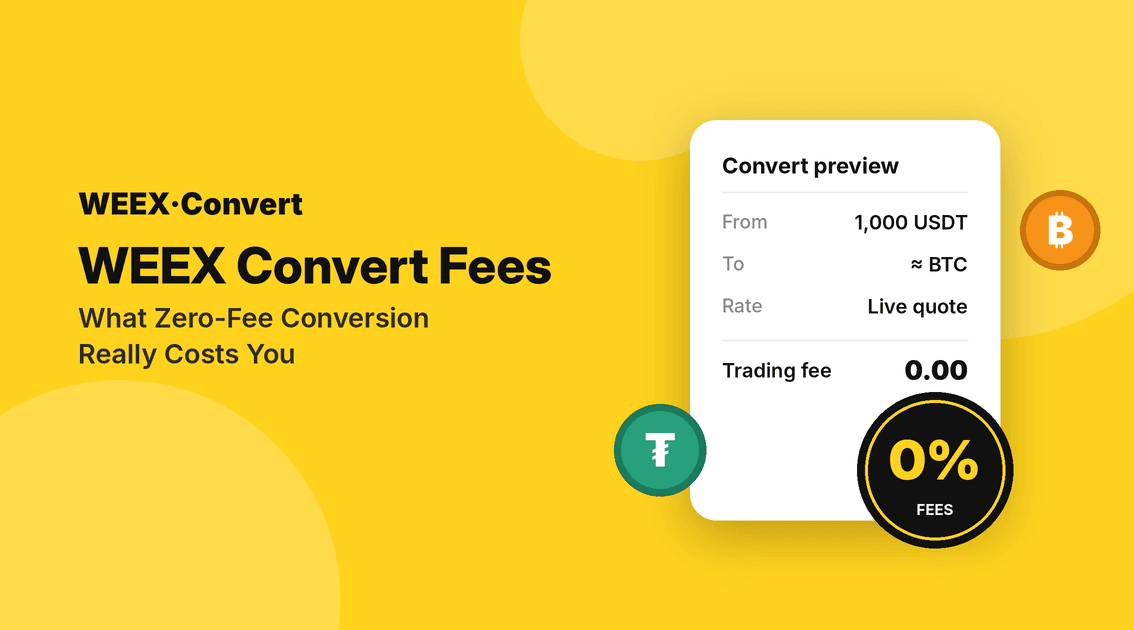
The one caveat WEEX spells out is size. Market liquidity changes in real time, so larger conversions can see small price differences during execution. For an everyday swap, the preview is what you get. For a large one, treat it as a very close estimate.
Where the Real Cost Sits: The Quoted Exchange Rate
Every way of swapping one coin for another has a cost, and it shows up somewhere. On an order book, part of it is an explicit fee and part of it is the spread you cross and any slippage on the way through the book. In Convert, there is no explicit fee, so the entire cost is expressed through the rate on the quote.
That is why the useful question is not "is there a fee?" but "is this rate fair right now?" The system builds the quote from current market conditions and aims to give the best available rate at that moment. In practice, the rate on a liquid pair such as USDT to BTC or USDT to ETH tends to sit close to the spot market price. On thinner pairs, the gap between the quote and the last traded price can be wider, because the liquidity behind the quote is thinner too.
The better reading of "zero fee" is this: the cost is not hidden, it is bundled. You see one number, the amount you will receive, and that number already reflects the full price of the swap.
WEEX Convert vs Spot Trading Fees: A Worked Example
Spot trading on WEEX has a published fee schedule. According to the WEEX trading fees guide, the standard VIP 0 rate is 0.100% for both makers and takers, falling with higher VIP tiers. Here is how a 1,000 USDT purchase of BTC looks on each route, using illustrative numbers.
- Spot market order. You pay a 0.1% taker fee, which is 1 USDT on a 1,000 USDT order. On top of that, a market order crosses the spread and can fill across several price levels if the book is thin. On a deep pair like BTC-USDT that extra cost is usually small, but it is real.
- Spot limit order. If you rest a limit order and it fills as a maker, you still pay 0.1% at VIP 0, but you control the price. The trade-off is that it may not fill at all.
- Convert. You pay no fee. You accept the rate on the quote, and you know the exact amount of BTC before confirming.
So which one is cheaper? It depends on the gap between the Convert rate and the price you would actually achieve on spot after the fee. A simple way to check: take the quote's implied price (USDT spent divided by BTC received) and compare it with the current BTC-USDT spot price plus 0.1%. If the Convert price is at or below that line, Convert is the cheaper route for that trade. If you are new to order types, the WEEX guide on how to start spot trading explains market and limit orders step by step.
-- Price
How to Check a WEEX Convert Quote Before You Confirm
Because the rate is the cost, a ten-second check on the rate does most of the work.
- Run the implied price. Divide what you spend by what you receive. For USDT to BTC, that gives you the effective BTC price you are paying.
- Compare it with the live spot price. Open the BTC-USDT spot market in another tab. A Convert price within a small fraction of a percent of spot on a major pair is normal.
- Mind the clock. WEEX says quotes are usually locked for eight seconds. If you take longer than that, request a fresh quote rather than assuming the old one still stands.
- Size sensibly. If a large conversion shows a rate noticeably worse than spot, splitting it into smaller conversions may bring the rate closer to the market.
What traders usually miss is the reverse trip. A round trip, say USDT to ETH and back, costs you the rate gap twice. Zero fees make it feel free to flip between assets, but each conversion is priced on its own quote.
When Zero-Fee Convert Is the Better Choice
Convert earns its place in a few specific situations:
- Small amounts. On a 50 USDT swap, a fixed 0.1% fee is tiny in absolute terms, but Convert also removes the hassle of order sizes and minimum lot rules. It is built to handle small balances.
- One-off swaps. If you just need to move from USDT into BTC or ETH once, without watching an order book, a quote you can accept in one tap is simpler.
- Certainty over price control. You know the result before you commit. With a market order, you learn the final fill after the fact.
Spot remains the better tool when you want to set your own price with a limit order, trade frequently enough to benefit from VIP fee tiers, or execute very large orders where you prefer to manage the fill yourself.
Bottom Line on WEEX Convert Fees
WEEX Convert fees are zero, and that claim holds up: nothing is deducted after the swap and the preview shows the full result. The cost of a conversion lives in the quoted rate, so the habit worth building is checking that rate against the spot price before you confirm. For quick, small or one-off swaps, that makes Convert one of the simplest ways to change assets on WEEX. To compare a live quote yourself, open WEEX Convert and run the preview on the pair you need.
FAQ
1. Does WEEX charge any hidden fee on Convert?
No separate fee is charged. The amount shown in the preview already reflects the full cost of the swap, which is built into the quoted exchange rate.
2. Is WEEX Convert cheaper than spot trading?
It depends on the pair and size. Compare the quote's implied price with the spot price plus the 0.1% VIP 0 fee. On liquid pairs and small amounts, Convert is often competitive.
3. Why did I receive slightly less than the preview on a big conversion?
WEEX notes that larger amounts can see small price changes during execution because liquidity shifts in real time. Smaller conversions stay closer to the preview.
4. Do VIP levels lower WEEX Convert fees?
Convert already charges zero fees, so there is nothing for a VIP tier to discount. VIP tiers apply to spot and futures trading fees.
This content is provided for general informational purposes only and doesn't constitute financial, investment, legal, or tax advice. Any events, rewards, online promotions, or related information mentioned herein should not be considered a recommendation, solicitation, or invitation to purchase, sell, trade, or otherwise deal in any crypto assets. Crypto assets are highly volatile and may result in loss. The availability of WEEX services, products, and related events may vary by region. You are responsible for ensuring that your participation is in accordance with applicable local laws and regulations.
You may also like
WEEX Convert Quote: How the 8-Second Price Lock Really Works
WEEX Convert Limits: Minimum and Maximum Amounts Explained
How to Check a WEEX Convert Order: History, Rate and Status
USDC Significant EMT Status in the EU: What Changes on November 12 Under MiCA
Walrus (WAL) Jumps 30%: Sui Storage Token Rallies on AI Data
Bitcoin Price After Hot CPI: Why BTC Is Pinned Near $82,000
What Is a Limit Order? How It Works and When to Use It
Best Crypto Miner for Beginners: What to Check on Cost, Power, Hashprice and Profit Before You Buy
Limit Order vs Market Order: Which One to Use When Trading Crypto
What Is a Limit Order? How It Works in Crypto With BTC Examples
Stop Limit Order: How It Works and Why It Can Fail to Fill
Best Crypto Platform for Beginners: Pick by Goal, Not Brand

Best Crypto Podcasts for Beginners: A 4-Week Listening Plan
How to Buy Crypto Anonymously: 5 Methods, Real Costs and Limits
Will Bitcoin Break $87,000 This Week? CPI, Fed Speakers and ETF Outflows to Watch
Conflux (CFX) Price Jumps on China's National Blockchain Network Plan: Does the Policy Actually Name CFX?
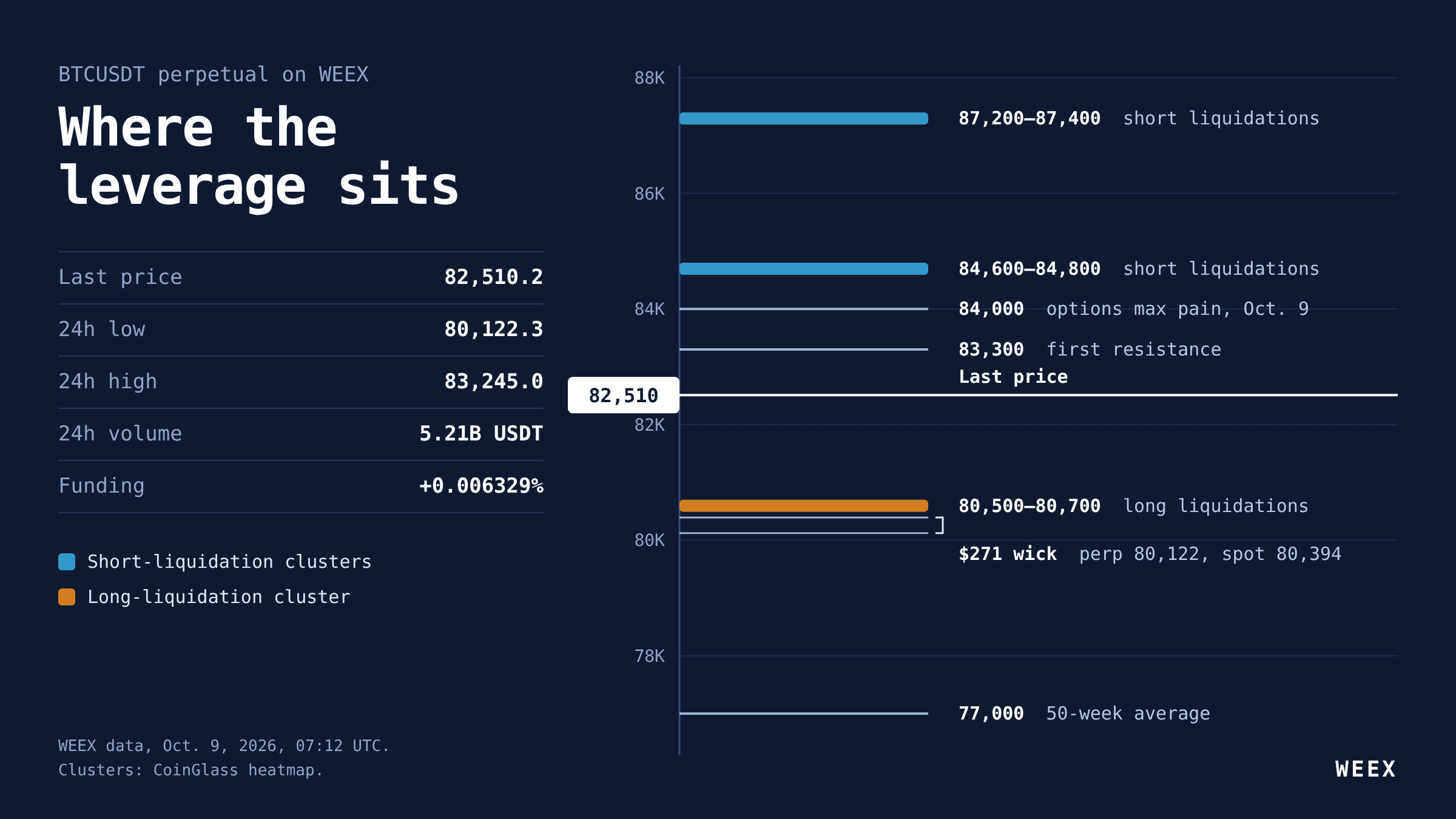
BTC Futures Analysis: $80K Held, but Longs Are Still Paying Up
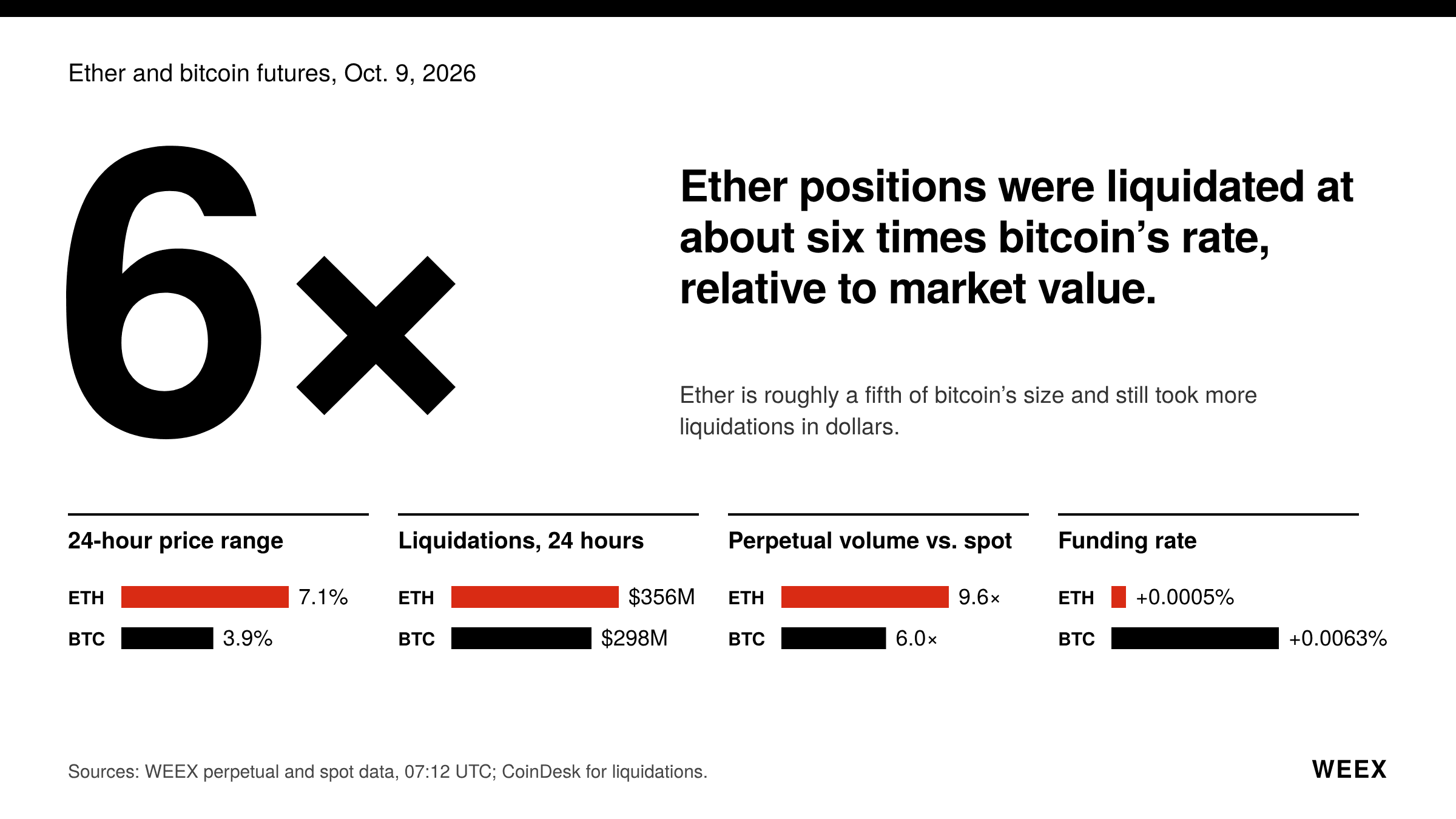
ETH Futures: Why Ether Is Falling Faster Than Bitcoin This Week
ENA Token Price Drops After October 5 Unlock: What Happened to Ethena?
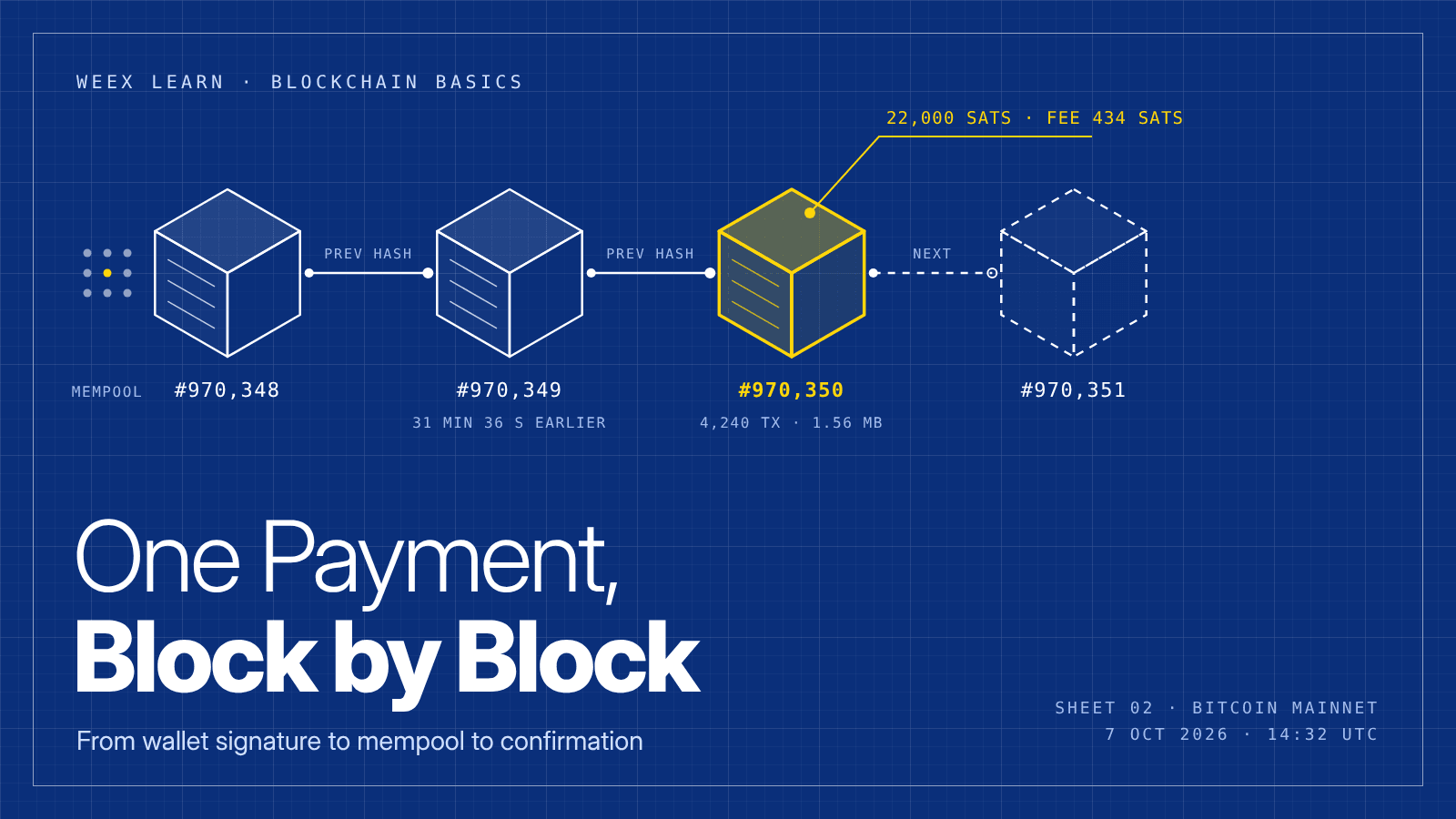
What Is Blockchain and How Does It Work? One Real Payment Traced

How to Buy Crypto With a Prepaid Card: Step-by-Step Guide
Best Crypto Trading Strategies for Beginners: What to Know Before You Trade
LayerZero Unlock October 2026: Can ZRO Hold $2 Amid Whale Inflows?
How to Buy Crypto With Apple Pay in 5 Steps: Why Your Bank May Decline the Payment
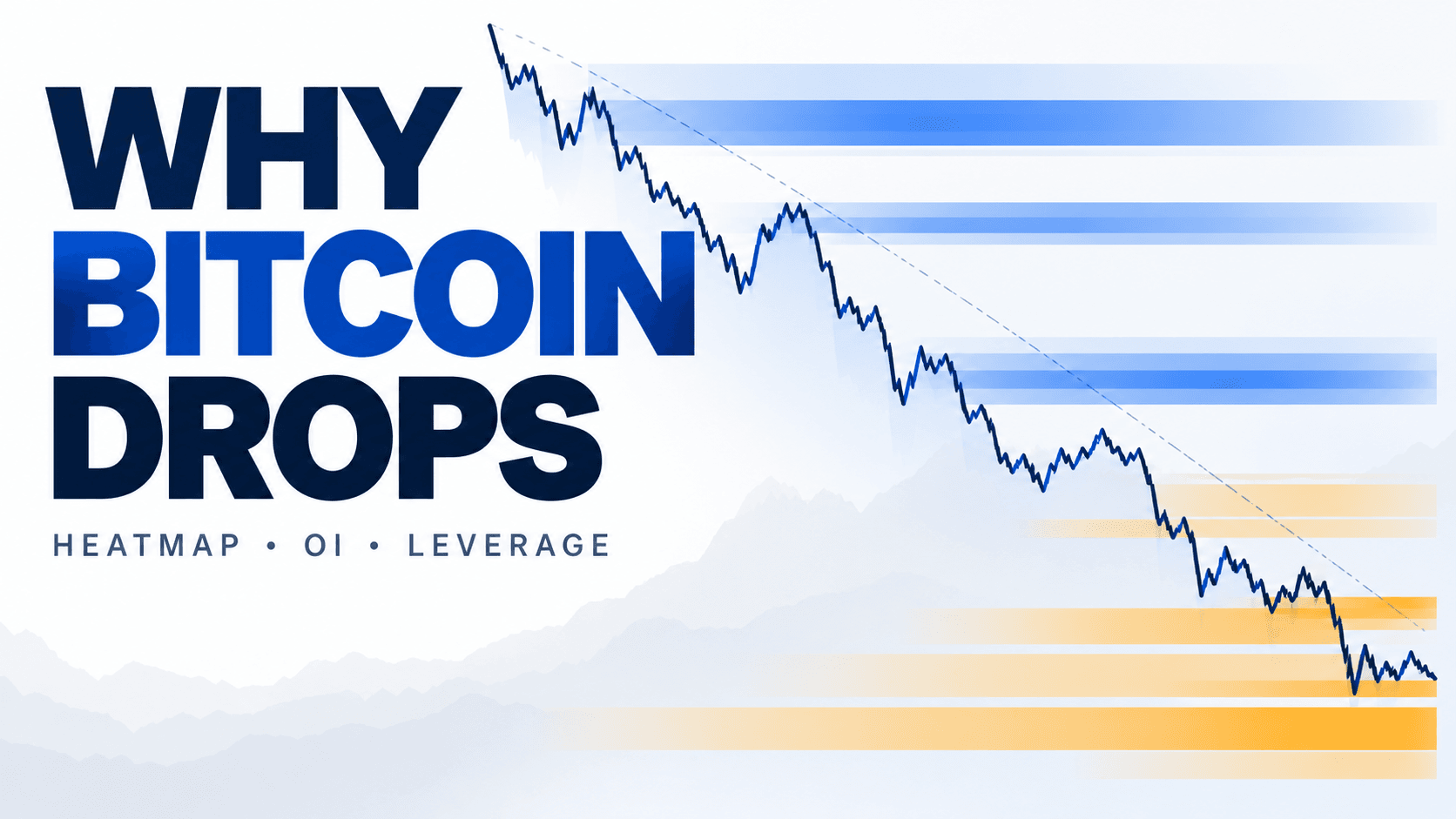
Why Does Bitcoin (BTC) Drop? How to Read a BTC Liquidation Heatmap Without Guessing the Bottom
Best Crypto Wallet App in 2026: How to Choose Between Hot, Cold, Custodial, and Web3 Wallets
What Is Blockchain and How Does It Work? One Real Block Explained
Trading Psychology for Beginners: The Math Behind Your Emotions
What Is Blockchain and How Does It Work? A Transaction Traced
Anonymous Crypto Wallet: What Still Protects Your Privacy in 2026
WEEX Convert Quote: How the 8-Second Price Lock Really Works
WEEX Convert Limits: Minimum and Maximum Amounts Explained
How to Check a WEEX Convert Order: History, Rate and Status
USDC Significant EMT Status in the EU: What Changes on November 12 Under MiCA
Walrus (WAL) Jumps 30%: Sui Storage Token Rallies on AI Data
Bitcoin Price After Hot CPI: Why BTC Is Pinned Near $82,000


