
BCRA has already purchased over $16 billion this year, but reserves fell due to a payment to the IMF

 Prefer us on Google


The dollar purchases by the Central Bank (BCRA) surpassed $16 billion this Thursday during 2026, after acquiring another $42 million, on a day when the supply of foreign currency once again outweighed the demand for coverage. However, gross international reserves recorded a sharp decline, affected by a payment to the International Monetary Fund (IMF), and ended again below $50 billion.
The monetary authority thus completed its second consecutive round with a buying balance, after starting November with two days without intervention. The acquisitions reached $51 million for the month, while the reported annual total reached $16.019 billion. Although it represents a recovery compared to the beginning of the week, the daily average for November remains at just $13 million, well below the $66 million of October.
The result coincided with a higher exchange activity. In the spot segment, $754.9 million were traded, compared to $698.3 million on Wednesday, while the BCRA's buying participation represented approximately 6% of the total volume. The improvement in supply allowed the Central Bank to increase acquisitions compared to the $9 million of the previous day, without preventing a new drop in the wholesale dollar.
However, gross reserves decreased by $793 million, down to $49.642 billion, despite the positive result of the official intervention. According to official sources from the BCRA explained to Ámbito, the monetary authority made a payment of $880 million to the International Monetary Fund (IMF), whose negative impact outweighed the favorable effect of foreign currency purchases and the revaluation of some international assets.
In particular, gold rose by 0.90%, with an estimated positive contribution of $80 million to the reserves. In contrast, the dollar index increased by 0.05%, while the euro depreciated by 0.06% and the pound fell by 0.13%. Meanwhile, the yuan and yen appreciated by 0.07% and 0.40%, respectively.
The dollar fell again and BCRA took advantage of the recovery in supply
The wholesale dollar fell another $0.50 and closed at $1,545.50, on a day of greater activity that helped moderate the exchange pressure recorded at the beginning of November. Although the demand for coverage reappeared during the early operations, it lost intensity as the session progressed and allowed a recovery in supply.
The quotation had reached a maximum of $1,549.50 during the morning, about $3.50 above the previous close. However, the inflow of foreign currency began to gain prominence and brought prices down to a minimum of $1,543.50 during the afternoon. A slight recovery at the end left the wholesale rate just above that level, still far from the historical highs recorded at the beginning of the week.
The movement occurred in a context of high activity, with $754.9 million traded in spot and $1.382 billion in futures, in a session that was also conditioned by the upcoming bank holiday and the coverage needs due to a reduced operations calendar.
In the weekly total, the wholesale dollar increased by $11.50, above the $4.50 recorded during the previous week. Thus, despite the corrections of the last few days, the exchange rate ended above the October close, in a scenario characterized by higher demand for coverage and international financial volatility.
Meanwhile, interest rates in pesos continued to decline. The TAMAR fell from 24% to 23.56% nominal annual, while the BADLAR decreased from 22.75% to 21.50%. The reduction in yields coincided with a moderation of the official dollar, although it also implies a lower return on deposits in local currency against potential depreciation expectations.
Looking ahead, the exchange dynamics will be conditioned by the fewer number of operating days and the uncertainty of international markets. The Argentine bank holiday this Friday will be joined by the US holiday next Wednesday, which could alter flows and financial operations.
In this context, the recovery of BCRA purchases represents a favorable signal compared to the beginning of November, but it is still not enough to restore the pace observed during October. The main challenge will be to maintain a surplus of foreign currency that allows continued dollar purchases while external payments continue to condition the evolution of reserves, especially in light of the financial commitments expected for 2027.
-- Price
This content is provided for general informational purposes only and doesn't constitute financial, investment, legal, or tax advice. Any events, rewards, online promotions, or related information mentioned herein should not be considered a recommendation, solicitation, or invitation to purchase, sell, trade, or otherwise deal in any crypto assets. Crypto assets are highly volatile and may result in loss. The availability of WEEX services, products, and related events may vary by region. You are responsible for ensuring that your participation is in accordance with applicable local laws and regulations.
You may also like
Tokenized collateral brings custody and settlement closer together

Treasury’s cash plan points to a possible December liquidity window for Bitcoin
A Counterintuitive Logic: The Anti-AI Movement Won't Eliminate Demand, But It Gives the Industry More Time to Absorb the Bubble
Bank of England Raises Interest Rates: What Changes for Investors
Net Inflows into Spot Bitcoin and Ether ETFs in the US

TradingBeats Launches New Version, Upgraded to Information Stream Format

Is Trump Media selling Bitcoin? 4,259 BTC moved to Crypto.com

Trading Volatility Without Guessing Price Movements: What New Strategies Does Paragon's Power Perps Bring?
Gold Token 2026: Why Move Gold on Chain?
Economy: The People's Bank of China Tightens Currency Rules to Calm the Yuan

Trust Wallet user reports losing funds without approving transaction

HashKey Uses Standard Chartered's Digital Deposits for Money Movement
Has Wall Street Broken the Mechanism That Made Bitcoin Soar?
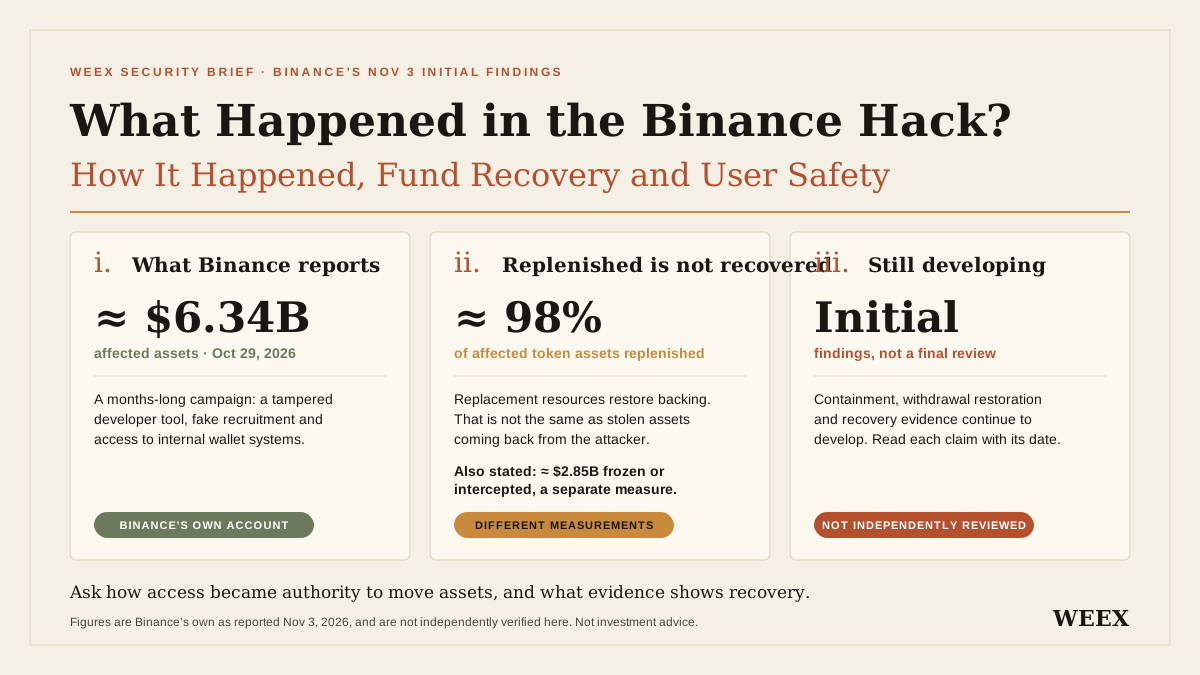
What Happened in the Binance Hack? How It Happened, Fund Recovery and User Safety
What happened in the Binance hack? Review the attack timeline, latest fund replenishment, recovery limits and practical steps to protect your account.
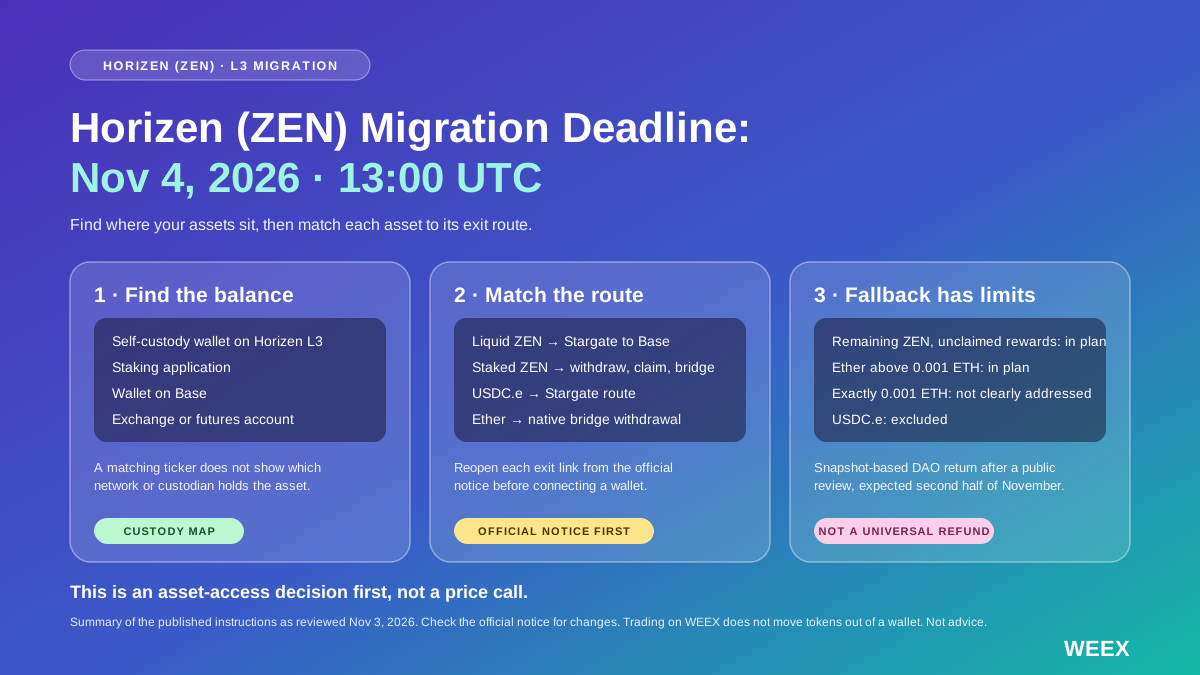
Horizen (ZEN) Migration Deadline: What to Move Before November 4 and What Happens If You Miss It
Horizen (ZEN) migration closes November 4. Check asset-specific bridge routes, wallet requirements, recovery exclusions and what to do if you miss it.
Bitcoin’s year-end liquidity hopes face a projected $150 billion Treasury cash rebuild

DMG Says Client Assets Are Secure and Highlights Layered Transaction Controls
Solana study finds wider spreads outside aggregators at five of six sampled pools
Crypto: Gate Freezes Two Accounts Linked to Binance Hack
BlackRock’s Ethereum fund sheds 580K ETH as monthly exits mount

How T7X Is Building the Infrastructure for a New Era of Capital Markets
The End of the Seasonality Myth. Why September and October Surprised Investors?
Hong Kong plans stablecoin trials for tokenized government debt
Ownership of Bitcoin in the Qian Zhimin Case and Victim Compensation
Polygon expands US banking access to Solana's 15 billion stablecoin market

Sui Puts Enforced Spending Limits at the Center of Its AI-Agent Design

Apple Reclaims Top Market Cap as Silver Nears $50: WEEX TradFi Market Brief
Vitalik's Latest Thoughts: We Need a Digital Minimalism Movement
RLUSD supply fell 29% on XRPL. One XRP trading pool barely changed

Mercado Bitcoin Plans Sui Asset Access in Brazil With Lending and Tokenization Links
Tokenized collateral brings custody and settlement closer together
Treasury’s cash plan points to a possible December liquidity window for Bitcoin
A Counterintuitive Logic: The Anti-AI Movement Won't Eliminate Demand, But It Gives the Industry More Time to Absorb the Bubble
Bank of England Raises Interest Rates: What Changes for Investors
Net Inflows into Spot Bitcoin and Ether ETFs in the US
TradingBeats Launches New Version, Upgraded to Information Stream Format
Contents
Latest articles


Latest coin listings on WEEX


