
Fake websites impersonate South Korean brands for crypto payments

 Prefer us on Google


AhnLab Security Intelligence Center (ASEC) has identified numerous websites impersonating South Korean companies, including Doosan Robotics and Chum-Churum, to solicit cryptocurrency payments. These sites utilized authentic company logos, promotional videos, and introductory materials to replicate official homepages, offering features such as sign-up and login, fee-history inquiries, VIP membership, and cryptocurrency deposit and withdrawal functions. In customer-service chats, users were directed to pay in USDT, provided with a TRON wallet address, and asked to submit transaction screenshots. AhnLab's analysis of a site impersonating Chum-Churum revealed five USDT deposits and three withdrawals linked to a specific crypto wallet, with all deposits originating from the same external wallet. The total amount received by that external wallet was estimated at approximately 13 million USDT, or 17.3 billion won, equivalent to 12500000 dollars.
-- Price
This content is provided for general informational purposes only and doesn't constitute financial, investment, legal, or tax advice. Any events, rewards, online promotions, or related information mentioned herein should not be considered a recommendation, solicitation, or invitation to purchase, sell, trade, or otherwise deal in any crypto assets. Crypto assets are highly volatile and may result in loss. The availability of WEEX services, products, and related events may vary by region. You are responsible for ensuring that your participation is in accordance with applicable local laws and regulations.
You may also like

Financial and Political Crisis in Paraguay: How the Ueno Bank Explosion Triggered the President's Resignation
OpenAI Releases National Community Covenant and Computing Park Policy Blueprint

GitBook Security Incident Review, Attack Targeting Trade.xyz

Post-Quantum Era Consensus Layer Divergence: Ethereum Maintains Decentralization, Monad Prioritizes Speed

The Ghost Behind the Screen: Unveiling the Secret World of North Korean Hackers Lazarus
Bitcoin Miners Turn to AI: Escaping the Crypto Cycle, but Entering New Turbulence
Decoding Variational: How a No-Order-Book Exchange Became the Dragon Behind Hyperliquid?
Creators Speak | The Biggest Risk in the Crypto Industry is Thinking It's Safe
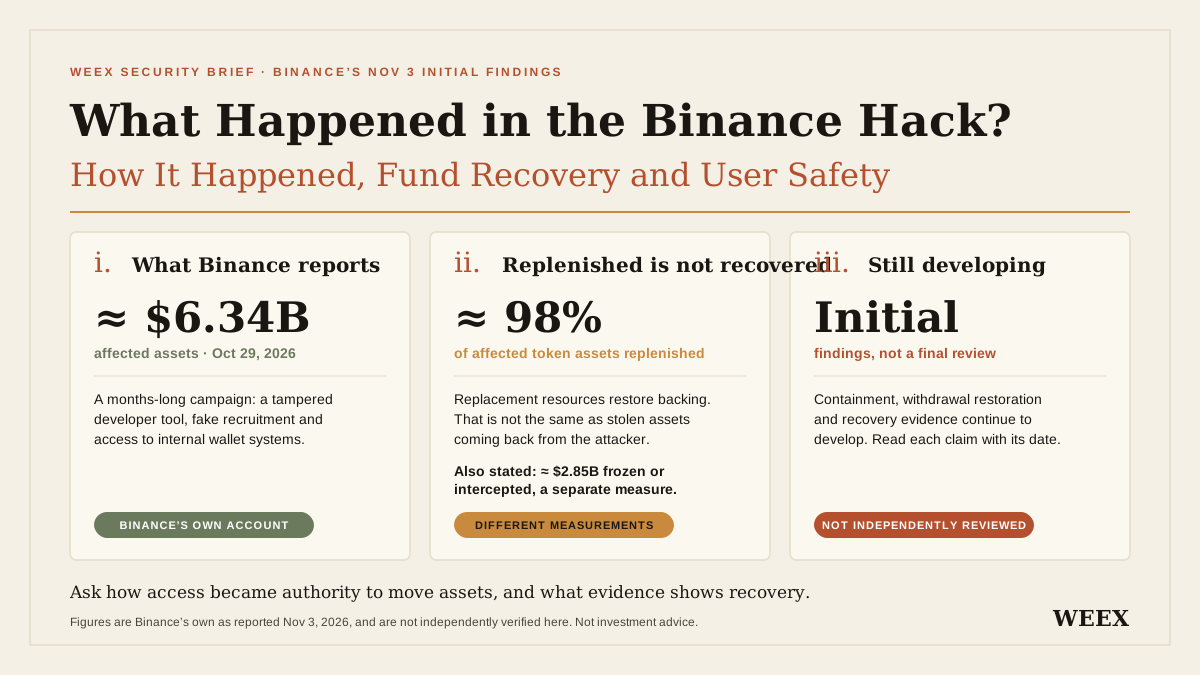
What Happened in the Binance Hack? How It Happened, Fund Recovery and User Safety
What happened in the Binance hack? Review the attack timeline, latest fund replenishment, recovery limits and practical steps to protect your account.

Who really controls a crypto project? Inside the SEC’s new guidance

Reflections After the Binance Heist: Who Should We Trust with Our Crypto Assets?
Solana study finds wider spreads outside aggregators at five of six sampled pools

Is it theft or fraud when the coins in the wallet remain but are changed to multi-signature by someone else?
Anthropic is Frenziedly Competing for Computing Power: $895.4 Billion Commitment, Even Old Coal Plants Are Not Spared

Tom Lee sees Ethereum's 4% drop post-Binance hack as bullish sign

Ornn, a Computing Power Trading Platform, Negotiates Series A Financing, Valuation May Exceed $1 Billion

Vitalik is making private Ethereum payments without a crypto website
Comparison of Security Among Four Perpetual DEXs: Who Can Truly Enable User Self-Rescue?

Is Issuing Tokens Still Necessary for Crypto Projects Focused on Revenue?
Will the Republican Party Lose the Elections? Cryptocurrencies May Benefit...

Nvidia May Guarantee Billion-Dollar AI Data Center Debt

Pi Network rolls out 4 developer updates ahead of November summit
DeFi DNS attack hits 12 sites as Blockaid flags Step Drainer

CDI was the only refuge in October: what this reveals

Binance Attacker Accidentally Transfers $3.5 Million in Tokens to NEWT Contract Address

The Golden Age of Hackers
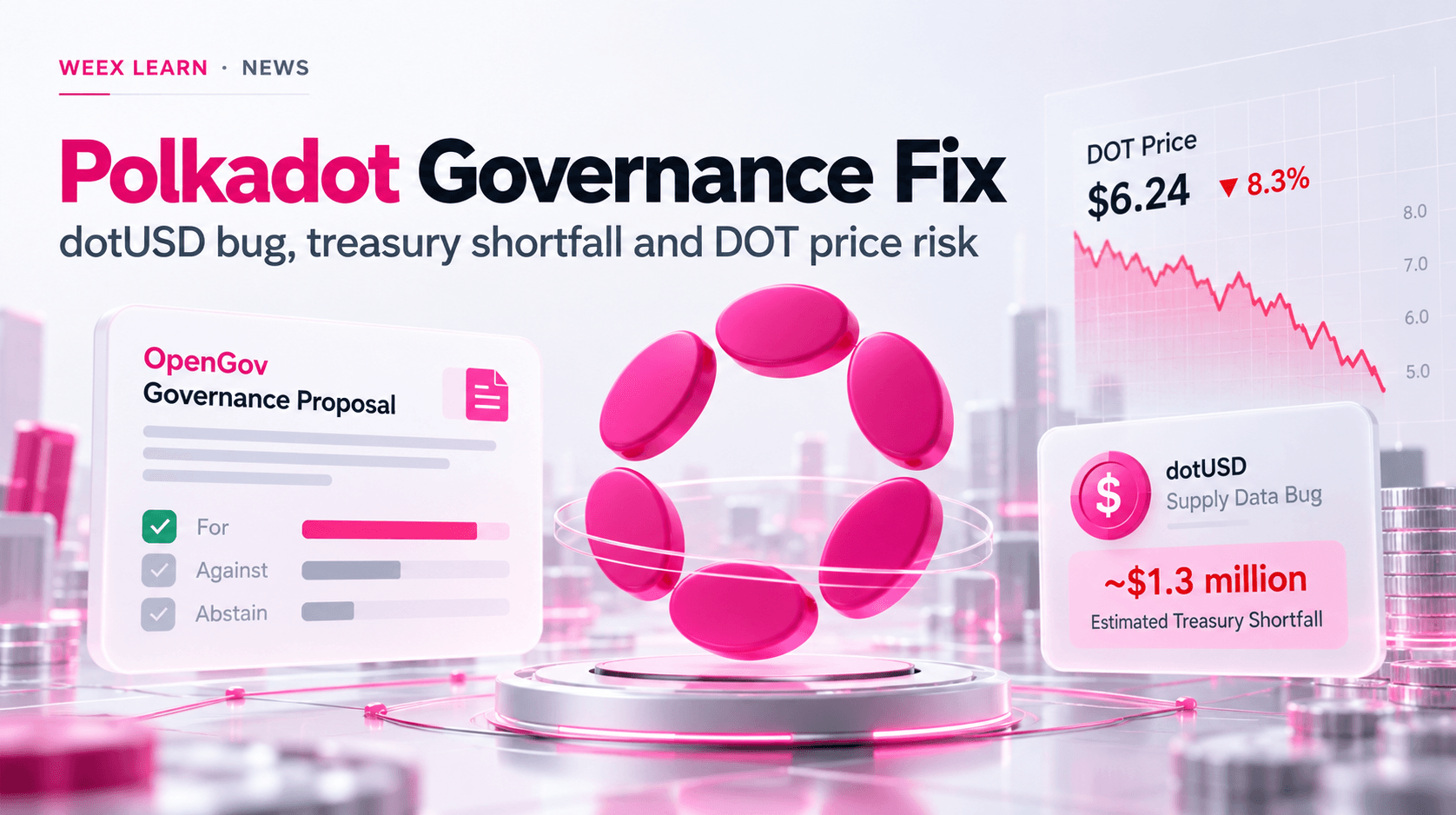
Polkadot OpenGov #1961: dotUSD Supply Bug and $1.3M Treasury Loss Explained

A Review of Global CEX Theft Incidents from 2014 to 2026
Hackers drain 9,400 SOL from bot wallets, and a copied key is blamed

Google Cloud Previews Institutional Crypto Key-Security Service as Custody Risks Grow
Financial and Political Crisis in Paraguay: How the Ueno Bank Explosion Triggered the President's Resignation
OpenAI Releases National Community Covenant and Computing Park Policy Blueprint
GitBook Security Incident Review, Attack Targeting Trade.xyz
Post-Quantum Era Consensus Layer Divergence: Ethereum Maintains Decentralization, Monad Prioritizes Speed
The Ghost Behind the Screen: Unveiling the Secret World of North Korean Hackers Lazarus
Bitcoin Miners Turn to AI: Escaping the Crypto Cycle, but Entering New Turbulence
Contents
Latest articles





Latest coin listings on WEEX


