
Intel Stock: Why SK Hynix Manufacturing Talks Keep Pushing Shares Higher

 Prefer us on Google

Intel stock jumped as much as 5.6% in premarket trading the day Reuters first reported SK Hynix was in exploratory talks with Intel about manufacturing memory chips on US soil for the first time.
Intel stock kept climbing through the sessions that followed, touching $108.80 before extending to $112.23 in after hours trading, and shares have since pushed as high as $114.56, up more than 7% from a recent intraday low. Intel stock's persistent rise over the past several trading days traces back to a single, still unconfirmed set of talks, and understanding exactly what's being discussed, and what isn't, matters more than the headline percentage moves alone.
What's Actually Being Discussed
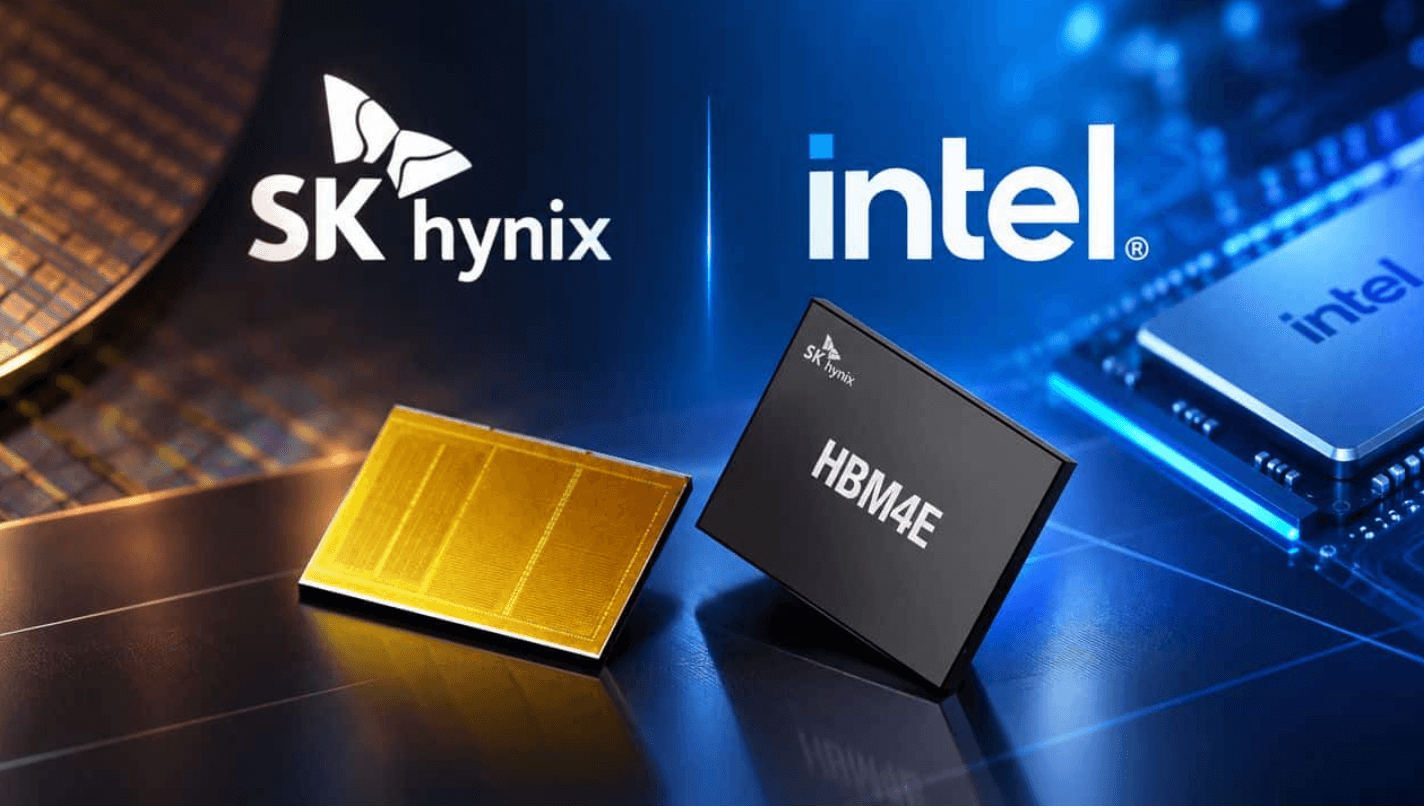
The core of these talks centers on Intel's long-delayed chipmaking facility in Ohio, a $28 billion campus that currently isn't expected to begin operations until 2030 or 2031. According to three sources familiar with the discussions cited by Reuters, one scenario under consideration would have SK Hynix lease space directly inside that Ohio facility. A second option would involve SK Hynix forming a joint venture with Intel and major cloud computing companies looking to secure their own dedicated memory chip supply as AI infrastructure demand continues straining global capacity.
Neither company has confirmed anything close to a final agreement. One source specifically characterized the talks as "exploratory," and SK Hynix issued a formal statement saying it is "reviewing ways to strengthen its memory business" but that "no matters have been determined." Intel, for its part, called the reports "speculation" while confirming it remains committed to Ohio and continues investing to get the site ready. Reuters itself was unable to determine what specific type of memory SK Hynix might actually produce there.
Why This Matters More Than A Typical Rumor
What separates this from routine chi industry speculation is the specific history between these two companies. Intel sold its NAND memory business to SK Hynix in a $9 billion deal, meaning any agreement to bring SK Hynix into an Intel owned campus would effectively put the company that bought Intel's old memory business back onto Intel property, according to Motley Fool's coverage of the reports. That history gives this specific rumor a credibility that a deal between two unrelated companies wouldn't carry on its own, since SK Hynix already has deep operational familiarity with the exact kind of memory manufacturing assets Intel is trying to fill space with.
The stakes for Intel specifically are tied directly to how troubled the Ohio project has been. The site has struggled to attract outside commitments since it was first announced, and Intel is now part owned by the US government following earlier support tied to domestic chip manufacturing policy. A confirmed memory tenant would do more than fill physical space: it would give Intel its clearest evidence yet that the Ohio campus can attract meaningful outside capital and demand, rather than continuing to function as a facility that, in Motley Fool's framing, "today only consumes cash."
Why SK Hynix Has A Real Reason To Want This
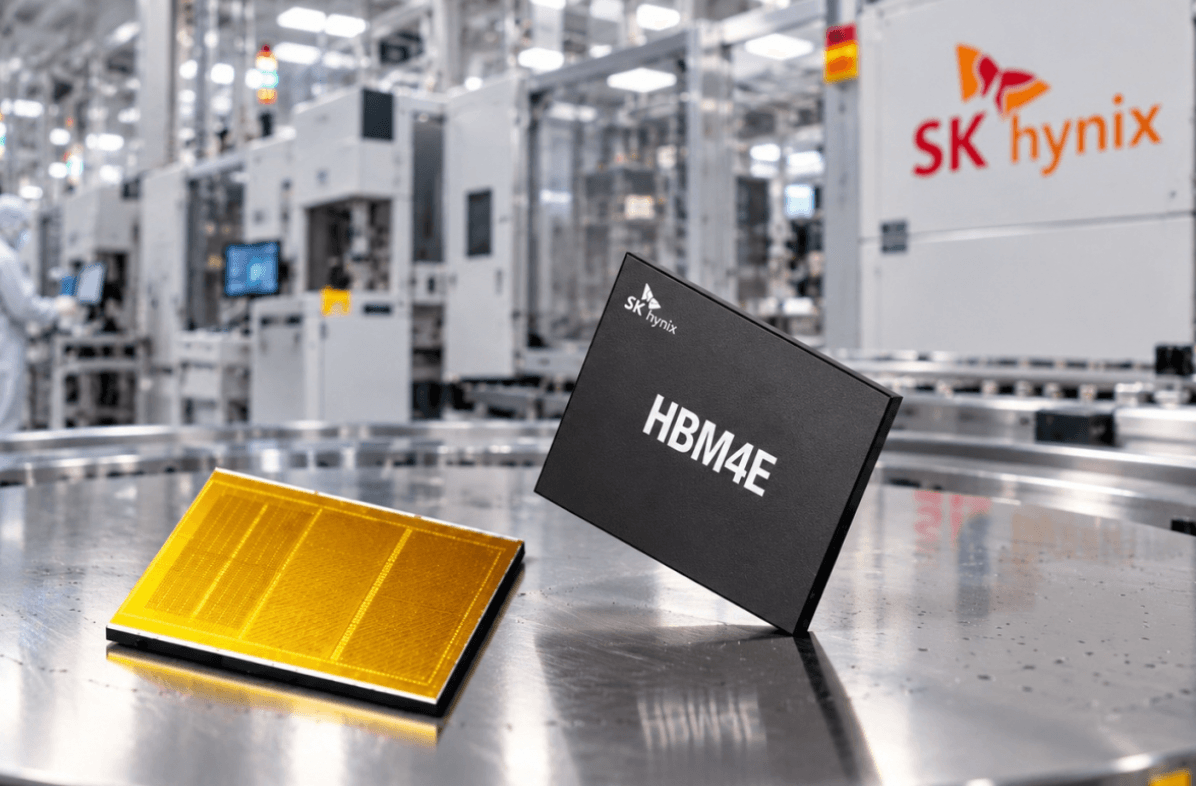
The interest isn't one sided. SK Hynix CEO Kwak Noh-jung warned earlier this year that 2027 will bring the most severe memory supply crunch the industry has ever seen, with customer demand expected to outpace production capacity well beyond 2030. That warning gives SK Hynix a direct commercial reason to secure additional manufacturing capacity now, rather than waiting for the crunch to fully materialize. SK Hynix has already committed more than $4 billion to a separate HBM packaging facility in West Lafayette, Indiana, with mass production of next-generation high-bandwidth memory expected there in the second half of 2029.
A deal with Intel in Ohio would complement, rather than replace, that Indiana investment. According to TheStreet's analysis of the reports, one plausible structure would have Ohio handle front-end wafer fabrication while Indiana handles advanced HBM packaging and testing, with finished memory then moving to the same US customers driving AI infrastructure demand. That division of labor would give SK Hynix something its Indiana project alone doesn't provide: front end memory manufacturing capacity actually located on US soil, rather than packaging and testing capacity built around wafers still fabricated elsewhere.
-- Price
The Political Complication Sitting Underneath This Deal
This isn't purely a business decision either company can finalize on its own terms. The Trump administration has been actively pushing chipmakers to expand domestic production as AI demand strains global memory supply, a policy tailwind that favors exactly this kind of Intel-SK Hynix arrangement. But South Korea's own government could complicate the picture significantly. If SK Hynix plans to produce advanced memory like HBM or DRAM in Ohio specifically, that could trigger a formal review under South Korea's Industrial Technology Protection Act, since those chip types are classified as sensitive technology under Korean law.
That regulatory risk is worth taking seriously rather than treating as a footnote. A deal that makes commercial sense for both companies, and that aligns with US policy priorities, can still stall or require significant restructuring if Korean regulators determine that shifting advanced memory production to Ohio compromises technology considered strategically important to South Korea. Reuters' reporting flagged this specific friction point directly, citing three separate sources on the potential review.
What The Stock Price Reaction Actually Tells You
The market's reaction across this stretch has been consistent enough to be worth reading as a genuine signal rather than noise. Intel rose roughly 5% on the initial September 16 report, according to CNBC, while SK Hynix's own Nasdaq-listed shares climbed about 2% the same session, and SK Hynix's Seoul-listed stock finished 4.1% higher separately. That both stocks moved together, rather than one gaining at the other's expense, suggests investors are reading this as a genuinely mutually beneficial arrangement rather than a one-sided win for either party.
The 5.5% pop in Intel stock specifically, even with so much of the deal still undecided, indicates investors see real upside in a potential SK Hynix partnership regardless of the deal's final structure. That's a meaningful distinction: the market isn't waiting for confirmation to start pricing in the possibility, which is part of why Intel stock has continued grinding higher across multiple sessions rather than giving back the initial pop once the "no deal confirmed yet" caveat became clear.
What Would Actually Need To Happen Next
None of this is resolved yet, and it's worth being precise about what still needs to occur before this moves from rumor to reality. A specific structure, whether SK Hynix leasing Ohio space directly or a broader joint venture including cloud computing partners, would need to actually get finalized and publicly confirmed by both companies. South Korea's Industrial Technology Protection Act review, if triggered by the specific type of memory involved, would need to clear without forcing a substantial restructuring of whatever deal gets proposed. And given that domestic US manufacturing costs considerably more than production in South Korea, according to Reuters' reporting on the added expense of higher wages and construction costs relative to Asia's denser semiconductor supply chain, both companies would need to agree on how those additional costs get absorbed or offset before any final agreement makes commercial sense for SK Hynix specifically.
Trading Intel Stock Through This Developing Story
Intel trades on WEEX Spot, letting traders take a direct position on shares with USDT as this SK Hynix story continues to develop, without needing a separate brokerage account to react to the next Reuters update or official confirmation from either company.
Trading on WEEX is backed by a publicly disclosed 1,000 BTC protection fund, worth knowing for anyone holding a position in a stock that's already moved more than 7% within a single session purely on unconfirmed reports, since a story this sensitive to headline risk can move just as sharply if the talks stall as it has while they've progressed.
Conclusion
Intel stock's climb from around $101 to above $114 over the past five sessions traces directly back to reports that SK Hynix is exploring memory chip manufacturing at Intel's delayed Ohio facility, a deal that would bring the buyer of Intel's old NAND business back onto Intel property and give the struggling $28 billion campus its first real commercial validation. Nothing has been finalized, and a formal South Korean regulatory review remains a genuine risk if advanced memory technology is involved, but the consistent gains across both Intel and SK Hynix stock since the initial report suggest investors are treating this as a credible, mutually beneficial arrangement rather than speculative noise.
FAQ
1. Has Intel and SK Hynix's manufacturing deal been finalized?
No. Both companies have described the talks as exploratory, with SK Hynix stating no specific plans or arrangements have been determined and Intel calling the reports speculation while confirming continued investment in the Ohio site.
2. What are the two main deal structures being discussed?
SK Hynix could lease space directly inside Intel's Ohio facility, or the two companies could form a joint venture together with major cloud computing firms seeking to secure their own memory chip supply.
3. Why would this deal matter for Intel's struggling Ohio project?
Intel's Ohio campus, a $28 billion investment not expected to begin operations until 2030 or 2031, has struggled to attract outside commitments, and a confirmed SK Hynix partnership would provide its clearest validation yet.
4. What regulatory risk could complicate this deal?
If SK Hynix produces advanced memory like HBM or DRAM in Ohio, it could trigger a review under South Korea's Industrial Technology Protection Act, since those chip types are considered sensitive technology under Korean law.
5. Have Intel and SK Hynix worked together before?
Yes, in a sense. Intel sold its NAND memory business to SK Hynix in a $9 billion deal, meaning a new Ohio arrangement would put SK Hynix back in close proximity to assets it previously acquired from Intel.
This content is provided for general informational purposes only and doesn't constitute financial, investment, legal, or tax advice. Any events, rewards, online promotions, or related information mentioned herein should not be considered a recommendation, solicitation, or invitation to purchase, sell, trade, or otherwise deal in any crypto assets. Crypto assets are highly volatile and may result in loss. The availability of WEEX services, products, and related events may vary by region. You are responsible for ensuring that your participation is in accordance with applicable local laws and regulations.
You may also like

Stablecoin remittances show 84% cost gap, but payout reliability varies

Stablecoins: Mastercard and BVNK Launch Fiat and Crypto Account, Stripe Targets 100 Countries with Its Cards

How to Manage a Channel When Cryptocurrency Advertising is Banned in 2026

The session to annul the DNU allowing bitcoin contracts in Argentina failed

Only 18% of Uniswap v3 positions under $1,000 beat holding after gas, study finds

Memecoins: 17 Days to Reach the Peak, One Year to Lose 95%!

Starknet Considers Separating from Ethereum to Become Quantum-Resistant

Bitcoin Directly or via an ETP in a Securities Account: What to Choose?

AMC's No Does Not Automatically Halt AMC Stock Tokens Abroad on Robinhood

Microsoft exposes how USDT-funded phishing network targeted 75,000 organizations
XRP Fails to Match Bitcoin and Ether's Success for Long-Term Holders: Why the Token Lags Behind the Market

Fortitude sold $8.3 million in borrowed Zcash to fund its mining expansion

Bank of America: Still Expecting Rate Hike in October, Raises Forecast for Fed's Favorite Inflation Indicator

Study finds $188 billion in risky funds linked to crypto exchanges

September Web3 Security Monthly Report: 48 Major Security Incidents, Over $760 Million in Stolen Funds

Papertrade Revenue Surpasses Circle? It's Just a 'Liquidation Harvesting Machine'

Pearl's Strategic Power: Not Eliminating Useless Miners, But Naturally Phasing Them Out Through Economic Principles

Scammers First Deceive, Then Offer to Help Recover Losses

Ripple opens Wall Street’s door to Hyperliquid’s $59 billion trading market

MSCI New Rules Implemented, 14 Crypto Companies Enter Potential Impact List

G7, AI and Stablecoins: The 3 Stablecoin Issues Ignored by Finance Ministers

What Do the New Tesla Roadster Specs Mean for Tesla (TSLA) Stock?
Explore the new Tesla Roadster specs, reservation payments and 2028 production plan, plus what the reveal could mean for Tesla stock and future profits.

Quant (QNT) Price Prediction 2026–2030: Can Bank Adoption Drive a Return to $500?

Spout raises $2M to offer 0% interest loans on Solana

RWA Weekly: Ant Group and HSBC Test Agent Tokenized Payments; Robinhood Explores Tokenized Actively Managed ETFs
Chips, AI and Bitcoin: Reading Cross-Market Risk Appetite After a Volatile Week

Is a Bitcoin record closer than you think? This one indicator reveals everything

$600 Million in Fake Trading Volume Exposes the Myth of the Prediction Market 'Truth Machine'

The Other Side of Artificial Intelligence: Why Wall Street Is Starting to Distrust Chips

Asia Recovers After Tech Sell-off: What Changed in 24 Hours
Stablecoin remittances show 84% cost gap, but payout reliability varies
Stablecoins: Mastercard and BVNK Launch Fiat and Crypto Account, Stripe Targets 100 Countries with Its Cards
How to Manage a Channel When Cryptocurrency Advertising is Banned in 2026
The session to annul the DNU allowing bitcoin contracts in Argentina failed
Only 18% of Uniswap v3 positions under $1,000 beat holding after gas, study finds
Memecoins: 17 Days to Reach the Peak, One Year to Lose 95%!
Contents
Latest articles


Latest coin listings on WEEX


