
What Is Bitcoin Dominance and How To Use It?

 Prefer us on Google
Navigating the ever-changing cryptocurrency market can be challenging, especially with fluctuating trends and shifting investor sentiment. One essential tool that provides clarity amid this complexity is Bitcoin dominance. This metric illustrates Bitcoin’s share of the total cryptocurrency market capitalization and reflects how capital rotates between Bitcoin and alternative cryptocurrencies (altcoins).
A rise in Bitcoin dominance often signals that investors are seeking stability and reducing exposure to higher-risk altcoins. Conversely, a decline may indicate growing speculation and increased interest in altcoins. Whether you’re building a diversified portfolio or just beginning your crypto journey, understanding Bitcoin dominance can offer valuable insight into market dynamics and help inform your strategic decisions.
In this article, we’ll explore what Bitcoin dominance is, how it’s calculated, what its movements reveal, and how you can apply this knowledge to enhance your investment approach.
What Is Bitcoin Dominance?
Bitcoin Dominance represents the proportion of the total cryptocurrency market capitalization that is attributed to Bitcoin. In essence, this metric highlights how much of the overall crypto investment is concentrated in Bitcoin compared to altcoins.
As the original and largest cryptocurrency by market value, Bitcoin often serves as a benchmark for the broader digital asset market. An increase in Bitcoin dominance typically suggests that investors are moving toward perceived safety and stability, often during times of uncertainty. A decrease, on the other hand, may indicate growing appetite for risk and speculation in altcoins.
Monitoring Bitcoin dominance can offer valuable insights into market sentiment, help detect trend transitions, and support more strategic asset allocation decisions.
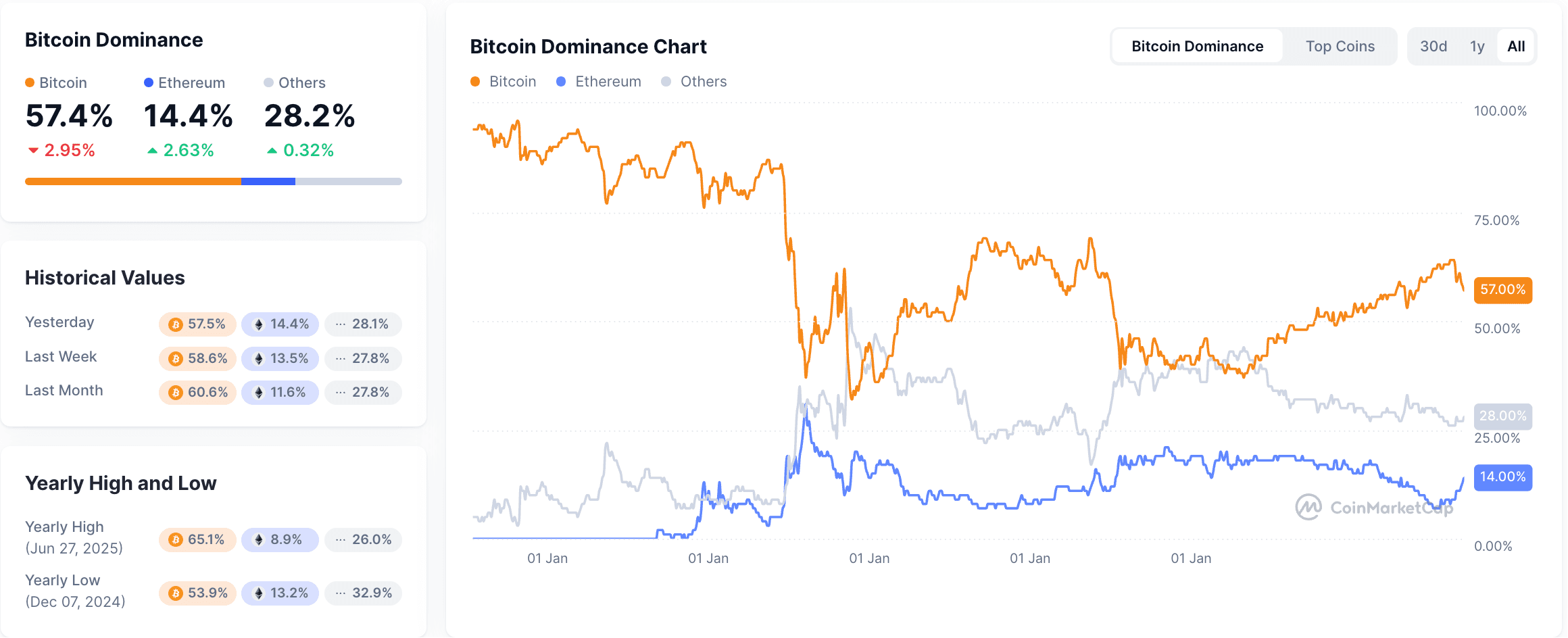
Source: CoinMarketCap
What Influences Bitcoin Dominance?
Bitcoin dominance can be affected by a variety of factors — both internal to the crypto market and external in the global economy.
How To Use Bitcoin Dominance in Trading
Bitcoin dominance should not be used in isolation—but it can serve as a valuable tool for making more informed decisions.
Here’s how many investors apply it:
- Adjusting Exposure: Increase or decrease allocation to Bitcoin versus altcoins in response to dominance trends.
- Gauging Market Sentiment: Rising dominance may reflect risk-off sentiment, while declining dominance often signals altcoin speculation.
- Identifying Reversals: Sharp changes in dominance can indicate market rotation or the end of a trend.
When combined with technical analysis, sentiment indicators, and macroeconomic insight, Bitcoin dominance adds meaningful context to both short-term trading and long-term investment strategies.
-- Price
What Does High/Low Bitcoin Dominance Mean?
High Bitcoin Dominance (Above 60–65%)
A high Bitcoin dominance level indicates that the majority of capital within the cryptocurrency market is flowing into Bitcoin rather than alternative coins. This typically reflects a cautious or risk-averse sentiment among investors, who may be seeking the relative stability and established reputation of Bitcoin during uncertain market conditions. Such periods often coincide with Bitcoin-centric bull runs or broader market corrections.
Low Bitcoin Dominance (Below 50%)
A decline in Bitcoin dominance suggests that investors are increasingly allocating funds to altcoins, demonstrating growing confidence in alternative crypto projects and ecosystems. This environment frequently aligns with “altcoin seasons,” where tokens such as Ethereum, Solana, or various meme coins experience significant outperformance compared to Bitcoin, pointing to a more speculative and opportunity-driven market mood.
Bitcoin Dominance vs. Altcoin Season
Altcoin season occurs when altcoins deliver substantially higher returns than Bitcoin, typically triggered by a decline in Bitcoin’s market dominance below critical levels—often around 50%. During these phases, investors shift capital from Bitcoin into smaller-cap altcoins, driving rapid price appreciation across the broader crypto market.
Historically, altcoin rallies have followed strong Bitcoin bull runs, emerging once BTC’s upward momentum slows. Notable examples include the surges in 2017 and 2021, where declining Bitcoin dominance coincided with explosive altcoin performance. However, past trends do not guarantee future outcomes, as market conditions evolve with each cycle.
While Bitcoin dominance serves as a useful benchmark, traders should combine it with additional metrics—such as trading volume, trend strength, and individual altcoin market caps—to assess opportunities more accurately. A multi-indicator approach helps navigate the volatility and timing challenges inherent in altcoin seasons.
Conclusion
Bitcoin Dominance might sound complex, but it’s actually one of the easiest ways to gauge the crypto market’s health. For new traders, watching this metric can be a game-changer—whether you're looking for the right time to buy altcoins, manage risk, or just understand where the market stands.
Next time you check Bitcoin’s price, take a quick look at its dominance too. That one number could give you the edge you need to trade smarter.
Further Reading
This content is provided for general informational purposes only and doesn't constitute financial, investment, legal, or tax advice. Any events, rewards, online promotions, or related information mentioned herein should not be considered a recommendation, solicitation, or invitation to purchase, sell, trade, or otherwise deal in any crypto assets. Crypto assets are highly volatile and may result in loss. The availability of WEEX services, products, and related events may vary by region. You are responsible for ensuring that your participation is in accordance with applicable local laws and regulations.
You may also like

WEEX Convert Fees: What Zero-Fee Conversion Really Costs You

WEEX Convert Quote: How the 8-Second Price Lock Really Works
WEEX Convert Limits: Minimum and Maximum Amounts Explained
How to Check a WEEX Convert Order: History, Rate and Status
USDC Significant EMT Status in the EU: What Changes on November 12 Under MiCA

Walrus (WAL) Jumps 30%: Sui Storage Token Rallies on AI Data
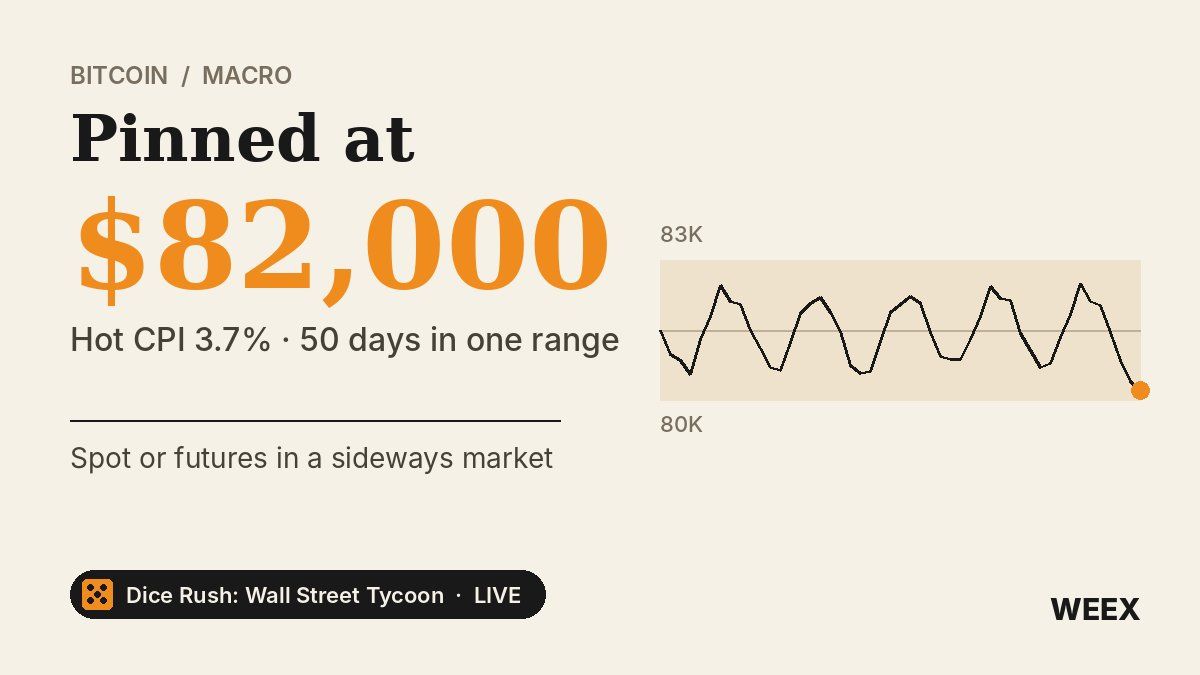
Bitcoin Price After Hot CPI: Why BTC Is Pinned Near $82,000
What Is a Limit Order? How It Works and When to Use It

Best Crypto Miner for Beginners: What to Check on Cost, Power, Hashprice and Profit Before You Buy

Limit Order vs Market Order: Which One to Use When Trading Crypto
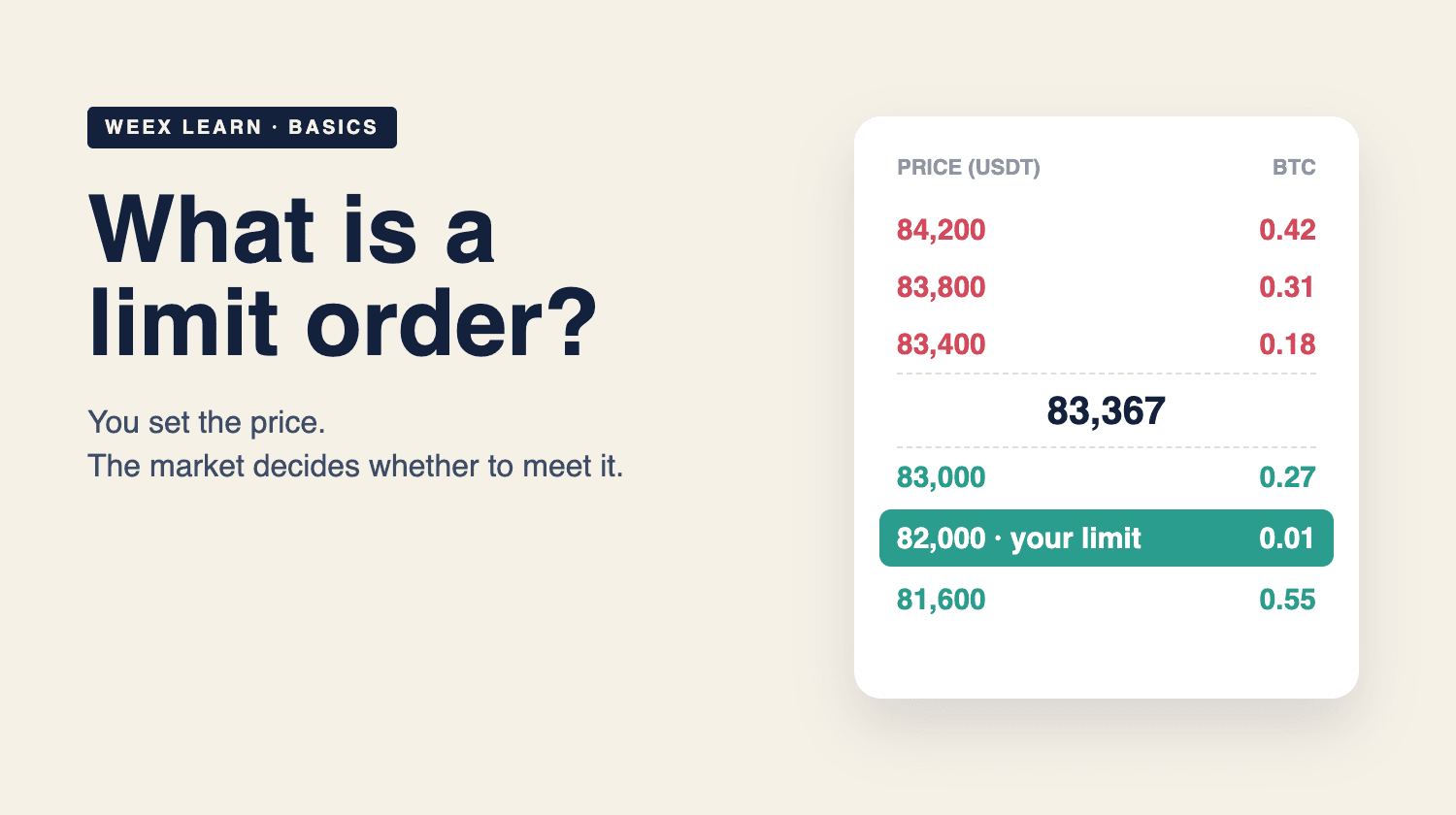
What Is a Limit Order? How It Works in Crypto With BTC Examples
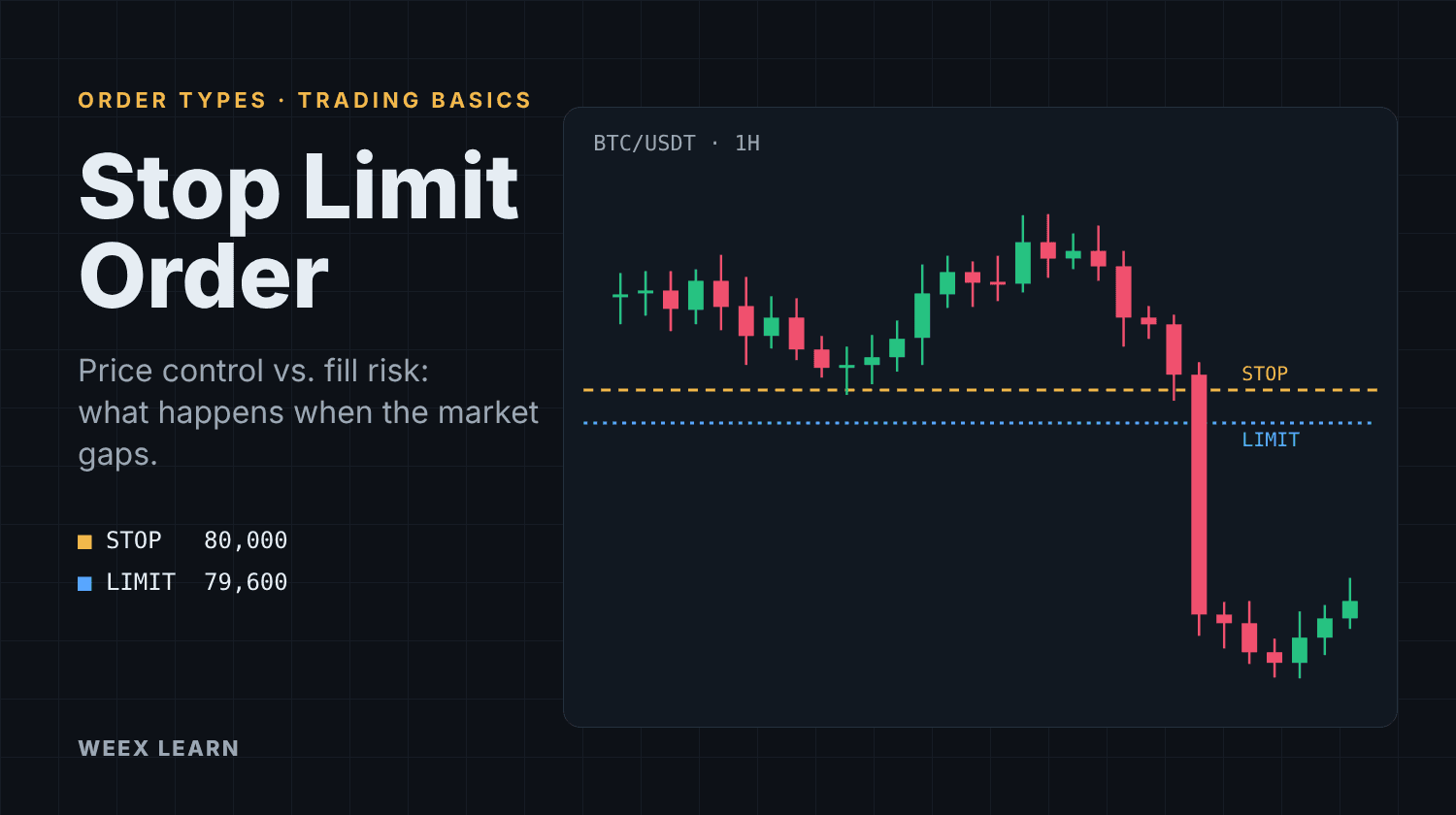
Stop Limit Order: How It Works and Why It Can Fail to Fill
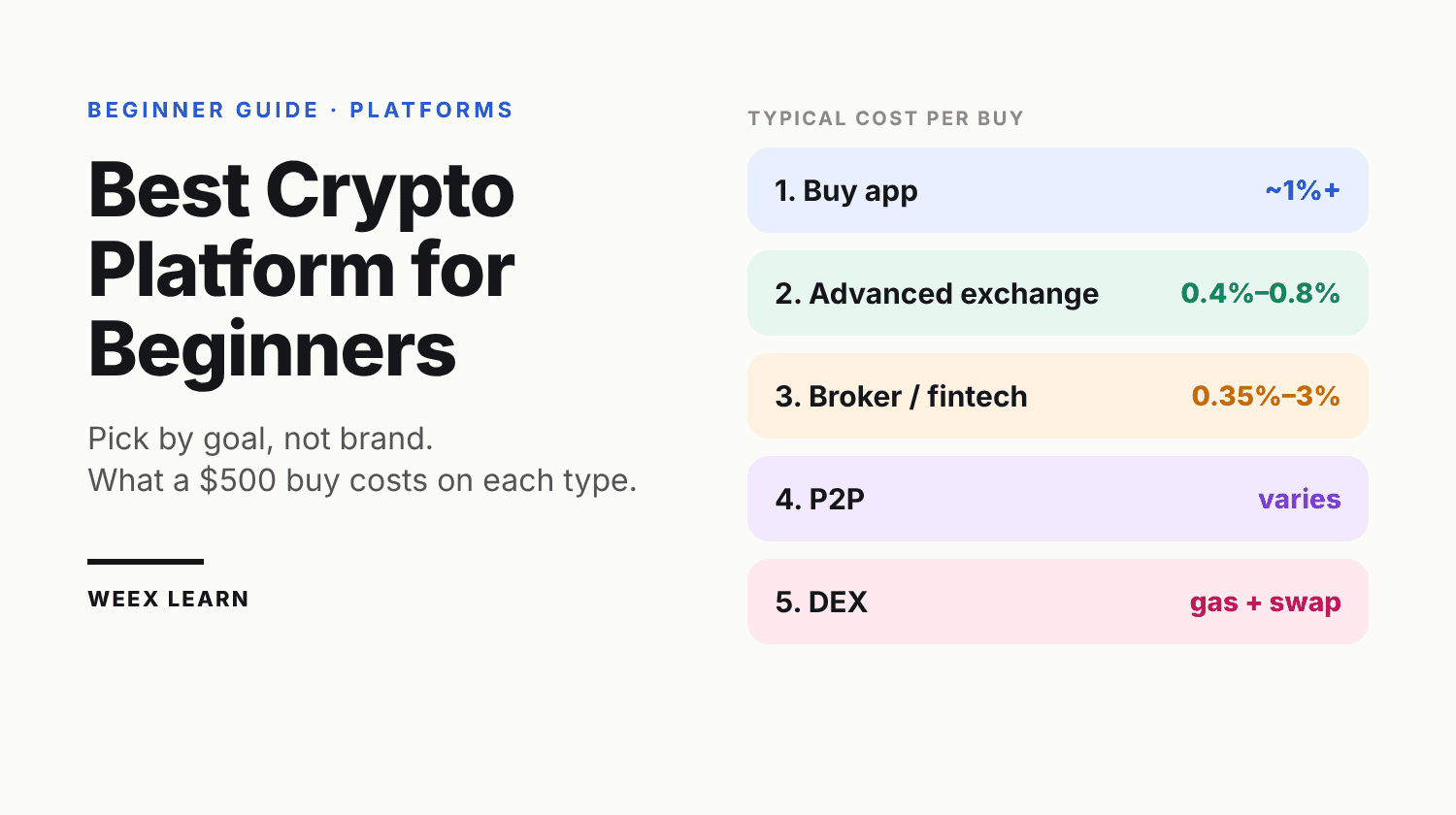
Best Crypto Platform for Beginners: Pick by Goal, Not Brand

Best Crypto Podcasts for Beginners: A 4-Week Listening Plan

How to Buy Crypto Anonymously: 5 Methods, Real Costs and Limits

Will Bitcoin Break $87,000 This Week? CPI, Fed Speakers and ETF Outflows to Watch

Conflux (CFX) Price Jumps on China's National Blockchain Network Plan: Does the Policy Actually Name CFX?
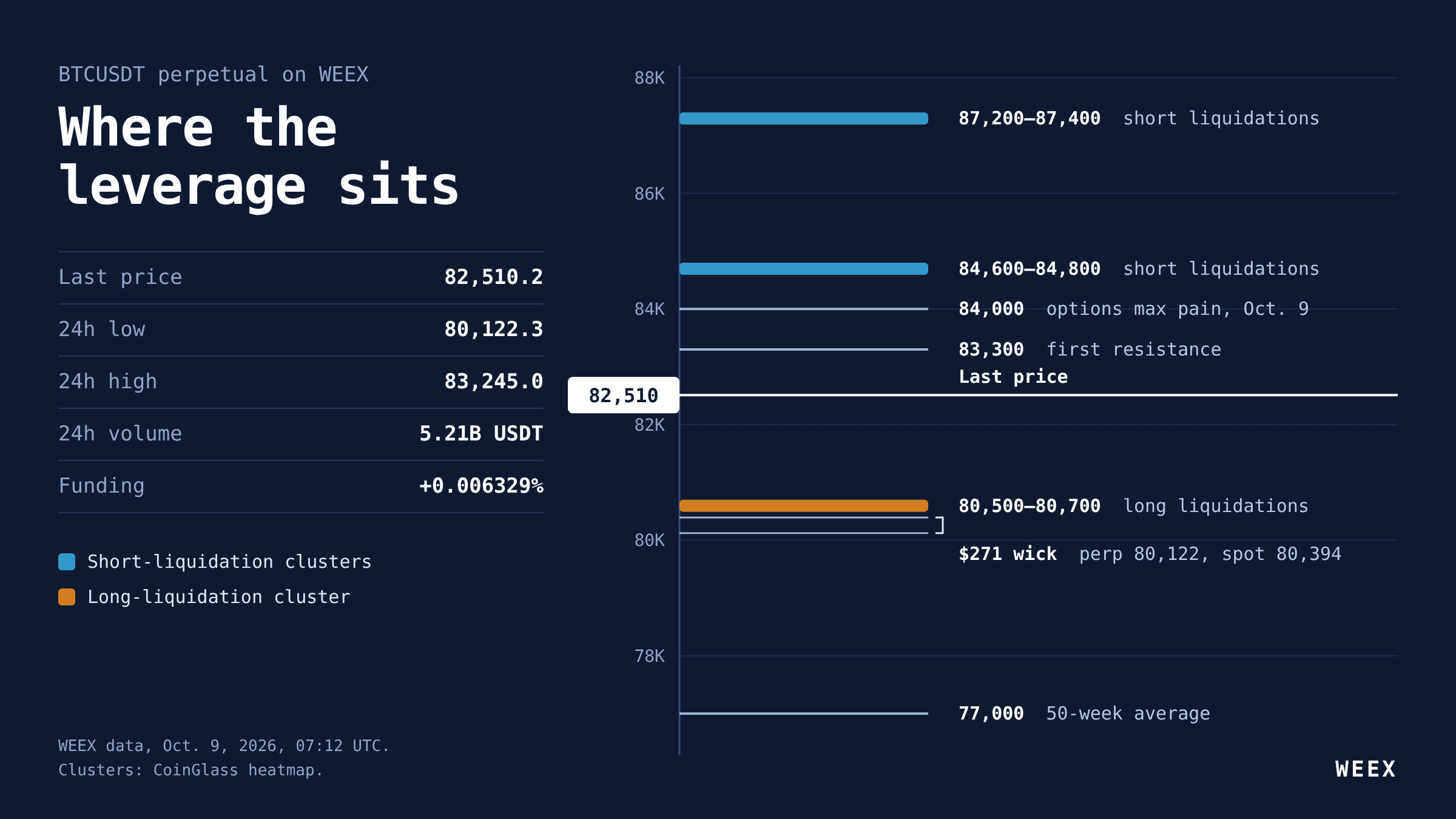
BTC Futures Analysis: $80K Held, but Longs Are Still Paying Up
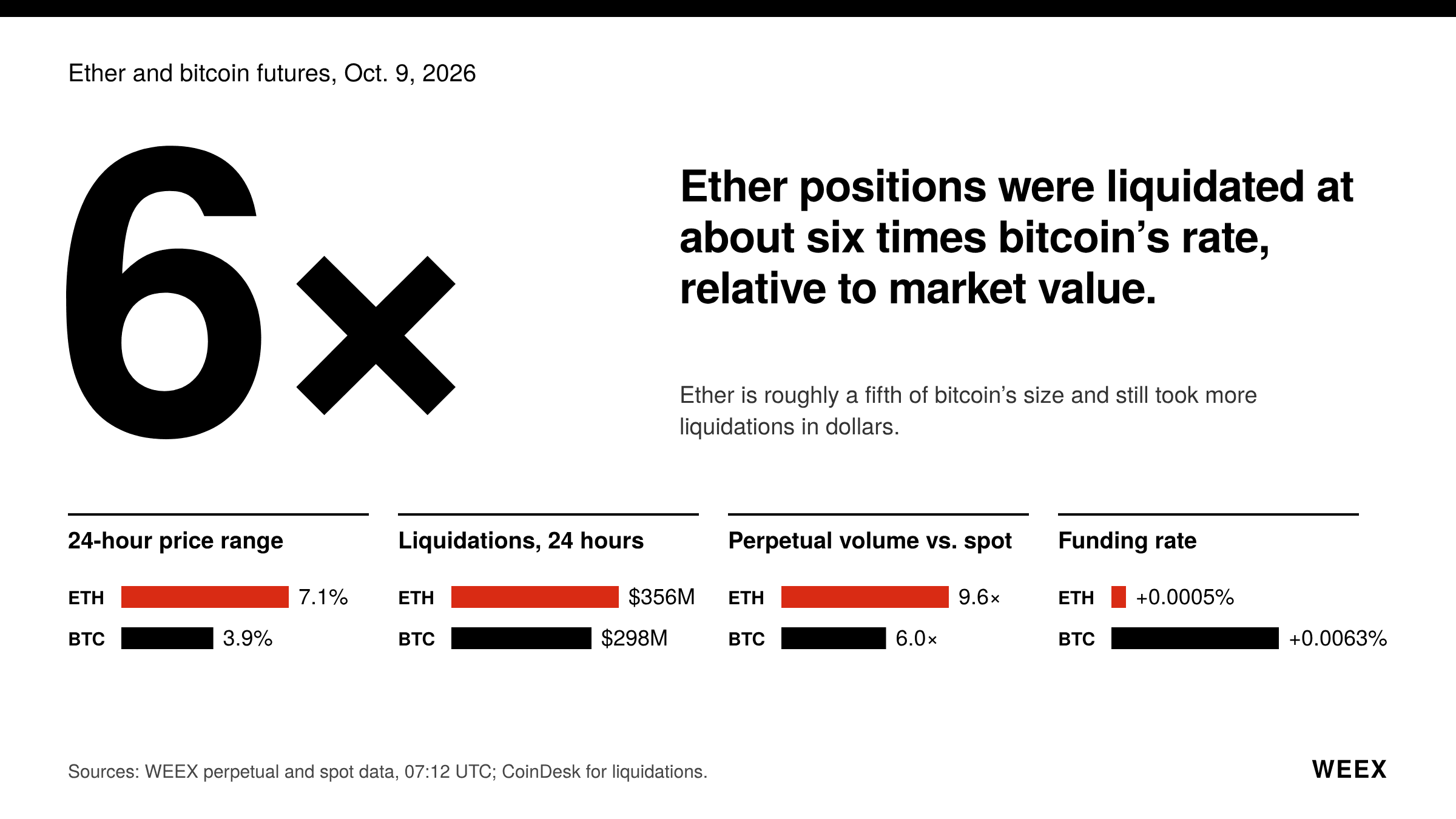
ETH Futures: Why Ether Is Falling Faster Than Bitcoin This Week
ENA Token Price Drops After October 5 Unlock: What Happened to Ethena?
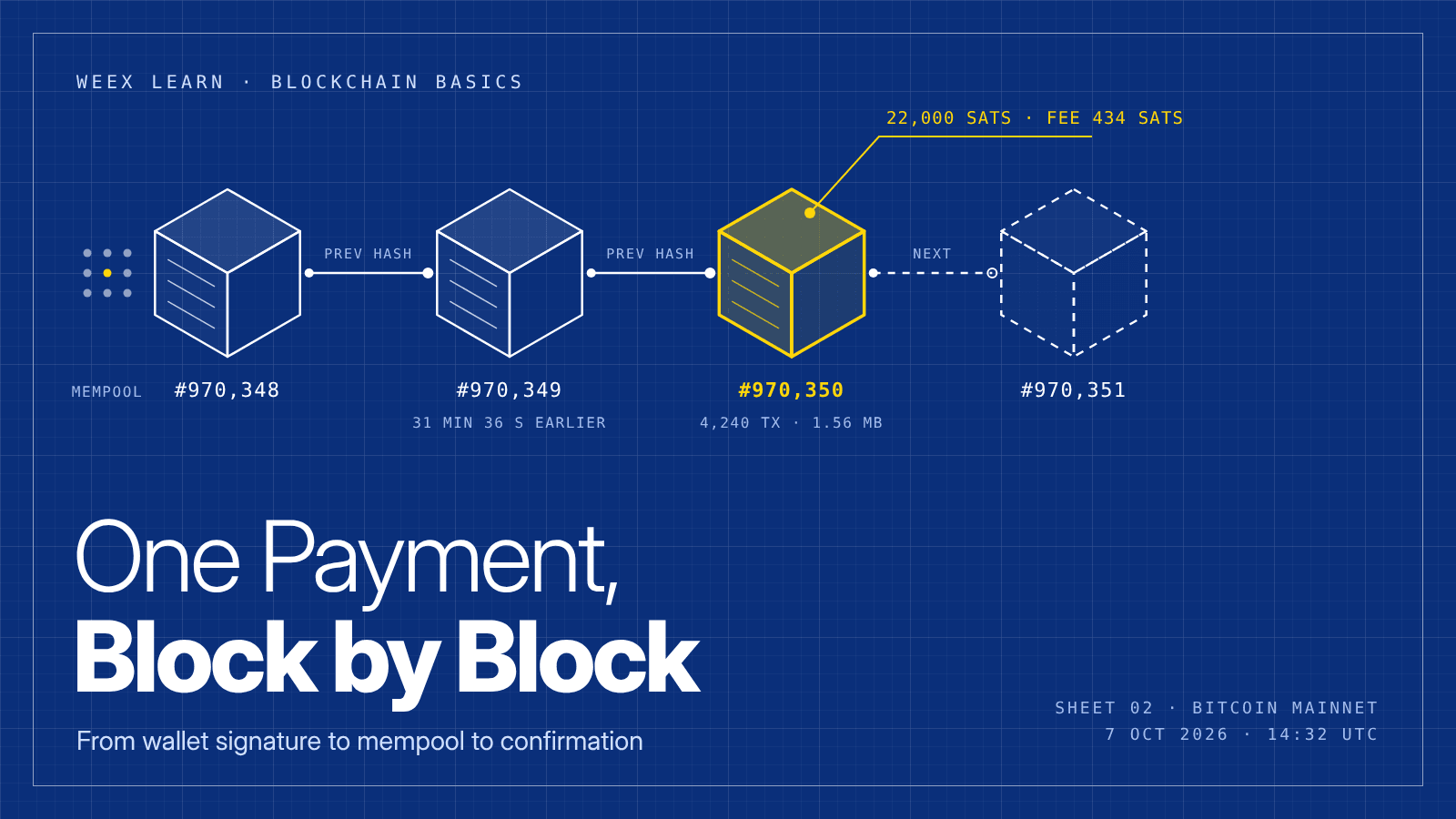
What Is Blockchain and How Does It Work? One Real Payment Traced

How to Buy Crypto With a Prepaid Card: Step-by-Step Guide
Best Crypto Trading Strategies for Beginners: What to Know Before You Trade
LayerZero Unlock October 2026: Can ZRO Hold $2 Amid Whale Inflows?
How to Buy Crypto With Apple Pay in 5 Steps: Why Your Bank May Decline the Payment
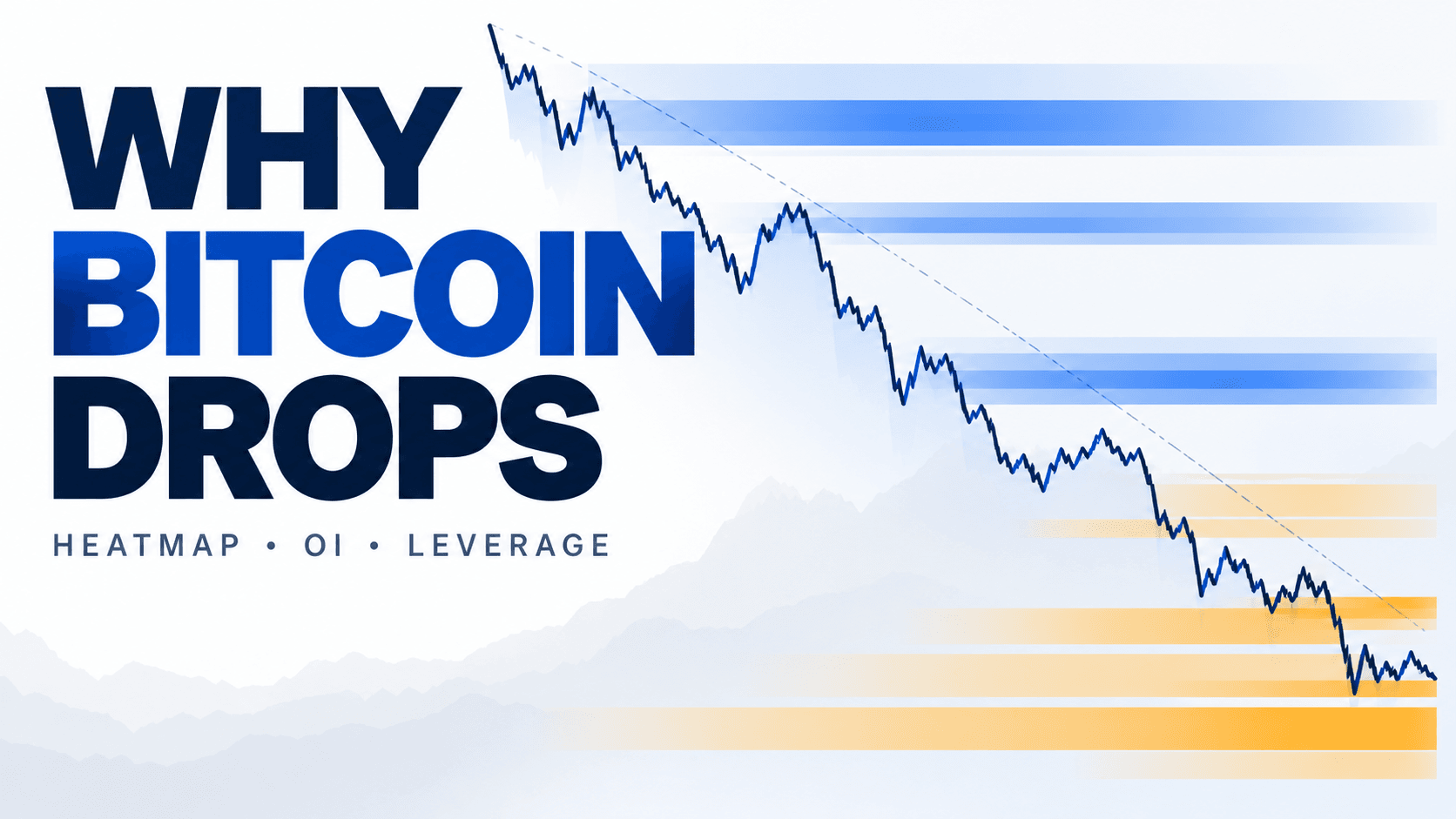
Why Does Bitcoin (BTC) Drop? How to Read a BTC Liquidation Heatmap Without Guessing the Bottom

Best Crypto Wallet App in 2026: How to Choose Between Hot, Cold, Custodial, and Web3 Wallets

What Is Blockchain and How Does It Work? One Real Block Explained
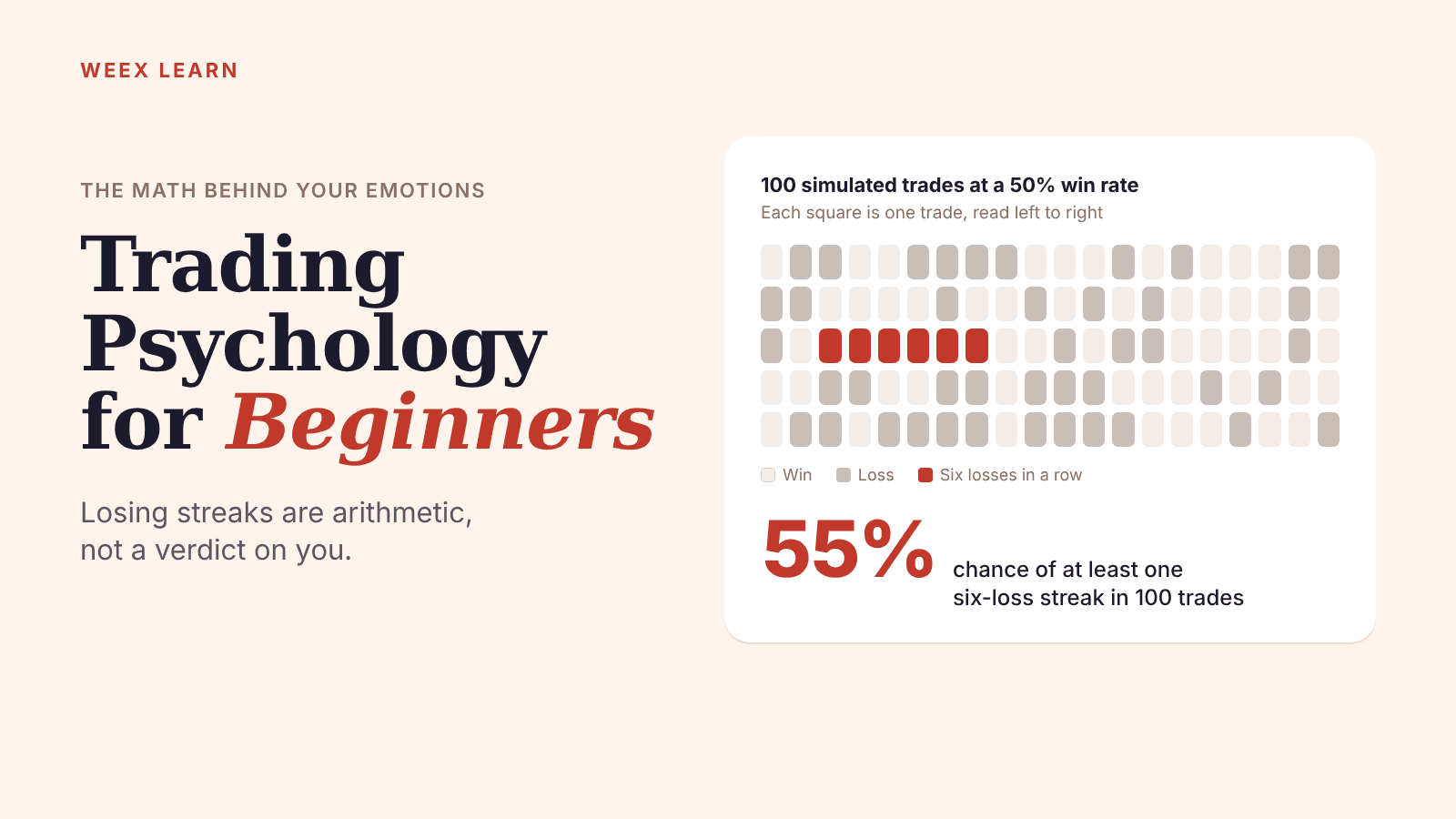
Trading Psychology for Beginners: The Math Behind Your Emotions
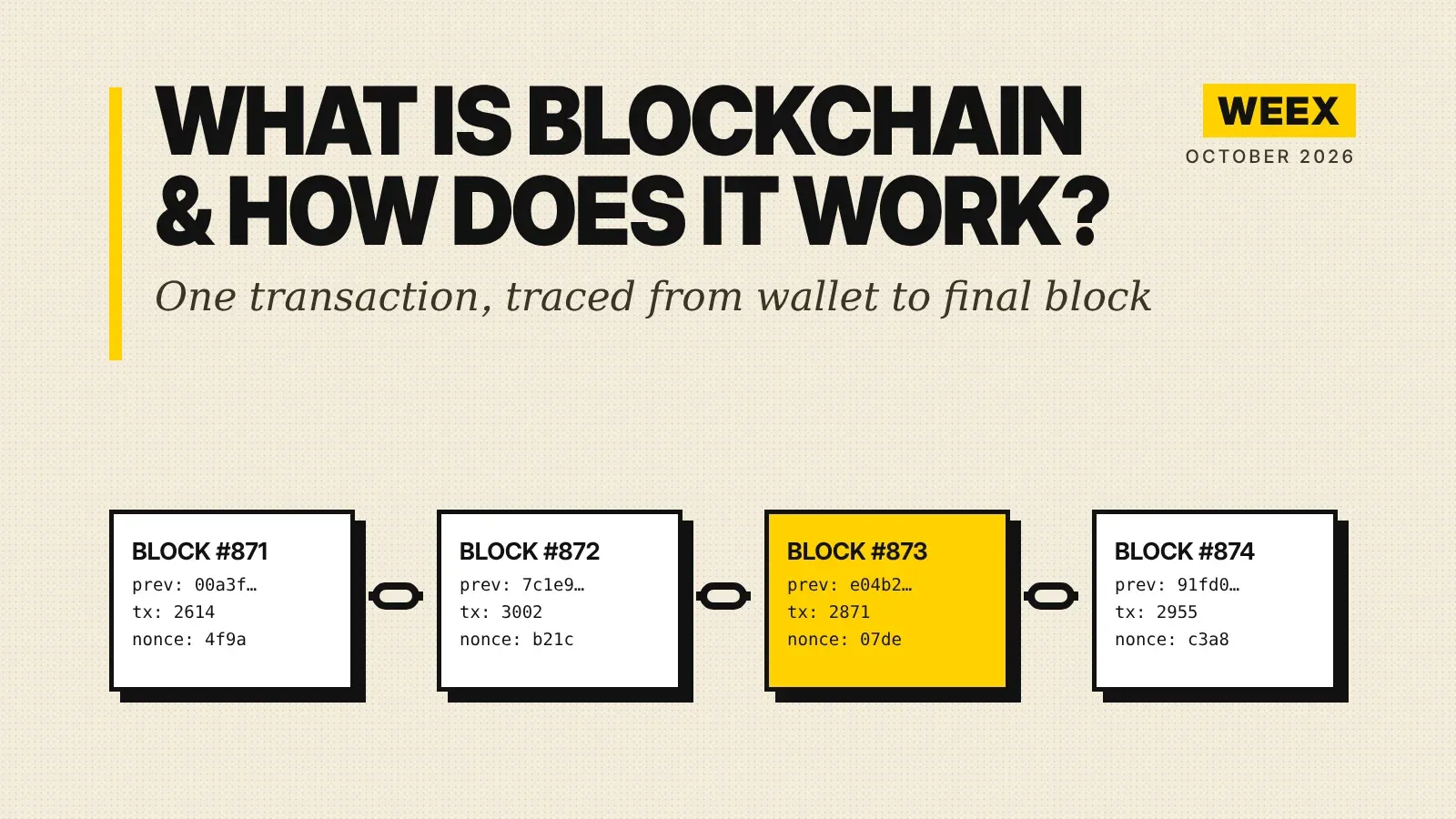
What Is Blockchain and How Does It Work? A Transaction Traced
WEEX Convert Fees: What Zero-Fee Conversion Really Costs You
WEEX Convert Quote: How the 8-Second Price Lock Really Works
WEEX Convert Limits: Minimum and Maximum Amounts Explained
How to Check a WEEX Convert Order: History, Rate and Status
USDC Significant EMT Status in the EU: What Changes on November 12 Under MiCA
Walrus (WAL) Jumps 30%: Sui Storage Token Rallies on AI Data


