
What Is WEEX Stock Spot Trading? A Beginner's Guide to US Stock Trading with USDT

 Prefer us on Google

WEEX Stock Spot Trading lets a trader access price exposure to companies like Nvidia and Apple using USDT, without opening a separate brokerage account first. That's a meaningfully different starting point than how most people think about buying US stocks, and understanding exactly what WEEX Stock Spot Trading does, and just as importantly what it doesn't do, is the first thing worth getting clear on before using it.
WEEX Stock Spot Trading officially launched on August 31, and it's built around a mechanism that's worth explaining in plain terms rather than assuming it works the same way as a traditional brokerage account, because it doesn't.
What WEEX Stock Spot 2.0 Actually Is
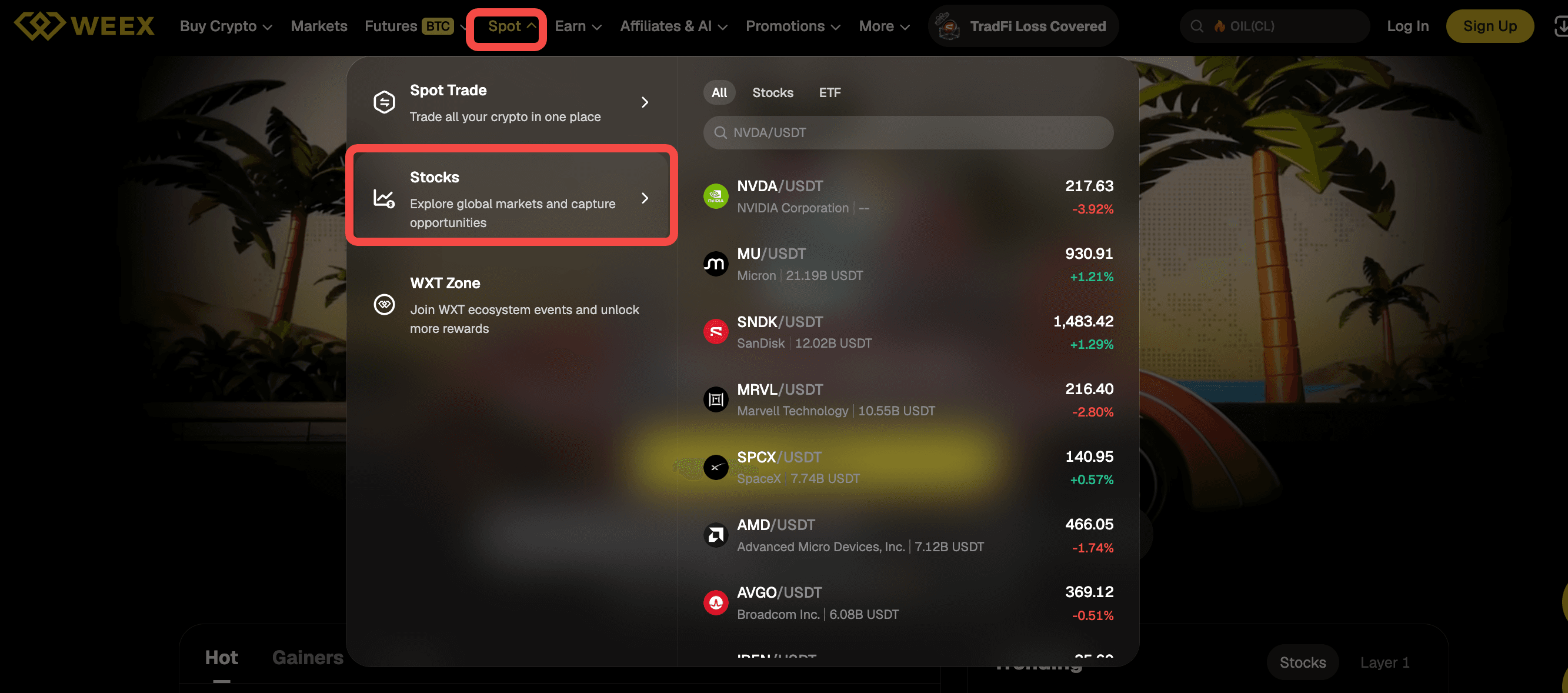
WEEX Stock Spot 2.0 is a stock token product built on synthetic assets, positioned as distinct from other third-party stock token offerings such as Ondo or xStocks. The product is designed to track the price performance of specific US stocks and ETFs, letting a trader gain exposure to that price movement directly through USDT rather than through a conventional equities account.
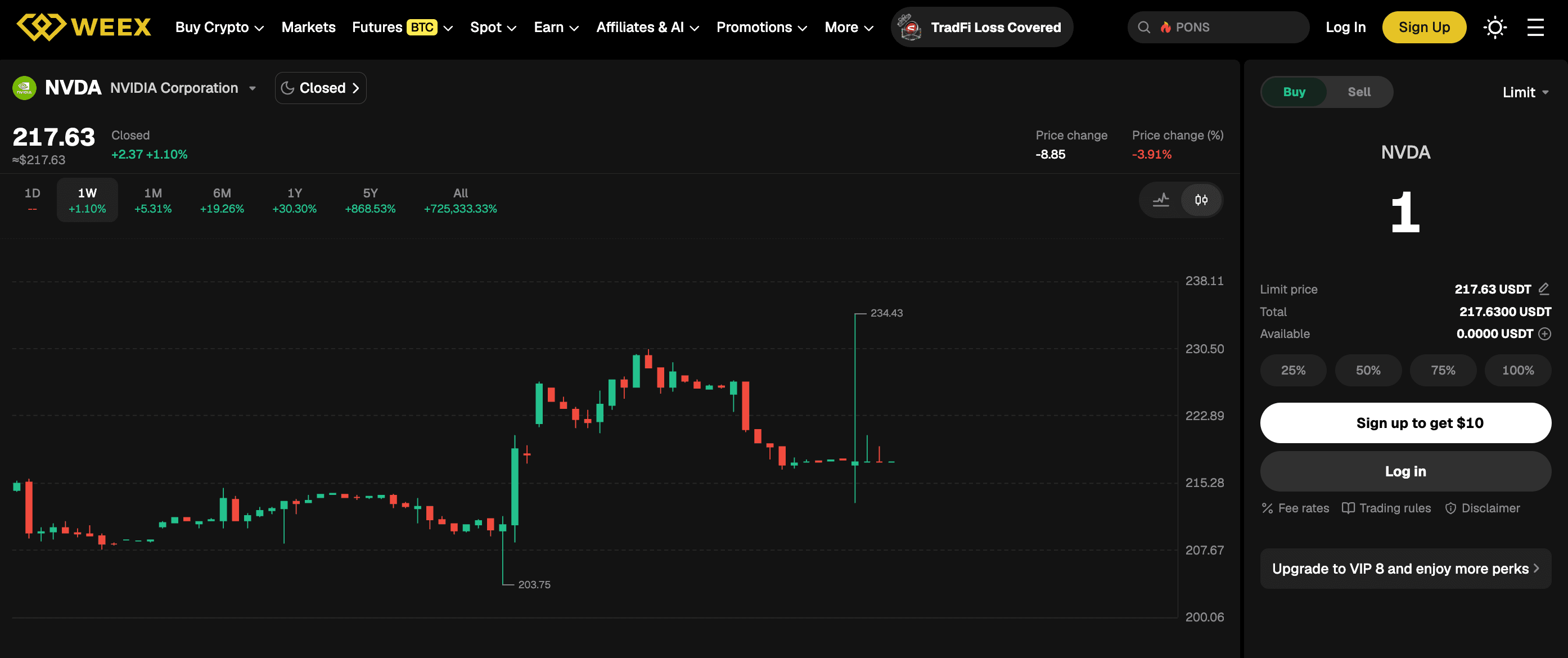
The practical entry point is intentionally low: trading can start with as little as 5 USDT, and popular names like NVDA and AAPL are tradable directly against USDT. That structure removes two of the more common friction points for someone new to US stock exposure, opening a brokerage account and meeting a typical minimum investment threshold, replacing both with a single crypto-funded trading pair.
How the Synthetic Asset Mechanism Actually Works
The core mechanism behind WEEX Stock Spot Trading is that these are synthetic assets, meaning the token's price is designed to track a stock's actual market performance without the token itself representing a claim on the underlying company. When a trader buys an NVDA token on WEEX, they're buying an asset whose price is built to move in line with Nvidia's stock price, not a share of Nvidia stock routed through an exchange like Nasdaq.
This distinction determines how execution actually works on the platform. Orders are not routed to Nasdaq, NYSE, or any external broker. Instead, the actual execution price a trader receives is determined by the matched price within WEEX's own stock token trading pair. That's a structurally different pricing mechanism than a traditional brokerage order going directly to a stock exchange's order book, and it's worth understanding clearly before treating a stock token's price movement as identical in every respect to the underlying stock's own market price.
What This Product Is Not: Key Differences From Owning Real Stock
This is the detail that matters most for anyone evaluating whether this product fits what they're actually looking for. WEEX stock tokens do not represent ownership of the underlying shares. Holding an NVDA token through WEEX Stock Spot Trading does not make a trader a shareholder of Nvidia in any legal sense.
That has concrete consequences. Token holders do not receive shareholder rights that come with owning actual equity, including voting rights, the ability to participate in shareholder meetings, or dividend payments. Anyone specifically seeking those rights, rather than price exposure alone, is looking for something a synthetic stock token product isn't designed to provide. WEEX Stock Spot Trading is built for traders who want to express a view on a stock's price movement using crypto as the funding currency, not for investors seeking the full legal and financial rights that come with holding actual shares through a traditional brokerage.
-- Price
What You Can Actually Trade at Launch
The initial asset lineup spans several distinct categories rather than a narrow list of single names. The "Magnificent Seven" grouping covers NVDA (Nvidia), MSFT (Microsoft), AAPL (Apple), GOOGL (Alphabet), AMZN (Amazon), META (Meta Platforms), and TSLA (Tesla), covering the group of large-cap technology names most closely associated with the current AI-driven market cycle.
A separate memory and storage category includes SK Hynix, Micron (MU), Western Digital (WDC), Seagate (STX), and Sandisk (SNDK), reflecting the ongoing attention on memory chip supply and HBM demand tied to AI infrastructure buildout. Beyond individual names, the launch lineup includes leveraged ETFs such as TQQQ and SQQQ (3x leveraged long and short exposure to the Nasdaq 100), SOXL and SOXS (3x leveraged exposure to the Philadelphia Semiconductor Index), KORU (3x leveraged exposure to South Korean equities), and single-stock leveraged products including MUU (2x Micron), INTW (2x Intel), and SNXX (2x Sandisk). This breadth means the product covers both direct large-cap exposure and more targeted, leveraged sector plays within a single trading interface.
Trading Hours and When the Market Is Actually Open
WEEX Stock Spot Trading operates on a defined schedule tied to US market hours rather than running continuously around the clock. Trading is available Monday through Friday, 08:00 to 24:00 UTC+0, which corresponds to Monday through Saturday, 16:00 to 08:00 the following day in UTC+8 time. That window is designed to cover pre-market, regular session, and after-hours trading activity in a single continuous block.
The market is closed Monday through Friday from 00:00 to 08:00 UTC+0 (08:00 to 16:00 Beijing time), as well as on weekends and US stock market holidays. In UTC+8 terms, that means the market is also closed from Saturday 00:00 through Monday 08:00. Anyone planning to trade around a specific catalyst, an earnings report or a major news event, should check this schedule directly, since order execution outside these windows isn't available regardless of how the underlying US stock itself might be moving in extended trading elsewhere.
Fees, Liquidity, and How Execution Is Designed to Work
WEEX has structured the product around a flexible fee model intended to keep trading costs low, including a limited-time zero-fee promotion on select popular assets. Beyond the fee structure itself, the platform describes the product as backed by global market-making liquidity and deep order books, aimed at minimizing slippage and supporting guaranteed pricing with high-speed order matching.
For a trader, this combination, low minimum entry, competitive fees, and liquidity depth, is what determines whether the actual trading experience holds up in practice, separate from the underlying synthetic asset mechanism itself. A product that tracks a stock's price accurately in theory still needs sufficient liquidity behind it to execute trades at prices close to that theoretical tracking price, particularly during periods of higher volatility in the underlying stock.
Security Measures Behind the Product
WEEX describes the security architecture behind Stock Spot Trading as multi-layered, combining a distributed system architecture, a verifiable protection fund, intelligent risk controls, and manual review processes. This structure is intended to safeguard both user assets and the trades themselves, applying the same general security philosophy WEEX uses across its broader product suite to this newer stock token offering specifically.
For a trader evaluating any new product on an exchange, security architecture is worth confirming independently rather than taking as a given, and the presence of a verifiable protection fund in particular is a detail that can typically be checked directly rather than relied upon solely as a marketing claim.
Conclusion
WEEX Stock Spot Trading gives traders a way to gain price exposure to major US stocks and ETFs, including the Magnificent Seven, key memory and storage names, and a range of leveraged ETF products, using USDT and starting with as little as 5 USDT, without opening a separate brokerage account. The product works through synthetic asset tokens whose price tracks the underlying stock's performance, with execution determined by WEEX's own matched order book rather than routing through Nasdaq, NYSE, or an external broker, and without conferring the shareholder rights, voting, meeting participation, or dividends, that come with owning actual shares. Understanding that distinction clearly, alongside the product's defined trading hours and security structure, is what actually determines whether this fits what a given trader is looking for. WEEX's current Stock Spot 2.0 promotional campaign is live for traders interested in exploring the product further.
FAQ
1. Do I need a brokerage account to trade on WEEX Stock Spot Trading?
No. Trading is done directly with USDT through WEEX, without requiring a separate external brokerage account.
2. Does owning a WEEX stock token mean I own actual shares of the company?
No. WEEX stock tokens are synthetic assets that track a stock's price performance. They do not represent ownership of the underlying shares, and holders do not receive shareholder rights such as voting, meeting participation, or dividends.
3. What is the minimum amount needed to start trading?
Trading can start with as little as 5 USDT.
4. What assets are available at launch?
The initial lineup includes the Magnificent Seven stocks (NVDA, MSFT, AAPL, GOOGL, AMZN, META, TSLA), memory and storage names (SK Hynix, MU, WDC, STX, SNDK), and a range of leveraged ETFs including TQQQ, SQQQ, SOXL, SOXS, KORU, MUU, INTW, and SNXX.
5. When is the market open for trading?
Trading is available Monday through Friday, 08:00 to 24:00 UTC+0 (16:00 to 08:00 the following day, UTC+8), covering pre-market, regular, and after-hours sessions. The market is closed outside this window, on weekends, and on US stock market holidays.
This content is provided for general informational purposes only and doesn't constitute financial, investment, legal, or tax advice. Any events, rewards, online promotions, or related information mentioned herein should not be considered a recommendation, solicitation, or invitation to purchase, sell, trade, or otherwise deal in any crypto assets. Crypto assets are highly volatile and may result in loss. The availability of WEEX services, products, and related events may vary by region. You are responsible for ensuring that your participation is in accordance with applicable local laws and regulations.
You may also like

Nvidia Stock Falls After Microsoft's Maia 300: Is Custom Silicon a Real Threat to NVDA?
NVDA Stock Sits Near Its High While Rivals Are Down 18-32%: What Explains the Gap

AMD vs Nvidia After Q2 Earnings: Which Stock Is the Better Buy?

Flying Tesla Roadster (FTR) Coin: What Is It and What to Check Before Trading a Roadster Memecoin

Tesla Roadster Performance, Thrust and Rocket Trims: Specs, Price and 2028 Production

Cyberleek Token Risks: Memecoins Tied to Leaks, Anonymous Wallets and Why Verification Matters
Staking APR vs Inflation: How Much of Your Crypto Yield Is Real?
CRWV Stock Swings From -9.5% to +5.9%: Why CoreWeave Reversed
Starknet Independent L1 Vote: What It Really Means for STRK
WEEX Convert Fees: What Zero-Fee Conversion Really Costs You
WEEX Convert Quote: How the 8-Second Price Lock Really Works
WEEX Convert Limits: Minimum and Maximum Amounts Explained
How to Check a WEEX Convert Order: History, Rate and Status

What Is Walrus Coin (WAL)? Why It Is Rising and What Is Still Unconfirmed
PYTH USDT After the 100% Rule: Buyback Mechanics, Overbought Signals and Risks Before Trading

USDC Significant EMT Status in the EU: What Changes on November 12 Under MiCA
APR vs APY in Crypto: Why the Bigger Number Can Mislead You
Walrus (WAL) Jumps 30%: Sui Storage Token Rallies on AI Data
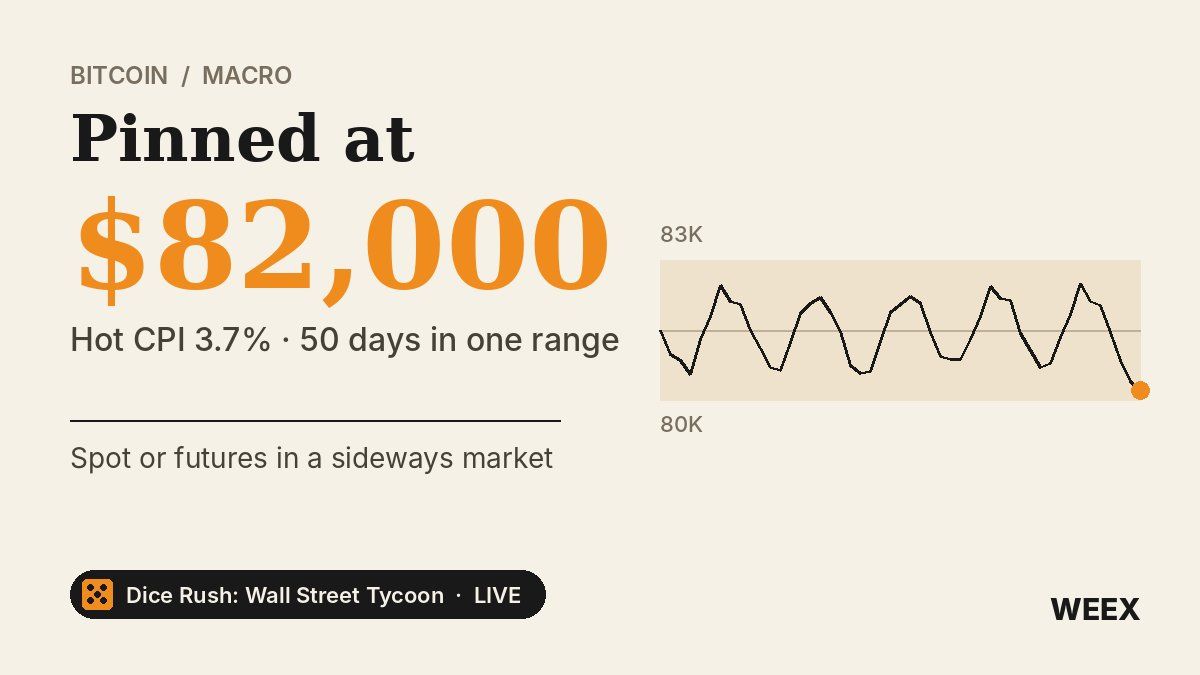
Bitcoin Price After Hot CPI: Why BTC Is Pinned Near $82,000
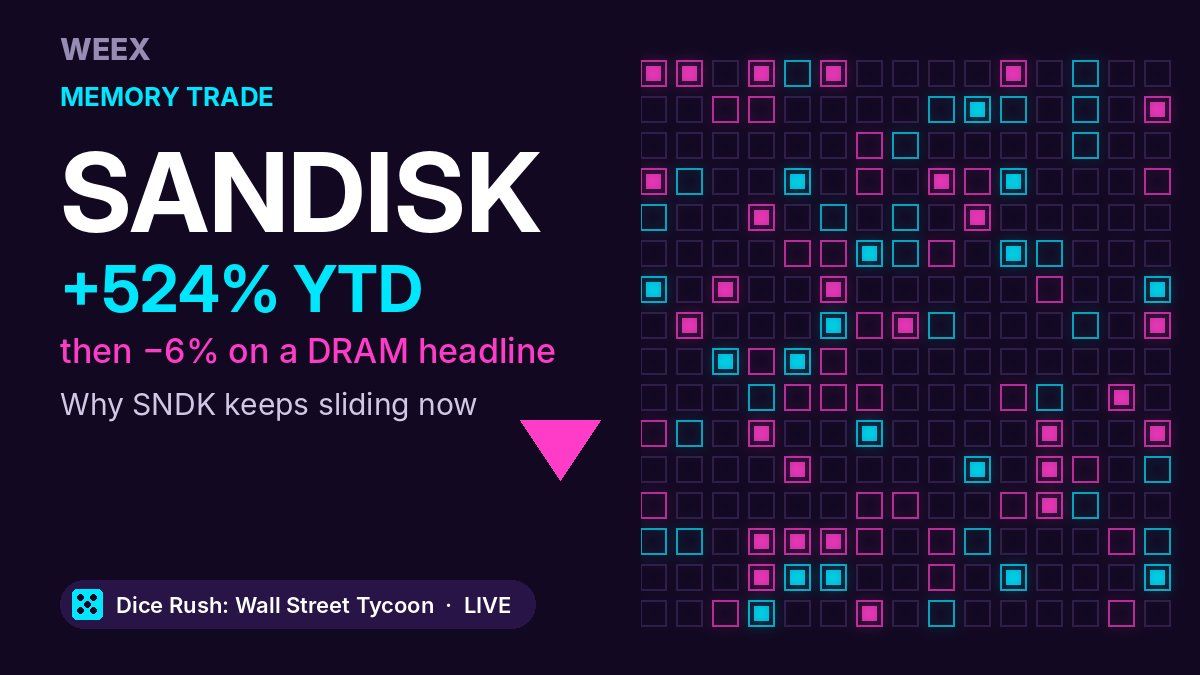
Sandisk Stock After a 524% Run: Why SNDK Keeps Sliding Now
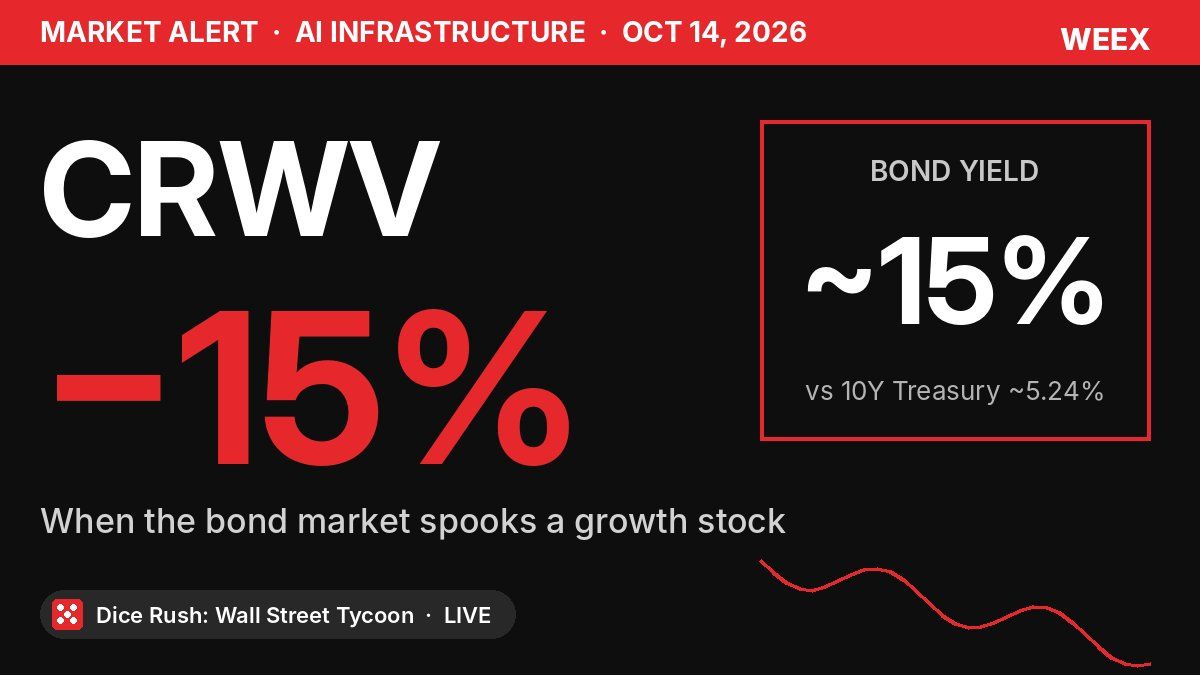
CoreWeave Stock Plunges 15%: Why a Bond Yield Spooked CRWV
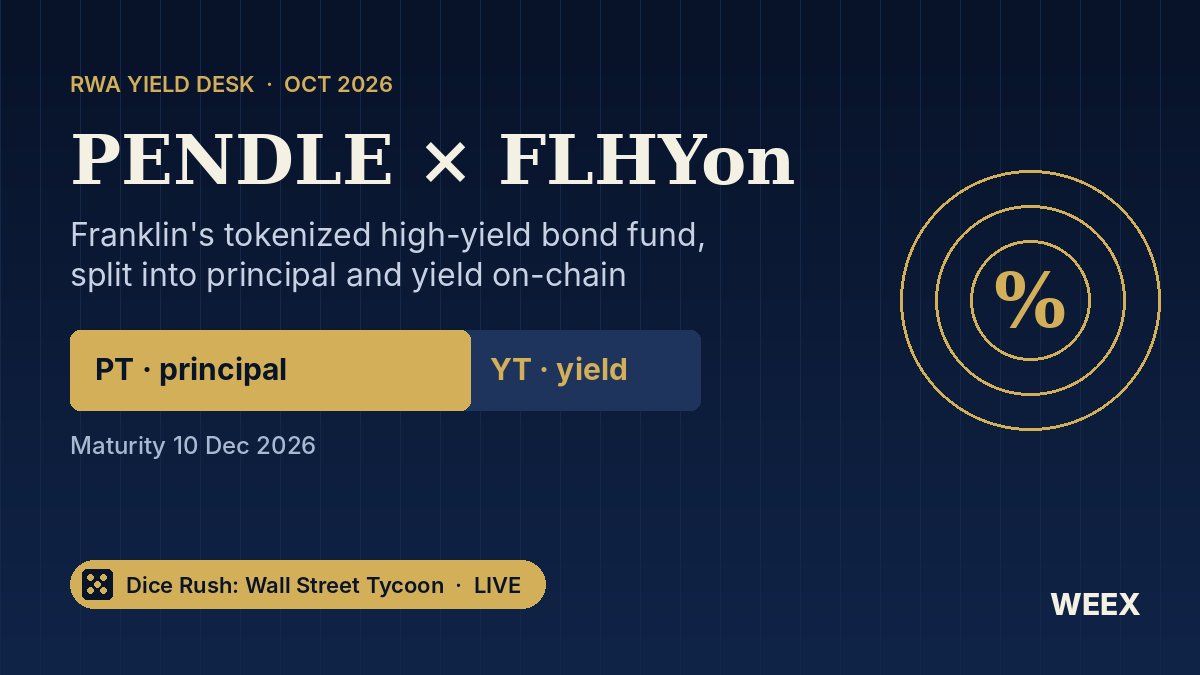
PENDLE Price and FLHYon: What Franklin's Bond Token Changes
WEEX 2026 New User Guide: Register, Complete KYC, and Claim the Welcome Bonus (Step-by-Step)

WEEX Convert Guide: How to Swap Crypto on Web and App and What the Quote Really Means
ASML Stock Falls Despite a Record Q3 and Higher Outlook: Is the AI Chip Equipment Boom Already Priced In?

SKHY Stock Falls Again: Is the SK Hynix Selloff About China’s CXMT and YMTC or AI Profit-Taking?
What Is a Limit Order? How It Works and When to Use It
Best Crypto Miner for Beginners: What to Check on Cost, Power, Hashprice and Profit Before You Buy
DeFi Vault vs Staking: Who Controls Your Yield and Your Exit?
Buy Limit Order: How to Buy Crypto Below the Market Price
Nvidia Stock Falls After Microsoft's Maia 300: Is Custom Silicon a Real Threat to NVDA?
NVDA Stock Sits Near Its High While Rivals Are Down 18-32%: What Explains the Gap
AMD vs Nvidia After Q2 Earnings: Which Stock Is the Better Buy?
Flying Tesla Roadster (FTR) Coin: What Is It and What to Check Before Trading a Roadster Memecoin
Tesla Roadster Performance, Thrust and Rocket Trims: Specs, Price and 2028 Production
Cyberleek Token Risks: Memecoins Tied to Leaks, Anonymous Wallets and Why Verification Matters
Contents
Popular coins
Latest articles


